
Impact Insights: Unfolding the Science Behind Car Crashes
by AutoExpert   |  13 October, 2023

Share :

The open road, a realm of freedom, yet it holds a potential risk every time we buckle up and set forth. Car crashes are a grim reality, but beneath the screech of tires and the jarring halt, there’s a captivating science at play. Let’s unravel the forces, reactions, and vehicle dynamics that sketch the narrative of a car crash.

The Prelude: Speed and Momentum

The story begins with the speed of the vehicle as it journeys on the road.
Science Behind Car Crashes

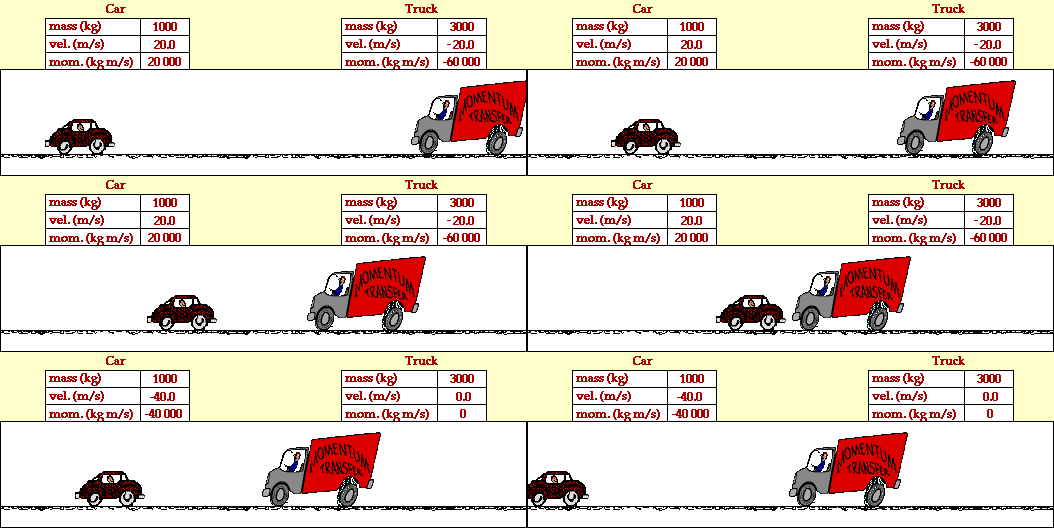
  • Momentum: The momentum of a car is the product of its mass and velocity. A high-speed collision involves a sudden change in momentum, which according to Newton’s laws, leads to forces that can cause significant damage.

The Encounter: The Physics of Impact

The moment of collision is a dramatic dance of physics principles.

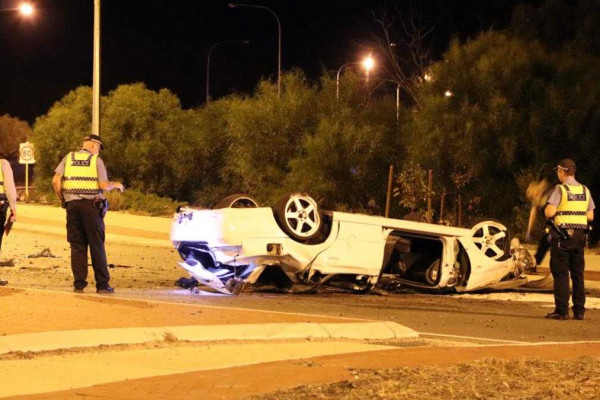
  • Kinetic Energy: At the point of impact, the kinetic energy is transformed into other forms of energy. In a car crash, it’s often converted into sound energy (the crash sound), and deformation energy (the crumpling of metal).

  • Impulse and Force: The impulse experienced by the car is the product of the force exerted on it and the time over which this force is applied. Higher speeds often result in greater forces and potentially more damage.

Science Behind Car Crashes

The Reaction: Vehicle Response

The response of the vehicle during and after a crash is a fascinating study of science and engineering.

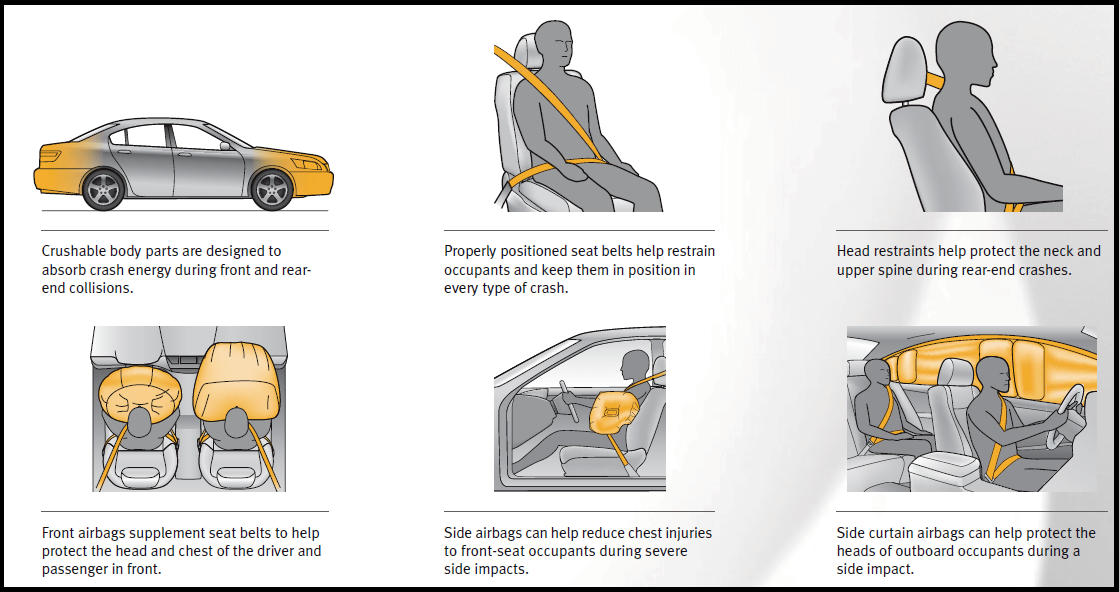
  • Crumple Zones: Modern cars are engineered with crumple zones that absorb some of the crash energy, reducing the force felt by occupants. For instance, in a frontal collision, the front crumple zone deforms to absorb the shock.

  • Restitution: The coefficient of restitution, a measure of how bouncy a collision is, also plays a part. A higher coefficient indicates a more elastic collision, where the vehicles bounce back, while a lower coefficient indicates a more inelastic collision, where the vehicles may stick together.
Science Behind Car Crashes

Safety Harness: The Science of Protection

Advancements in safety technology are a testament to our understanding of crash physics.

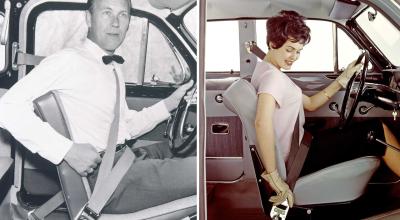
  • Airbags and Seatbelts: Airbags deploy using sensors that detect a sudden deceleration, cushioning occupants from the harsh forces. Seatbelts stretch slightly to reduce the stopping force, showcasing the meticulous science embedded in safety features.
Science Behind Car Crashes

A Narrative of Survival

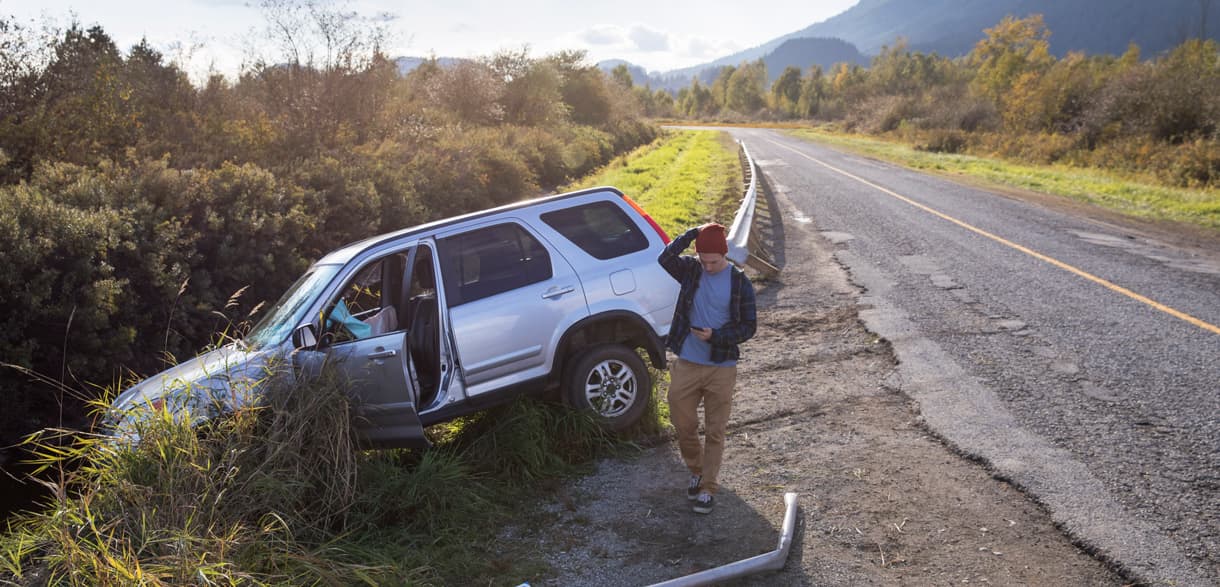
The science behind car crashes isn’t just a tale of forces and impacts; it’s a narrative of survival, a push towards engineering advancements that shield us from the unforgiving laws of physics. Each crash unravels a lesson, fueling the drive towards safer automotive designs, ensuring that our journey on the road is less perilous and more forgiving.

Recomended:

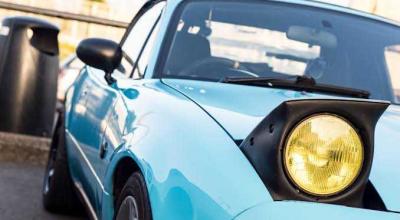
Everyone Says Pop-Up Headlights Were Banned, but That Is Not What Actually Happened - Photo
Others
Everyone Says Pop-Up Headlights Were Banned, but That Is Not What Actually Happened

Few automotive features can make a parked car look as alive as pop-up headlights. Turn the switch and two neat sections of bodywork rise from the hood, pause with theatrical precision and reveal the l

AutoExpert
This Talking Datsun Hid a Tiny Six-Track Record Player Beneath the Dashboard - Photo
Others
This Talking Datsun Hid a Tiny Six-Track Record Player Beneath the Dashboard

A new car speaking to its driver no longer feels remarkable. Navigation systems issue directions, safety assistants complain about lane markings and voice controls wait patiently for somebody to remem

AutoExpert
Honda Built Navigation Before GPS Using Helium, Transparent Maps and a Glowing Green Dot - Photo
Others
Honda Built Navigation Before GPS Using Helium, Transparent Maps and a Glowing Green Dot

There was a time when getting lost required some commitment. A driver would unfold a road map across the steering wheel, locate two towns that appeared to be printed directly on top of one another, th

AutoExpert
Your Front Brakes Do Most of the Work, So Why Did the Rear Pads Wear Out First? - Photo
Others
Your Front Brakes Do Most of the Work, So Why Did the Rear Pads Wear Out First?

The usual explanation sounds perfectly logical. When a car slows down, its weight moves toward the front. The front tires carry more load, so the front brakes provide more of the stopping force. That

AutoExpert
Rubber Is Naturally Pale, So Why Did the Automotive World Make Every Tire Black? - Photo
Others
Rubber Is Naturally Pale, So Why Did the Automotive World Make Every Tire Black?

A bright red car, a metallic blue car and a taxi painted the color of a highlighter will normally leave the factory with exactly the same footwear. Black tires. The color seems so inevitable

AutoExpert
A Fatal Hand-Crank Accident Helped Change the Way Every Car Starts - Photo
Others
A Fatal Hand-Crank Accident Helped Change the Way Every Car Starts

Starting a modern car requires so little effort that the action barely registers. Turn a key, press a button or let the vehicle recognize that its driver has climbed aboard. A second later, the engine

AutoExpert
You Installed the Correct Battery, but Your Car May Still Think the Old One Is There - Photo
Others
You Installed the Correct Battery, but Your Car May Still Think the Old One Is There

Changing a car battery used to be one of the cleaner bargains in home mechanics.Remove two terminals, undo the clamp, lift out the old battery and fit the new one. The clock might need resetting a

AutoExpert
Highway Rumble Strips Are Designed to Sound Awful, but Making Them Quieter Could Save Lives Too - Photo
Others
Highway Rumble Strips Are Designed to Sound Awful, but Making Them Quieter Could Save Lives Too

One tire wanders across the painted line and the previously quiet cabin erupts with a harsh mechanical growl. The steering wheel trembles, the seat vibrates and, for half a second, it feels as if some

AutoExpert
People Once Wanted Car Radios Banned Because Listening While Driving Seemed Far Too Dangerous - Photo
Others
People Once Wanted Car Radios Banned Because Listening While Driving Seemed Far Too Dangerous

A dashboard without a radio now looks unfinished. Even the most basic car is expected to provide music, news and something to fill the silence when traffic has stopped moving but the clock has not.

AutoExpert
The Seatbelt That Chased You Across the Door Was America’s Cheaper Alternative to an Airbag - Photo
Others
The Seatbelt That Chased You Across the Door Was America’s Cheaper Alternative to an Airbag

Open the door of certain 1980s or early 1990s cars and a small buckle begins travelling along the roofline. Sit down, close the door and the shoulder belt glides toward the B-pillar, hopefully passi

AutoExpert