You Installed the Correct Battery, but Your Car May Still Think the Old One Is There
by AutoExpert | 10 September, 2026
Changing a car battery used to be one of the cleaner bargains in home mechanics.
Remove two terminals, undo the clamp, lift out the old battery and fit the new one. The clock might need resetting afterward, and the radio could demand a security code, but the car generally accepted its fresh supply of electricity without asking for a formal introduction.
Some modern cars are considerably less trusting.
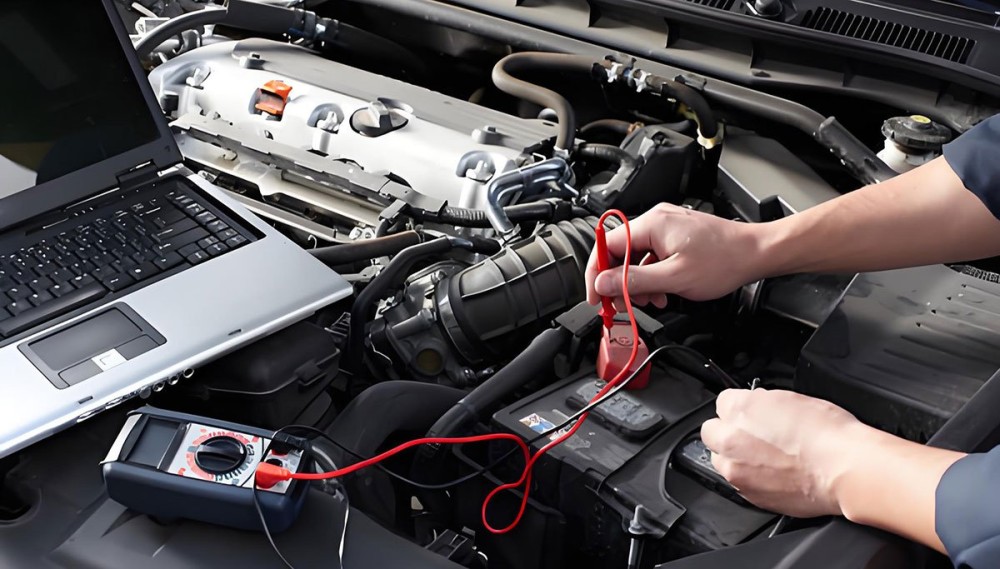
A replacement battery can have the correct dimensions, voltage and terminal layout, start the engine perfectly and still require registration with the vehicle’s energy-management system. If its capacity or construction differs from the original, additional coding may also be necessary.
The car is not checking whether the battery is genuine or keeping an electronic warranty record. It is trying to understand what kind of battery has just been fitted and how it should be charged.
Modern cars keep a surprisingly detailed battery diary
Vehicles with start-stop systems and extensive electrical equipment must manage energy carefully. The battery may be asked to restart the engine repeatedly, power accessories while the engine is off and recover energy during deceleration. Meanwhile, heated seats, pumps, computers, cameras and entertainment systems continue requesting electricity.
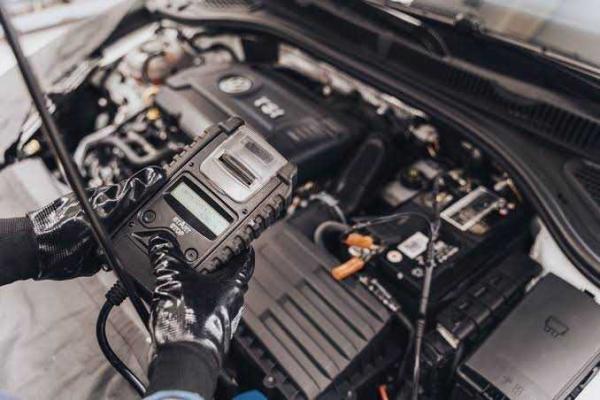
A battery sensor, often fitted around the negative terminal, can measure current, voltage and temperature. The vehicle uses that information to estimate the battery’s state of charge and general condition.
As a battery ages, its behavior changes. It stores less energy, accepts charge differently and becomes less dependable during cold starts. The management system may gradually adapt its charging strategy and restrict nonessential equipment when the available reserve falls.
That creates a problem when a tired five-year-old battery is removed.
The new battery may be physically present, but the control unit can continue working from historical information gathered from the old one. Registering the replacement resets relevant battery-age and usage data so the system knows it is managing a fresh component.
The exact process varies. Some cars require a diagnostic tool to record the replacement. Others perform a self-learning procedure after the battery has been fitted. Certain models need only a battery-monitor reset, while simpler vehicles require nothing beyond reconnecting the terminals.
This variation explains why two owners can replace similar-looking batteries and receive completely different advice.
Registration and coding are related, but they are not identical
The words are often used interchangeably, especially in advertisements for diagnostic tools, but they describe different jobs.
Battery registration normally tells the vehicle that the old battery has been replaced. Depending on the system, it may reset battery age, charging adaptations, operating hours or energy-throughput information.
Battery coding tells the vehicle about the replacement battery’s characteristics. These can include its capacity in amp-hours, its manufacturer and whether it uses conventional flooded, enhanced flooded battery or absorbent glass mat construction.
A like-for-like replacement may need registration without extensive recoding. Changing from one approved capacity or technology to another can require both.
The distinction matters because different batteries tolerate different charging conditions. AGM batteries are designed to handle demanding start-stop operation and repeated charge cycles. EFB batteries improve upon conventional flooded designs but generally serve less intensive systems. Installing an ordinary flooded battery in a vehicle designed around AGM technology can leave the replacement badly overworked.
VARTA’s replacement guidance recommends replacing AGM with AGM. An EFB battery may be replaced with the same technology or, where the manufacturer permits, upgraded to AGM. Moving in the opposite direction simply because a cheaper battery fits the tray can create problems long before the warranty paperwork has disappeared into a drawer.
Even apparently small differences deserve attention. A battery with a different capacity may fit physically, but the charging strategy and reserve calculations may no longer match it.
What happens if the new battery is never registered?
The consequences depend heavily on the vehicle.
Some systems will recognize the replacement gradually and correct themselves. Others may continue applying assumptions developed around the old battery. Start-stop operation might remain unavailable, electrical loads may be restricted and charging may be less appropriate for the new battery.
The engine can still start normally, which makes the omission easy to overlook. The first obvious symptom may be a message on the dashboard, a start-stop system that refuses to operate or a replacement battery that ages more quickly than expected.
Not every issue after replacement proves that registration was missed. A loose terminal, poorly secured ground connection, incorrect battery specification or defective new battery can cause similar trouble. Start-stop systems also remain disabled under many normal conditions, including low charge, extreme temperatures and heavy climate-control demand.
Temporary oddities can appear simply because power was disconnected. Clocks, windows, sunroofs, steering-angle sensors and other systems may need to relearn their positions. Some warning lights disappear after the car has completed its checks or been driven for a short distance.
The important point is that registration should be treated as a vehicle-specific service requirement, not as an optional ritual performed on every modern car.
The owner’s manual may mention battery precautions without explaining the complete workshop procedure. Manufacturer service information, a reputable battery application guide or a properly equipped technician can confirm what the particular model requires.
A five-minute check can prevent an expensive experiment
Before buying a replacement, identify the original battery’s voltage, capacity, cold-cranking rating and construction. Start-stop cars commonly use AGM or EFB batteries, but the presence of a start-stop button alone should not be used to guess the specification.
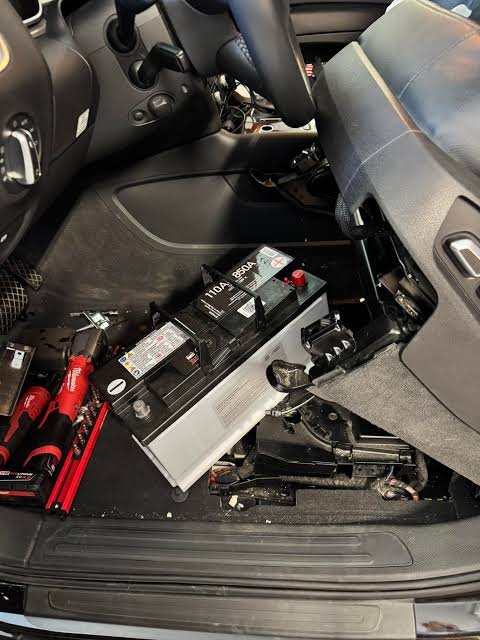
It is also worth locating the battery before arriving home with tools. Modern manufacturers hide them beneath trunk floors, under seats and behind panels that require more patience than the replacement itself.
If registration is required, many independent workshops and battery specialists can complete it through the diagnostic port. Brand-specific enthusiast tools may also support the procedure, although selecting the wrong capacity or battery technology can be worse than leaving the menu alone.
Care is particularly important when using a memory-saving device. Keeping the vehicle powered during replacement may preserve settings, but it also means disconnected cables can remain electrically live. The manufacturer’s procedure should decide whether supporting the electrical system is appropriate.
Hybrid and electric vehicles usually have a low-voltage battery as well as their propulsion battery. A weak 12-volt battery can prevent the vehicle from waking up even when the large traction battery is charged. That does not make the high-voltage system suitable for home experimentation. Orange cables and high-voltage components should be left untouched.
A battery still performs the same basic job it has performed for generations: storing electrical energy and delivering it when the car asks.
What changed is the conversation around it.
The modern vehicle monitors, calculates and remembers. When the battery is replaced, some cars need that memory updated before they can give the new arrival a fair start.