Highway Rumble Strips Are Designed to Sound Awful, but Making Them Quieter Could Save Lives Too
by AutoExpert | 10 September, 2026
One tire wanders across the painted line and the previously quiet cabin erupts with a harsh mechanical growl. The steering wheel trembles, the seat vibrates and, for half a second, it feels as if something important has fallen off the car.
Then the tire returns to smooth pavement and everything goes quiet.

Nothing broke. The road simply shouted.
Rumble strips are deliberately shaped to create noise and vibration when a tire passes over them. They provide a physical warning when a distracted, drowsy or poorly positioned driver begins leaving the lane. They contain no sensors, cameras or electricity, yet they remain useful at three in the morning, in bad weather and inside cars built decades before lane-departure technology existed.
Their apparent simplicity hides a surprising amount of engineering.
The tire becomes part of the alarm
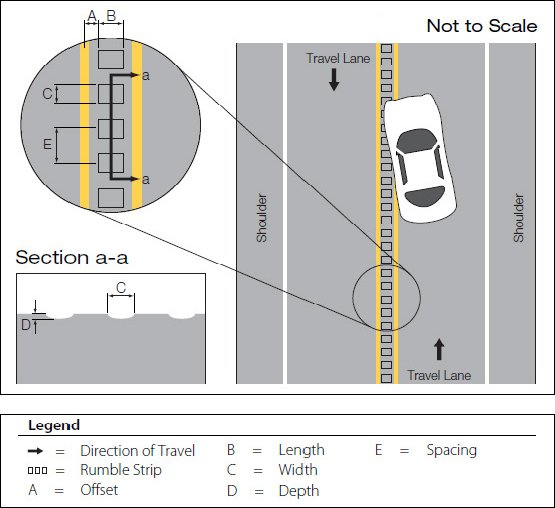
A conventional milled rumble strip consists of repeated depressions cut into the pavement. As the tire crosses them, it moves rapidly down and up. Those small movements travel through the wheel, suspension and body of the vehicle, producing the vibration occupants feel.
The repeated impacts also generate sound. Depth, width, length and spacing all influence the result, as do vehicle speed, tire construction and the road surface itself. A design that sounds suitably urgent inside a family sedan may behave differently beneath a truck with heavier tires and a noisier cabin.
The spacing is particularly important. Put the grooves too far apart and the driver may feel a series of individual bumps. Move them closer together and the tire produces a continuous growl. Engineers want a warning that is immediate and unmistakable without making the vehicle difficult to control.
Road agencies use several arrangements.
Shoulder strips sit near the outside of the traffic lane and warn that the vehicle is leaving the road. Centerline strips alert a driver who has started crossing toward opposing traffic. Transverse strips run across the direction of travel and are commonly used before hazards where drivers need to slow down or pay attention.
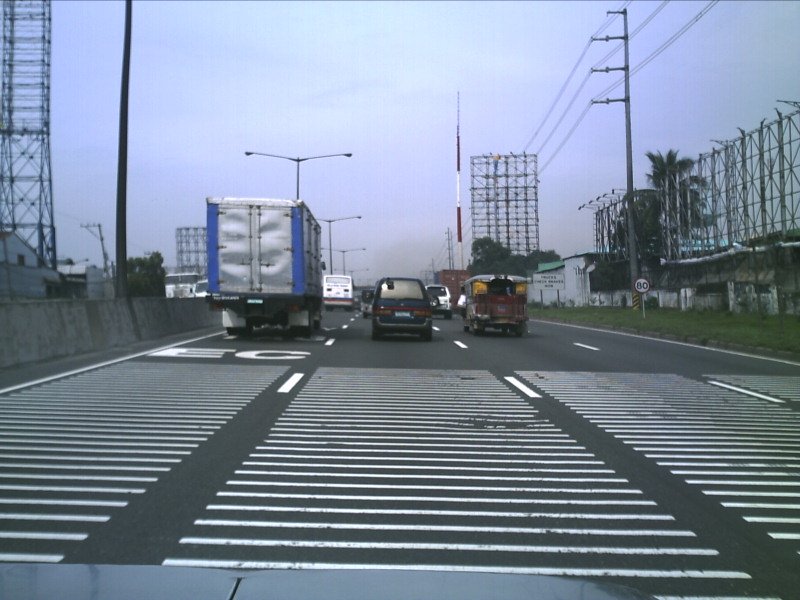
There are also rumble stripes, where the painted line is placed over or immediately beside the grooves. This combines a visual boundary with an audible and tactile one, while the textured surface can help the marking remain visible in wet conditions.
Early versions appeared on American roads by the middle of the 20th century. New Jersey used corrugated pavement sections on the Garden State Parkway in the early 1950s, producing what some contemporary descriptions called a “singing lane.” Later, milled designs made it possible to add the treatment to hardened pavement without rebuilding the road.
Today, the Federal Highway Administration considers shoulder and centerline rumble strips proven countermeasures for reducing run-off-road and opposing-direction crashes.
An effective warning can become an unpopular neighbor
The same noise that wakes a drifting driver can wake everyone living beside the road.
Inside the car, the sound lasts only as long as the tire remains on the strip. A nearby resident may hear it each time another vehicle clips the line. On a busy bend or narrow section of highway, that can happen repeatedly throughout the night.
Making the warning quieter outside the vehicle without weakening it inside has produced a different design known informally as the “mumble strip.”
Instead of sharply edged depressions, sinusoidal rumble strips use a smoother, wave-shaped profile. The tire rises and falls more gradually, creating vibration within the vehicle while reducing some of the aggressive exterior noise associated with traditional grooves.
This is not simply a matter of making roadside life more pleasant. Noise complaints can stop projects, limit where rumble strips are installed or result in existing strips being removed. A slightly quieter design that communities will accept may protect more drivers than a louder design that never reaches the pavement.
There are other compromises.
Cyclists need enough smooth shoulder to travel without riding across the grooves. Where they must cross a continuous strip, agencies may provide periodic gaps. Motorcyclists generally remain stable while crossing properly designed strips at an appropriate angle, but damaged pavement, standing water and unnecessarily aggressive profiles can make the experience unpleasant.
Snowplows, drainage, pavement condition and future resurfacing also influence the design. Raised markers may work in one climate and be quickly destroyed in another. Deep cuts in deteriorating pavement can accelerate cracking. A treatment that suits a broad freeway shoulder may be completely inappropriate on a narrow rural road.
This is why rumble strips are not stamped into every road using one universal pattern. Agencies study traffic, crash history, road geometry, surrounding homes and the needs of other road users before choosing a design.
What to do when the road suddenly growls
The noise is intended to create a quick correction, but panic can turn a small lane departure into a larger problem.
A driver who touches a shoulder strip should keep a firm, calm grip on the wheel, ease off the accelerator and steer smoothly back into the lane when it is safe. A sudden, violent turn can upset the vehicle, particularly if one side has already reached loose gravel or a soft shoulder.
The warning should also be taken seriously. Crossing the same strip repeatedly may indicate fatigue, distraction or difficulty seeing the lane markings. Opening a window and turning up the music are poor substitutes for stopping somewhere safe and resting.
Modern lane-departure systems can warn through a light, tone or steering-wheel vibration before the tires reach the grooves. That has not made rumble strips obsolete. Vehicle technology varies, drivers can disable assistance systems and cameras may struggle when markings are covered or difficult to see.
The road-based warning waits for every vehicle equally.
That sudden buzz beneath the tires may feel crude beside the cameras, processors and carefully animated dashboard alerts fitted to modern cars. Yet its message requires no menu and no translation.
It is abrasive, physical and impossible to mistake. Exactly as its engineers intended.