
A Fatal Hand-Crank Accident Helped Change the Way Every Car Starts
by AutoExpert | 11 September, 2026
Starting a modern car requires so little effort that the action barely registers. Turn a key, press a button or let the vehicle recognize that its driver has climbed aboard. A second later, the engine is running.
Early motorists had a much less agreeable arrangement.
They climbed out, walked to the front of the car, inserted a metal crank through the bodywork and physically turned the engine until it fired. On a cold morning, that might require several attempts, adjustments to the ignition and fuel mixture, and enough enthusiasm to make walking seem increasingly attractive.
It was inconvenient, dirty and surprisingly dangerous.
One badly timed spark could turn the crank into a weapon
A starting handle was connected to the engine’s crankshaft. When the driver pulled the handle upward, the crankshaft turned, the pistons moved and the engine had a chance to begin running under its own power.
If everything happened in the correct order, the crank disengaged and the engine continued running. If the fuel mixture ignited too early or the engine backfired, the crankshaft could suddenly turn in the opposite direction.
The starting handle came back with it.
A forceful kickback could injure a wrist, dislocate a shoulder or break a thumb wrapped carelessly around the handle. Early motoring guides taught drivers to keep their thumbs beside their fingers rather than around the crank, limiting the damage if the engine fought back.
That advice helped, but it did not make the ritual safe.
In 1908, automobile manufacturer Byron Carter reportedly stopped to help a stranded motorist on Belle Isle in Detroit. Carter, who founded the company behind the Cartercar, attempted to restart the vehicle by hand. The crank kicked backward and struck him in the jaw.
Carter later developed complications from the injury and died.
He was a friend of Henry Leland, the founder of Cadillac. According to the Automotive Hall of Fame’s account, the accident strengthened Leland’s determination to remove the hand crank from his cars.
Cadillac’s engineers had already considered an electric starter, but their design was too large and cumbersome for practical use. Leland needed somebody who understood how to make a powerful electric motor behave in a compact package.
Charles Kettering had recently done something surprisingly similar with a cash register.
The idea existed before the practical starter
The answer to who invented the electric car starter is less tidy than many automotive histories suggest.
Clyde J. Coleman had applied for a patent covering an electric automobile starter in 1899. The patent was granted in 1903, years before Kettering’s system reached a Cadillac showroom.
Coleman’s design established the idea, but it was not yet suitable for widespread production. Electric motors, batteries and control systems were still bulky, and early cars provided little room for extra equipment. An invention could work on paper and remain completely impractical beneath a hood.
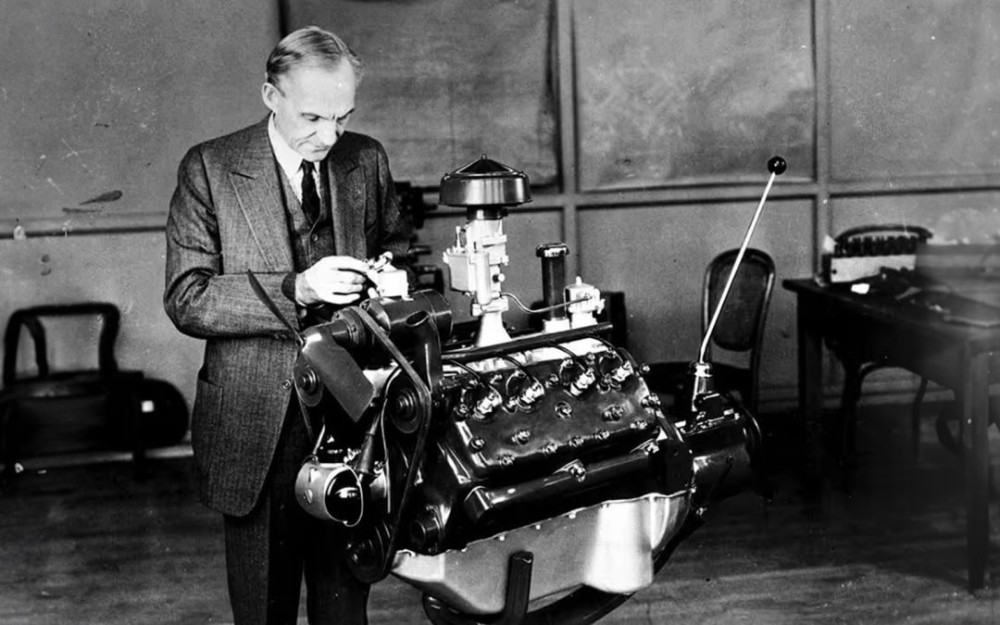
Coleman’s patent rights eventually reached the Dayton Engineering Laboratories Company, better known as Delco. Its co-founder, Charles Kettering, had already created an electric motor for National Cash Register that replaced the hand-operated mechanism used to open a cash drawer.
Kettering understood that a starter motor did not need to run continuously. It only had to survive a tremendous electrical load for a few seconds, long enough to turn the engine. Once the engine fired, the motor’s difficult part of the day was over.
Kettering and his Delco colleagues developed a compact system for Cadillac, presenting a workable version to Leland in 1911. Kettering filed his engine-starting-device patent on June 15 of that year.
The production system did more than replace a pair of human arms. Its electric motor helped start the engine, then operated as a generator once the engine was running. The wider electrical system also supported ignition and lighting.
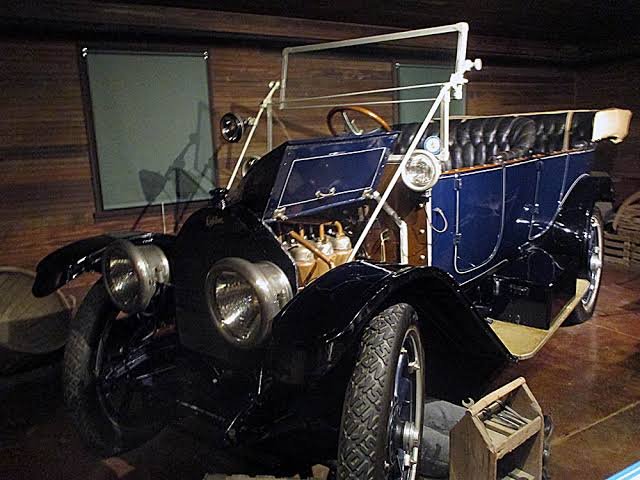
For 1912, Cadillac introduced the electric self-starter on its Model Thirty. Pressing a control inside the car could now perform a job that had previously required strength, mechanical knowledge and a certain willingness to be punched by an engine.
The starter changed who could use a car
Cadillac understandably treated the feature as a major selling point. The electric starter made its cars safer and easier to operate, particularly for motorists who lacked the strength or experience needed to manage a temperamental hand crank.
That mattered enormously as cars moved beyond wealthy hobbyists and professional chauffeurs. Driving could become an ordinary activity rather than a mechanical performance conducted at the roadside.
Other manufacturers noticed. Electric starters spread quickly during the 1910s, although cheaper cars kept hand cranks for longer. The Ford Model T, designed with ruthless attention to affordability, continued relying on its crank until an electric starter became available in 1919.
By the beginning of the 1920s, electric starting was becoming normal on American cars. A device that had seemed difficult to package only a decade earlier was turning into equipment buyers expected.
The historical credit remains shared. Coleman patented an early electric starter. Kettering and his team made the concept practical enough for mass-produced automobiles. Leland provided the commercial pressure, resources and determination to put it into a Cadillac.
Carter’s death did not create the electric starter from nothing. Work on self-starting systems had already begun. His accident gave the problem a human cost that was impossible for Leland to ignore.
Modern starters are smaller and more efficient, while hybrids may use integrated starter-generators that make the old Kettering arrangement sound unexpectedly current. Some new cars no longer require the driver to give the starting process any thought at all.
That effortless moment began during an era when starting a car could leave its owner bruised, stranded or much worse. The electric starter did more than save drivers a walk around the hood.
It finally stopped the engine from swinging first.