
Everyone Says Pop-Up Headlights Were Banned, but That Is Not What Actually Happened
by AutoExpert | 14 September, 2026
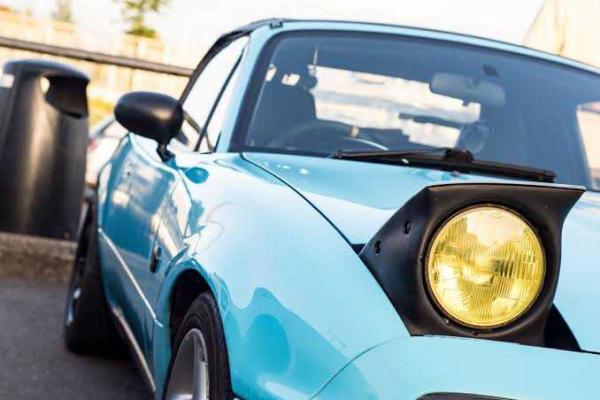
Few automotive features can make a parked car look as alive as pop-up headlights. Turn the switch and two neat sections of bodywork rise from the hood, pause with theatrical precision and reveal the lamps. A Mazda Miata looks awake. A Lamborghini Countach suddenly appears ready to interrogate the darkness. A Chevrolet Corvette completes a small mechanical performance before illuminating the road.
Then, almost simultaneously, they vanished.
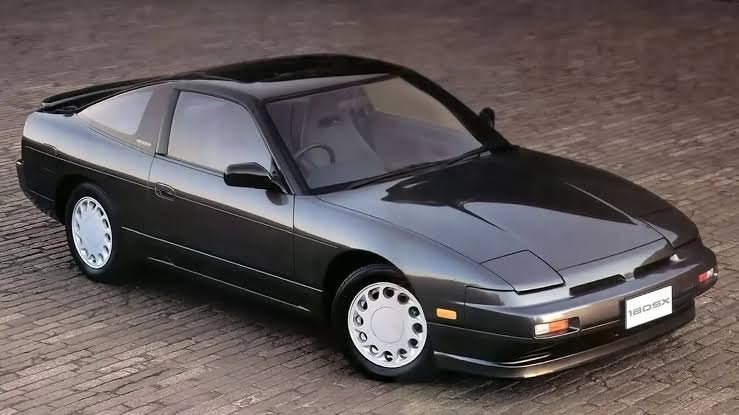
The usual explanation is that governments banned them because they were dangerous to pedestrians. That version is tidy, memorable and incomplete. Pop-up headlights were gradually squeezed out by a combination of safety requirements, changing lighting technology, aerodynamic compromises, manufacturing costs and the ordinary nuisance of adding motors to something that had previously needed only a bulb.
No single regulator gathered the world’s sports cars together and ordered them to close their eyes.
Pop-up headlights originally solved a real design problem
The 1936 Cord 810 is usually credited as the first production car with retractable headlamps. Its driver operated them manually, turning cranks to rotate the lamps out of the front fenders.
The idea remained unusual until postwar styling began chasing lower hood lines and smoother shapes. Headlights presented an awkward obstacle. They had to illuminate the road from a legally acceptable height, yet the available lamps were bulky and difficult to blend into a sleek nose.
American lighting rules made the challenge even more noticeable. For decades, cars sold in the United States used standardized sealed-beam headlamps. These were practical, inexpensive to replace and protected their reflectors from contamination, but they gave designers a limited selection of round and, later, rectangular shapes.
A sports car could either display those lamps prominently or hide them until darkness arrived.
Hidden-headlight systems took several forms. Some rotated the complete lamp assembly. Others raised square pods from the hood or opened doors in front of stationary lamps. Chevrolet devised Corvette systems that flipped dramatically through 180 degrees, while Porsche allowed the 928’s round lamps to tilt upward like startled eyes.
By the 1970s and 1980s, pop-ups had become visual shorthand for speed. They appeared on affordable coupes as well as exotics: the Mazda RX-7 and MX-5, Toyota MR2 and Supra, Nissan 300ZX, Honda Prelude, Pontiac Firebird and numerous others.
When closed, the headlights allowed a cleaner nose and, in many cases, a lower drag coefficient. They also gave designers two distinct faces to work with, one for daylight and another for night.
The trouble began when the lights were opened.
The aerodynamic advantage disappeared after dark
A smooth hood helps air travel cleanly over a car. Raised headlamp pods do the opposite. They interrupt the airflow, create turbulence and can increase wind noise and drag.
Road & Track’s retrospective notes that Corvette engineers viewed the raised lamps as air brakes, estimating that they could reduce the C5’s maximum speed by as much as 10 mph.
That did not matter much during an evening drive through town, but it exposed the compromise. The feature improved aerodynamics only while the lamps were not needed.
The mechanisms also added parts. Electric motors, relays, wiring, pivots, gears, linkages, covers and manual emergency releases all occupied space and increased weight. Each component created another opportunity for age, corrosion or a tired plastic gear to interfere.
This is how pop-up-headlight cars acquired their familiar wink. One lamp would rise while the other remained closed, leaving the car looking rakish but illuminating only half the road.
Federal regulations anticipated such failures. The current version of Federal Motor Vehicle Safety Standard 108 still defines headlamp concealment devices and sets requirements for them. Among other provisions, the lights must remain open if the mechanism loses power while they are illuminated. A closed lamp must also be openable without tools after certain malfunctions.
That continuing language is important. It demonstrates why saying pop-up headlights were simply banned in the United States is inaccurate. The rules still explain how a compliant system must behave.
Building one is possible. Building one now makes little commercial sense.
Better headlights removed their reason for existing
Lighting technology changed rapidly during the 1980s and 1990s. U.S. regulations began permitting aerodynamic composite headlamp assemblies with replaceable bulbs. Designers were no longer forced to arrange a car’s face around a standardized round or rectangular sealed beam.
Fixed headlights could become narrow, angled and model-specific. Projector lamps required less frontal area, while xenon and later LED technology created even more freedom. A lamp could fit into the bodywork instead of waiting beneath it.
This eliminated most of the practical argument for pop-ups. A manufacturer could produce the same low nose with fewer components, less weight and no risk of the car developing a permanent squint.
The headlights themselves also became part of the brand identity. Modern light signatures are designed to be recognizable from a distance, even before the grille or badge becomes visible. Hiding them during the day would discard one of the designer’s most useful tools.
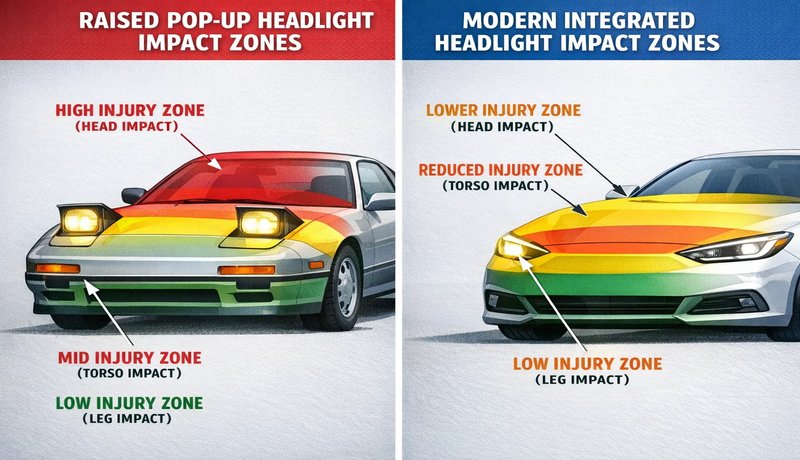
At the same time, pedestrian-protection standards placed greater emphasis on what happens when a person strikes the front of a vehicle. A smooth, deformable hood offers engineers more freedom to manage impact forces than a pair of rigid structures waiting to stand upright.
Pop-up lamps were not named and prohibited as a category, but their hard edges, mechanisms and packaging could make compliance more difficult and costly. Engineers would need to prove that the design met applicable impact requirements, perhaps by creating collapsible or actively controlled components. That is a large investment for a feature whose original functional purpose had already disappeared.
As Car and Driver’s history explains, the last mainstream examples disappeared in 2004 with the C5 Chevrolet Corvette and Lotus Esprit. Low-volume and custom vehicles have occasionally revisited the idea, but it has never returned as a normal production-car feature.
What to inspect when buying a car with pop-ups
The rarity now makes functioning pop-up headlights especially appealing on a classic. It also gives buyers one more system to examine before becoming distracted by the charm.
Both lamps should rise and close smoothly, at roughly the same speed, without excessive grinding, clicking or hesitation. A slow pod may indicate a tired motor, poor electrical connection or stiff linkage. Repeated clicking after the lamp reaches its position often points to worn internal gears or limit-switch trouble.
The covers should sit flush with the surrounding bodywork when closed. Uneven gaps can result from poor adjustment, previous collision repairs or a mechanism that has been assembled incorrectly. Water entering the housing may corrode connections and damage the reflective surfaces inside the lamps.
Manual release knobs or cranks should also be present and accessible. Their design varies between models, so the owner’s manual is a better guide than enthusiastic experimentation beside an unfamiliar motor.
Replacement parts are easy to find for some popular cars. The large enthusiast communities surrounding the Miata and Corvette, for example, support a healthy supply of motors, rebuilt gears and repair instructions. Obscure models can be considerably less cooperative. Before buying a rare coupe with one sleepy headlight, it is worth discovering whether the failed component costs $20 or requires finding another endangered car.
Conversion kits that replace pop-ups with fixed lamps are available for various models. They may reduce weight or improve reliability, but quality, beam performance and legality vary. They also remove a feature that often contributes heavily to the car’s identity and collector appeal.
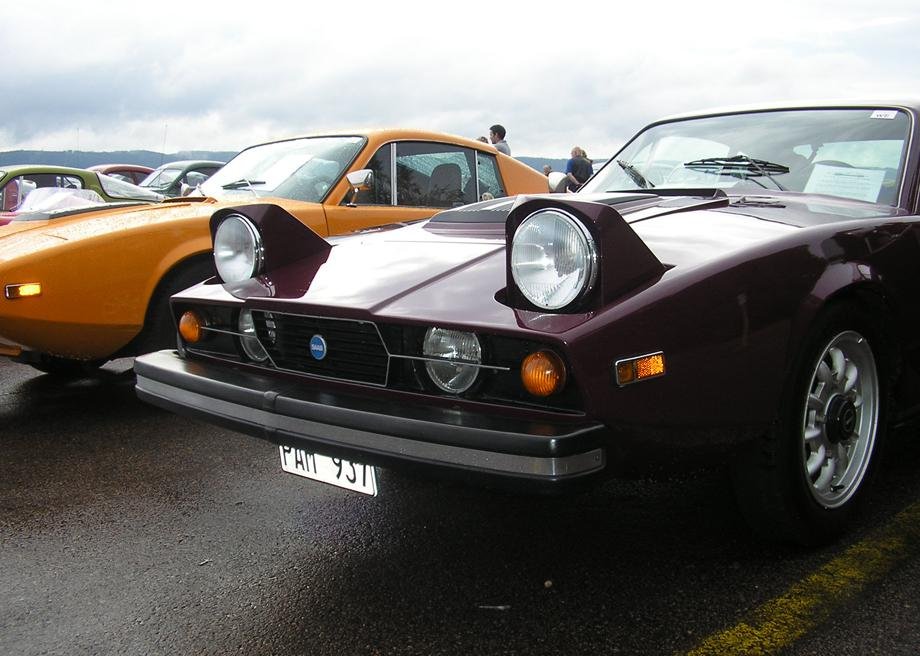
Pop-up headlights disappeared because the world around them changed. Fixed lamps became smaller and better. Regulations became more demanding. Aerodynamic expectations increased, while automakers lost enthusiasm for paying for mechanisms customers no longer needed.
That makes their disappearance understandable. It does not make the surviving cars any less entertaining.
Modern headlights can steer around bends, shade individual LEDs around oncoming traffic and project complex patterns onto the road. Technically, they are in another universe.
They still cannot wink.