This Talking Datsun Hid a Tiny Six-Track Record Player Beneath the Dashboard
by AutoExpert | 14 September, 2026
A new car speaking to its driver no longer feels remarkable. Navigation systems issue directions, safety assistants complain about lane markings and voice controls wait patiently for somebody to remember the correct command.
In the early 1980s, hearing a car produce an intelligible sentence was a very different experience. Digital speech was expensive, memory was limited and dashboard electronics were primitive by modern standards.
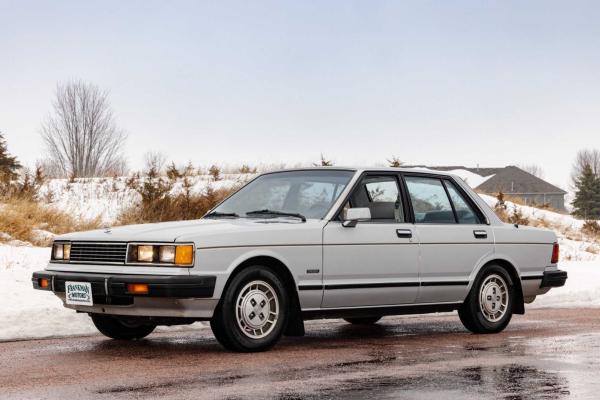
Datsun found a solution that was ingenious, mechanical and slightly absurd. It installed a record player under the dashboard. The system appeared in certain early-1980s Datsun and Nissan models, most famously the 810 Maxima. Instead of relying on synthesized speech stored in a computer, the car played prerecorded warnings from a tiny plastic phonograph disc.
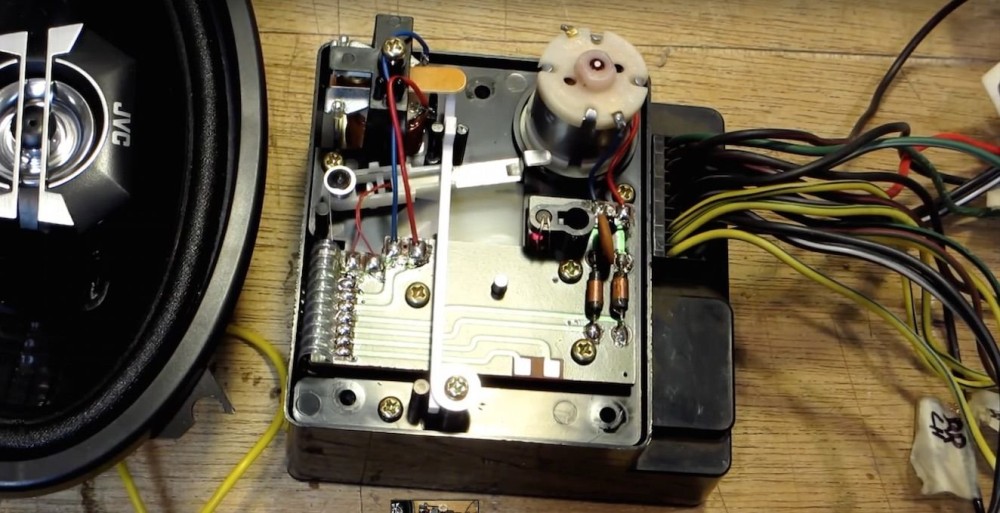
This was not a novelty record connected to the stereo. It was a purpose-built voice-warning machine containing a motor, drive belt, miniature tonearm and a record only around three inches across.
Six warnings lived on one little disc
A normal record contains one continuous spiral groove on each side. The Datsun system used six separate parallel grooves, each holding a short spoken message.
Depending on the vehicle and version, the system could announce that the left or right door was open, the parking brake was applied, the fuel level was low, the lights remained on or the key had been left in the ignition.
Sensors around the car already knew when one of these conditions existed. The clever part was turning the appropriate electrical signal into the correct sentence.
When a warning was triggered, the little record began spinning. An electromagnetic mechanism positioned the stylus over the relevant groove, lowered it and played the message. The design could also repeat a warning when necessary rather than delivering one polite sentence and abandoning the driver to the consequences.
The voice was female, calm and memorable. Surviving units are especially famous for the pronunciation of “parking brake,” which can sound closer to “bocking brake.” Whether this made the warning more effective is difficult to establish, but it certainly gave the car character.
Autoweek’s examination of several surviving units reveals how neatly everything was packaged. The complete box was roughly four inches across and could be mounted behind the interior trim near the driver’s footwell.
Inside, it looked like a small record player assembled by someone with very little room and considerable confidence.
Why use a record instead of a computer?
Mechanical playback seems like a comically complicated way to produce six sentences, especially when a modern key fob contains more computing power than the entire car.
At the time, however, prerecorded digital speech required costly memory and processing hardware. A tiny phonograph was comparatively straightforward. The words were already stored physically in the grooves, the playback mechanism was understandable and the associated electronics did not need to synthesize a convincing human voice.
This was the same period when toys, answering machines and household devices experimented with miniature records and tapes. Datsun simply adapted the principle for the harsher environment of a car.
That environment was no small challenge. A dashboard can become extremely hot in direct sun and freezing cold overnight. The mechanism had to tolerate vibration, sudden movement and the occasional pothole without turning “fuel level is low” into an avant-garde remix.
The record was made from durable plastic, while its stylus and tonearm were engineered to operate regardless of the box’s installed orientation. Decades later, enthusiasts have recovered functioning examples from scrapyards, suggesting the delicate-looking contraption was sturdier than common sense might predict.
Datsun was not alone in teaching cars to speak. Other manufacturers explored voice warnings as electronics became a selling point. Chrysler’s Electronic Voice Alert system, introduced during the 1980s, used synthesized digital speech and became famous for messages such as “a door is ajar.”
The approaches represented two moments in the same technological transition. Nissan’s miniature phonograph belonged to an era when mechanical ingenuity could still be cheaper than sufficient computer memory. Solid-state speech systems pointed toward the software-driven cabins that followed.
It came from an age of delightful electronic experimentation
The talking Datsun makes more sense when viewed inside an early-1980s showroom.
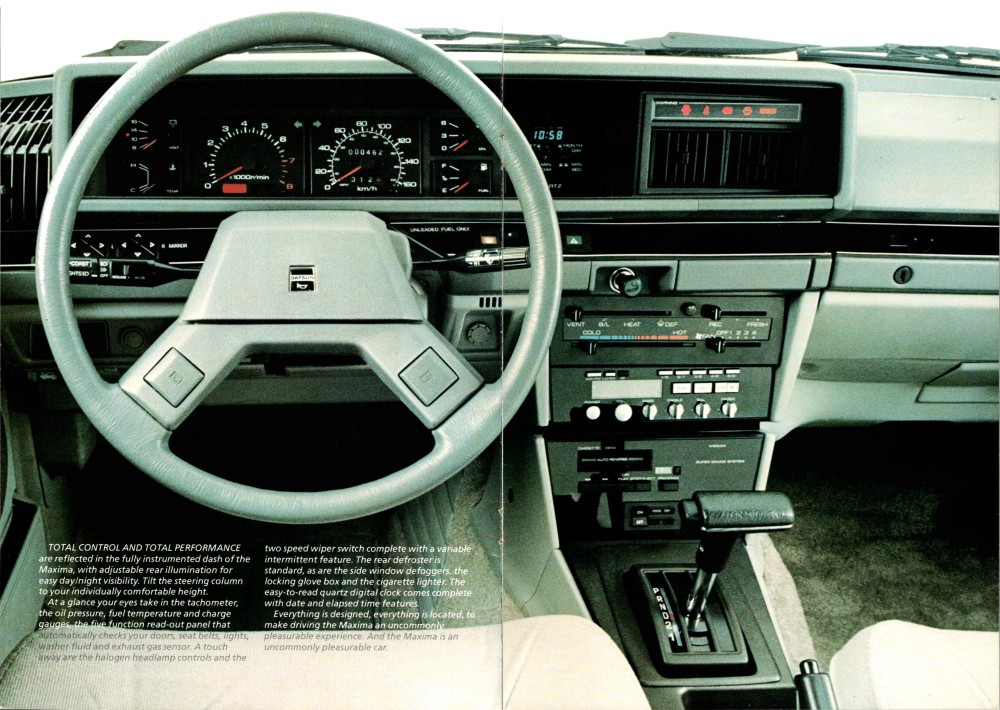
Automakers were discovering that electronics could make an ordinary model feel advanced. Digital instrument panels glowed like arcade machines. Trip computers calculated fuel consumption with great ceremony. Some cars displayed small diagrams of open doors or failed bulbs. Others fitted keyboards beside the steering wheel or placed touch-sensitive controls around green vacuum-fluorescent screens.
Not every idea aged gracefully, but subtlety was rarely the objective. A car that spoke felt as though it had arrived from the future, even when that future was being narrated by a needle dragging through a piece of plastic.
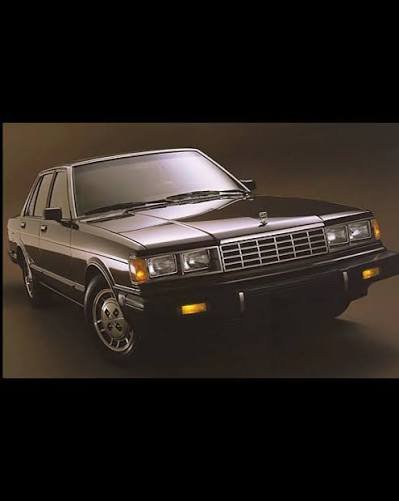
The Datsun 810 Maxima was particularly suited to the feature. It was positioned as a sophisticated, well-equipped model, and a voice-warning system gave salespeople something memorable to demonstrate. Opening a door and allowing the car to complain was more persuasive than explaining another line in the equipment brochure.
The technology also appeared while Datsun was transitioning to the Nissan name in export markets. Some cars wore both identities, which only adds to the period charm. The badge was changing, the dashboard was talking and the machinery behind that voice could have played a very small single.
By the middle of the decade, solid-state electronics had become the sensible choice. According to Autoweek, a 1985 Maxima voice-warning unit used electronic components rather than the earlier phonograph mechanism. Digital storage would continue becoming cheaper, smaller and more reliable until a moving stylus no longer had any business delivering vehicle alerts.
Modern cars can generate almost any spoken message in dozens of languages. They can adjust volume automatically, understand limited conversation and download new functions long after leaving the factory. In technical terms, there is no contest.
Yet the old Datsun possesses something much of today’s software struggles to manufacture: a genuinely good story.
A door switch did not merely activate a chime. It started a motor, spun a three-inch record, moved a tiny tonearm to one of six grooves and asked a hidden voice to tell the driver what had been forgotten.
The car sounded futuristic because it contained a machine from the past.