Your Steering Wheel Wants to Go Straight. Power Steering Is Not the Real Reason
by AutoExpert | 17 August, 2026
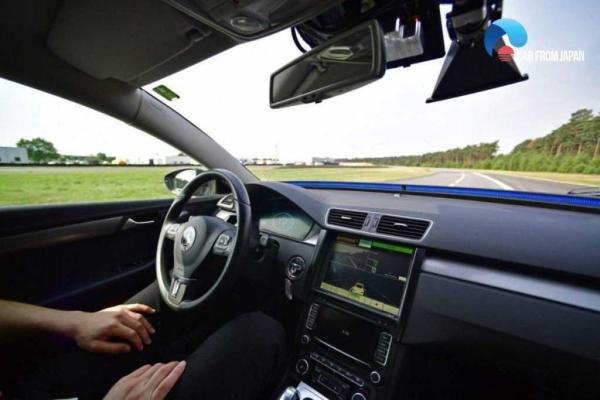
Turn into a side street, loosen the grip slightly and the steering wheel begins feeding itself back through the hands. The front wheels straighten, the car settles into its lane and the driver rarely gives the movement another thought. It feels almost as though the steering system knows where the road is going.
It does not, of course. The wheel’s return is largely created by careful suspension geometry and the forces building where the tires meet the road. Power steering makes the process easier and modern software can shape how it feels, but the desire to travel straight is designed into the front end of the car.
The answer begins with caster
Viewed from the side, the steering axis of a front wheel is usually tilted rather than perfectly vertical. The upper part commonly leans toward the rear of the vehicle. This is called positive caster.
The simplest comparison is the small wheel on a shopping cart. Its contact patch trails behind the point around which the wheel pivots, so forward movement pulls it into line. A car’s steering geometry is considerably more sophisticated, but the underlying idea is similar. The tire contact patch follows the steering axis in a way that encourages the wheel to align with the direction of travel.
Caster also changes the height and loading of the front suspension slightly as the wheels turn. Depending on the design, returning toward center allows the vehicle to settle back into a more natural position. Tire deformation adds another self-aligning force, particularly once the car is moving.
That is why the steering wheel may barely move toward center while the car is stationary but returns much more decisively on the road. The tires need to roll and generate those forces. Scrubbing a stationary tire across dry pavement mostly creates resistance and unpleasant noises from the rubber.
More self-centering is not automatically better
A generous amount of positive caster improves straight-line stability and gives the steering a stronger return. This is useful at highway speed, where a nervous car that wanders at every small input quickly becomes exhausting.
There is a tradeoff. More caster can increase steering effort and change the way the tires lean during a corner. Manufacturers choose the geometry to suit the vehicle. A relaxed city car, a sports coupe and a heavy pickup do not need to feel the same.
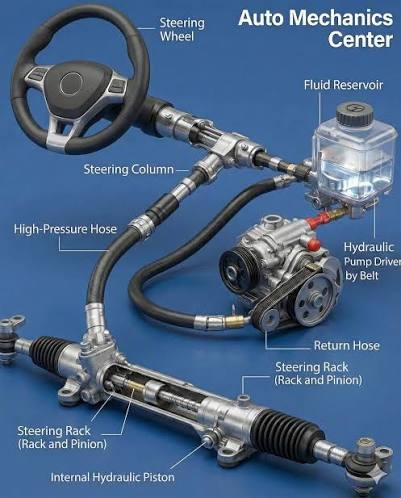
Power assistance then sits on top of that geometry. Hydraulic systems reduce the physical effort required to turn the wheel. Electric power steering can go further, adding or subtracting assistance according to speed and even helping engineers tune the return toward center.
Remove the assistance, however, and the geometry does not suddenly disappear. The wheel may become much heavier, but the basic self-centering tendency remains. This is why saying that power steering pulls the wheel straight tells only part of the story.
When the wheel stops coming back
A steering wheel does not need to snap perfectly to twelve o’clock after every gentle corner. Road camber, speed, steering angle, tire construction and the design of the car all influence how quickly and how completely it returns.
A noticeable change is more important than some imaginary universal standard.
If the wheel begins sticking after a turn, returns much better from one direction than the other, or needs to be manually unwound through an ordinary corner, something may be binding. Worn or incorrectly installed ball joints, strut mounts, tie-rod ends, steering-shaft joints and steering-gear components can all interfere with smooth movement.
Alignment matters too. Caster that has moved outside specification can weaken steering return and affect stability. This may happen after suspension work, a hard pothole impact, collision damage or the installation of parts that do not match the original geometry. Incorrect tire pressures can further muddy the symptoms.
There is no need to perform dramatic hands-off experiments on a public road. The useful observation is already available during normal driving. Does the wheel move back smoothly after an ordinary turn? Does it behave similarly in both directions? Has the steering become stiff, reluctant or inconsistent?
If the answer has changed, an alignment check should not be the only inspection. A technician should also look for components that are worn, corroded or binding. Aligning a car with a stiff joint may produce a beautiful printout without curing the actual problem.
The steering wheel’s return feels effortless because considerable engineering went into making it seem that way. Most of the time, the mechanism works so naturally that it disappears into the drive. When it stops feeling natural, that is precisely why it deserves attention.