Renault Gave Its Quiet-Looking Flagship Two Turbos and Four-Wheel Drive
by AutoExpert | 16 October, 2026
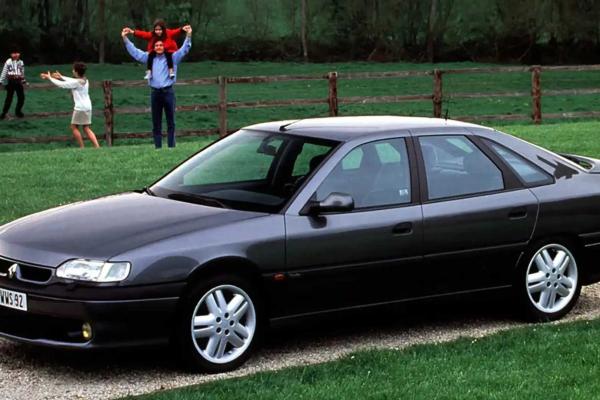
What was the Renault Safrane Biturbo? It was a high-performance version of Renault’s luxury flagship, developed with Hartge and Irmscher. A twin-turbo V6 drove all four wheels, while the body retained much of the ordinary Safrane’s restraint. Renault records production of 806 examples.
There are performance cars that explain themselves from the far end of a car park. The Safrane Biturbo would take a little more explaining, particularly to anyone who remembered the regular Safrane as a large, comfortable Renault.
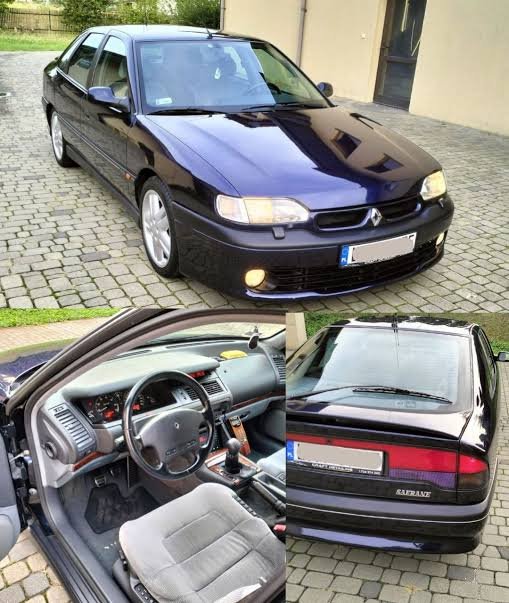
That unassuming starting point is much of the attraction. A buyer could have the space and appearance of an executive car with something considerably more interesting under the bonnet.
Renault chose the V6 Quadra, already equipped with four-wheel drive, as the foundation. It then brought in two German specialists whose involvement gives the car an unexpected twist.
Hartge worked on the engine. Irmscher dealt with the styling.
Two turbos, relatively little fuss
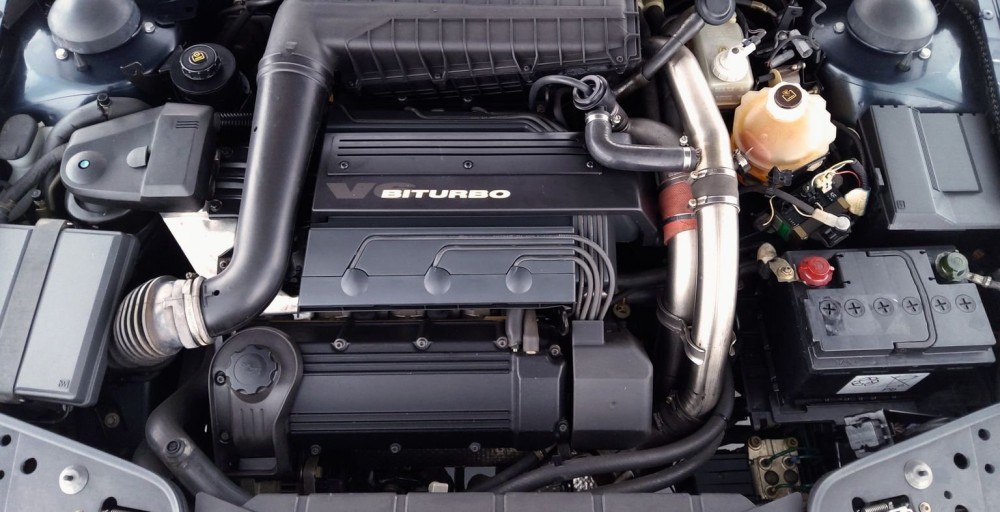
Hartge added a pair of KKK turbochargers to the 2,963cc PRV V6. Renault’s specification gives the resulting output as 268 metric horsepower and quotes a top speed of 250 km/h.
Irmscher’s changes included revised front styling with round fog lamps, a rear spoiler and a distinctive exhaust outlet. Seventeen-inch wheels and model-specific electronically controlled suspension completed a car that had received rather more attention than a badge and a louder exhaust.
The result still looked recognizably like a Safrane. You needed to know the clues to appreciate what was parked beside you.
That is a particular sort of luxury. Some owners want a fast car to make its intentions obvious. Others would rather enjoy the machinery themselves and avoid explaining it at every fuel stop.
The Biturbo offered plenty for the latter group to enjoy discussing when they chose to. Its French flagship origins, German engineering partners and complicated drivetrain give it an identity quite separate from the usual performance-car family trees.
Renault’s museum records 806 Biturbos out of roughly 310,000 Safranes. That small number helps explain why it can still feel like a discovery, even to enthusiasts familiar with the brand.
It also changes how a surviving example should be approached. An ordinary-looking body doesn’t make specialist mechanical work ordinary. A prospective owner needs to investigate maintenance history, parts availability and access to someone who understands the model, rather than assuming that a familiar Renault badge promises a simple ownership proposition.
Seen now, the pleasure is in that combination of discretion and ambition. Renault took a car that looked ready for a long, comfortable business trip and gave it a rather more entertaining answer to the question of what was under the bonnet.