Your AC Can Blow Ice-Cold Air and Still Need a Completely Different Kind of Service

by AutoExpert | 15 October, 2026
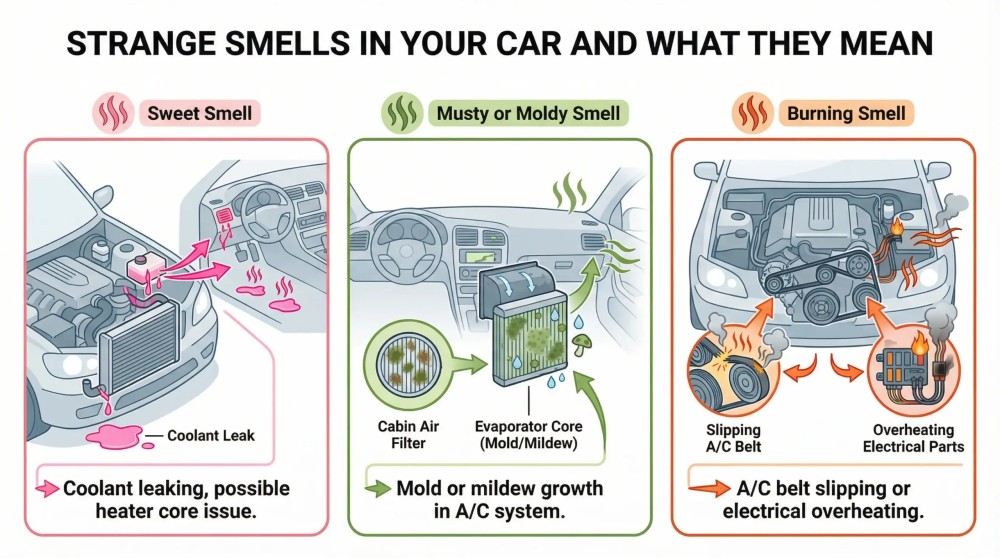
Why does car AC smell bad even when it blows cold? The smell may come from a dirty cabin filter or contamination around the evaporator, where moisture collects. A refrigerant recharge won’t clean either one. Have the source checked before paying for a service that only addresses cooling.
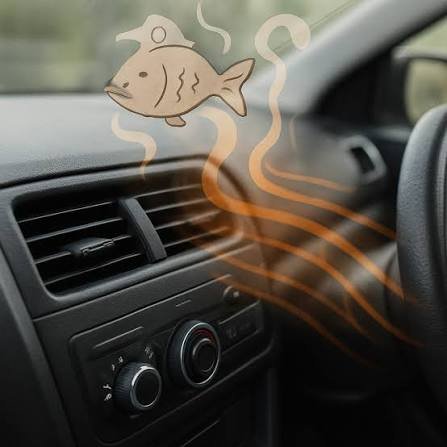
You know the smell before you have a useful name for it. Damp towel, perhaps, or something sour that makes the car feel as though it has been shut away for months. It arrives with the first air from the vents, hangs around long enough to annoy everyone, then mostly disappears.
By the time someone at the garage switches the fan on, the car may be behaving beautifully. Plenty of cold air, barely a trace of the smell. Naturally.
That disappearing act is worth mentioning when you book it in. “It smells for the first minute after being parked overnight” gives a mechanic more to work with than “the air conditioning needs doing.” It also helps avoid a conversation that goes straight to recharging a system which may already be cooling perfectly well.
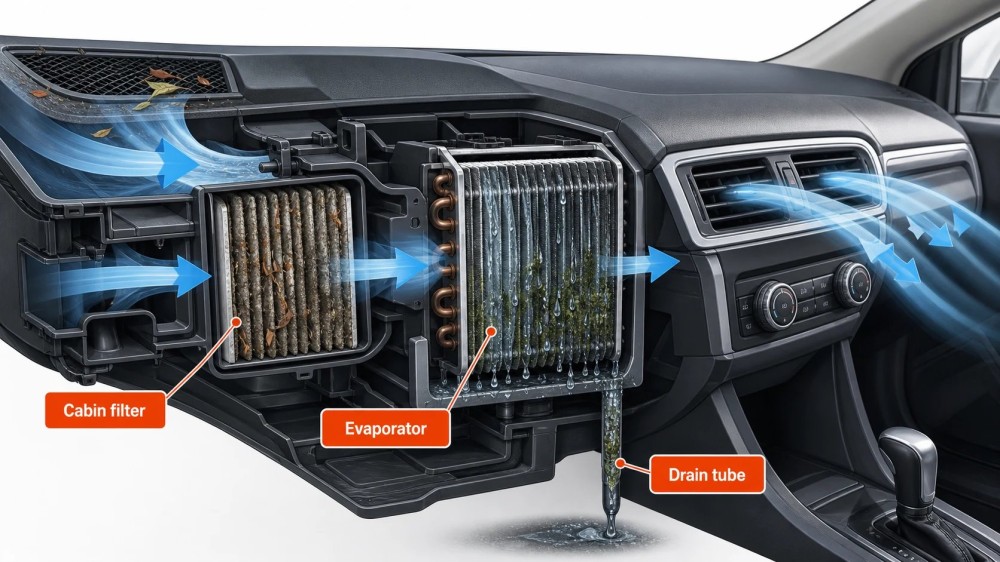
Behind the dashboard, the air passes over the evaporator, the cold part of the system that removes heat from it. Moisture collects on that surface. DENSO identifies contamination and microorganisms around the evaporator as possible sources of unpleasant smells, and recommends checking the cabin filter too.
A filter is a sensible place to start, especially if nobody remembers when it was last changed. But a fresh one won’t scrub a dirty evaporator hidden further inside. If a replacement helped briefly and the smell returned, tell the workshop that as well.
There is another slightly dispiriting possibility: some of what you smell may have come from the cabin in the first place. Toyota’s guidance describes odours from pets, dirt, rubbish and even air fresheners accumulating in the ventilation system. Hanging a stronger fragrance from the mirror can leave you with a remarkably specific combination of tropical fruit and damp towel.
Ask what the service includes
“AC service” covers a lot of ground on a garage price list. A recharge deals with refrigerant. A filter change replaces a filter. An evaporator-cleaning treatment has another job again. Before agreeing to the bill, ask which of those is being proposed and why it should help with your particular complaint.
Toyota’s 2020 odour bulletin, covering certain models, recommends filter replacement and evaporator cleaning when appropriate. It is also candid about the result: the procedure aims to reduce the intensity of the odour, rather than promise that every smell will disappear. That is useful context if a workshop offers an instant, permanent cure without first inspecting anything.
Mention any wet carpet, debris near the air intake or changes in the smell when using recirculation. These observations can help narrow the search. You don’t need to arrive with a diagnosis, and describing it as “vinegary” doesn’t identify the culprit on its own.
Resist the urge to pour or spray household cleaner into the vents. DENSO warns against unsuitable cleaning chemicals because they can damage the evaporator. A treatment needs to reach the right place using a product and method suited to the car.
If the cooling is weak as well, that deserves investigation alongside the smell. But when the air is already cold enough to make passengers reach for the temperature controls, another dose of refrigerant is a curious first answer to a dirty-air complaint.
The best thing to give the garage is an accurate account of when it happens, what has already been tried, and a request to find the source. Save the new air freshener until you can smell it on its own.