These Volkswagens Looked Repaired With Random Panels. The Factory Made Them That Way
by AutoExpert | 15 October, 2026
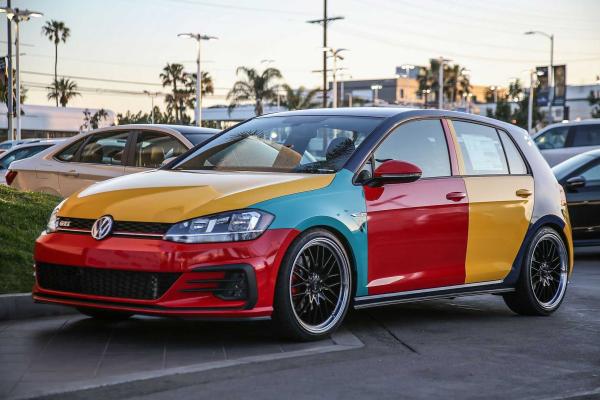
Why did Volkswagen make Harlequin cars? The multicoloured Polo began as a promotional demonstration of Volkswagen’s modular ordering system. Customers wanted the display cars, prompting the Polo Harlekin production model in 1995. A Golf Harlequin followed for the American market in 1996.
A blue bonnet, a yellow door, a green roof and red bodywork would usually invite questions about a car’s past. How bad was the accident? Was the paint shop ever booked? Does the owner intend to finish it?
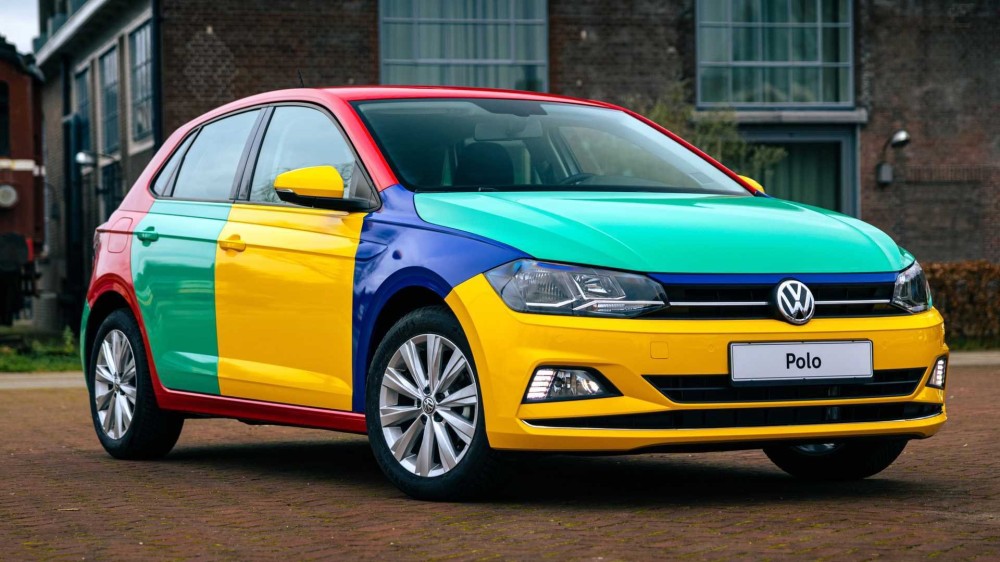
With a Volkswagen Harlequin, the awkward-looking assortment was the point. The car had been sold that way.
Its origins were surprisingly administrative. When Volkswagen introduced the third-generation Polo, it wanted buyers to understand how the available specifications could be combined. Four bright colours illustrated the different parts of the ordering system in the brochure.
Then Volkswagen put the idea onto real cars. Twenty multicoloured Polos were prepared for dealer showrooms, where they attracted rather more interest than an explanation of equipment packages normally would.
People wanted to buy them. Once those cars had gone, requests kept coming.
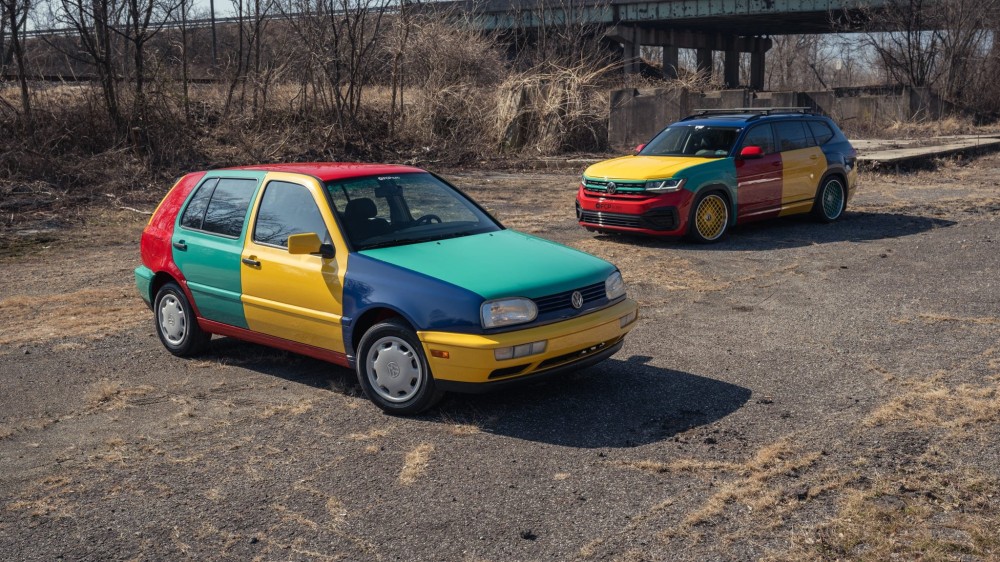
The colours followed a plan
The production Polo Harlekin used yellow, blue, green and red panels, but the arrangement wasn’t left to whoever happened to be holding a door that morning.
Volkswagen’s Dutch retrospective describes cars being taken from the line in the four base colours, then having their removable body panels exchanged by hand according to a fixed procedure. Customers couldn’t choose their preferred arrangement.
That makes the apparent randomness rather satisfying. Behind a car that looked casually assembled was a carefully organised process for making it look that way.
Volkswagen’s UK history records 3,806 Polo Harlekins. In 1996, the idea crossed to the Golf for America, although Volkswagen says demand there was limited. What stood out enthusiastically in a showroom didn’t necessarily suit everyone’s plans for a daily driver.
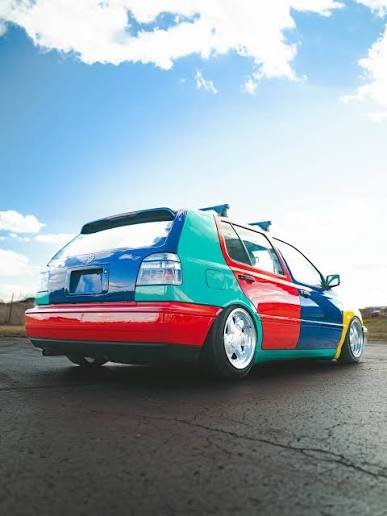
You can understand both reactions. A Harlequin is cheerful enough to make an ordinary supermarket car park more interesting. It is also a commitment to being noticed every time you go to buy milk.
For enthusiasts inspecting one today, the pattern is only the beginning. Correct colours can be copied, and an old car may have had legitimate repairs since leaving the factory. Model-specific paperwork, production details and the vehicle’s history matter alongside the panels. A colourful imitation can be enjoyable without being an original Harlequin.
Perhaps the nicest part of the story is that customers saw something in the display cars that Volkswagen hadn’t originally intended to sell. A visual aid for ordering a sensible hatchback became the reason to order an especially conspicuous one.
Somewhere in that process, explaining the options stopped being the interesting part. The car outside the showroom was having much more fun.