
The Car Was Wrecked, but the Airbags Never Opened. Does That Mean They Failed?
by AutoExpert | 13 August, 2026
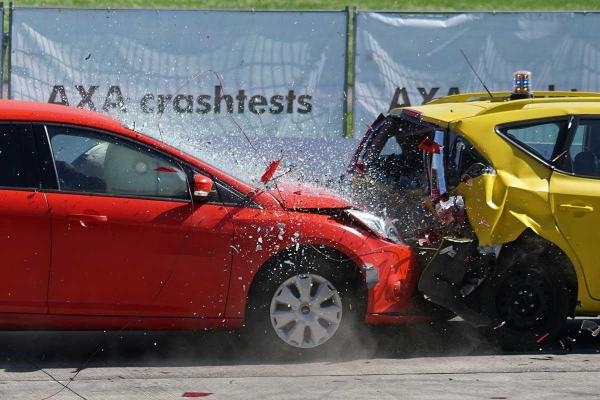
A car can leave a collision with a crushed bumper, broken lights and a hood folded into an expensive-looking shape, yet every airbag remains neatly hidden.
From outside, that makes little sense. The damage looks dramatic. Surely the airbags should have exploded from the dashboard like they do in crash-test videos.

Airbag systems do not judge a collision by the repair bill, however. They respond to forces, direction and timing, much of which cannot be understood simply by looking at bent metal after everything has stopped moving.
A bumper can suffer substantial damage in a relatively low-speed impact. Another crash may leave less obvious exterior damage while sending a much sharper force through the passenger compartment. The car is interested in the second part.
Its airbag controller is trying to answer a more important question: would deploying a particular airbag at this moment reduce the risk of injury?
Sometimes the answer is no.
Not every airbag is waiting for the same crash
Modern cars may contain airbags in the steering wheel, dashboard, seat sides, doors, roof rails and even beneath the dashboard near an occupant’s knees. They share a familiar name, but they are not one big system waiting to inflate together.
Frontal airbags are primarily designed for sufficiently severe frontal or near-frontal impacts. A light front impact may not trigger them. Neither may a side swipe, rear-end collision or certain angled crashes, even when the bodywork looks terrible.
Side airbags respond to a different set of conditions. Curtain airbags may deploy in a serious side impact and, in some vehicles, during a rollover. Knee airbags have their own purpose and deployment strategy. The exact arrangement depends on the model, year and seating position.
This is why a collision can activate one side curtain while leaving the steering-wheel airbag untouched. It is also why two apparently similar crashes can produce different results.
The sensors measure how rapidly the vehicle is slowing or changing direction. The control unit evaluates those signals within milliseconds, then decides which restraints are appropriate. There is no simple universal speed at which every airbag must deploy because hitting a rigid pole, another vehicle or a deformable barrier can produce very different forces.
A dramatic-looking crash may still be below the threshold
Cars are designed with exterior structures that bend and collapse to absorb energy. That crumpling can look alarming, but it is part of the vehicle’s attempt to keep the worst forces away from the occupants.
A bumper cover can crack. Headlights can shatter. The hood can buckle. None of those events alone tells the airbag controller that deployment is necessary.
Airbags themselves are not gentle devices. They inflate with enormous speed and are intended to supplement properly worn seat belts during particular types of serious crashes. Deploying one when it is not needed could create its own risk of injury and add considerable repair cost without improving protection.
That does not mean nondeployment should always be dismissed as normal. It means the final appearance of the car cannot settle the question.
The passenger airbag adds another layer. Many vehicles use an occupant-classification system to estimate whether the front passenger seat is empty or occupied by someone for whom deployment may be inappropriate. Depending on the vehicle and circumstances, the system may suppress the passenger airbag while allowing the driver’s airbag to operate normally.
The “Passenger Airbag Off” indicator provides a clue, but the owner’s manual explains how the specific system behaves.
When nondeployment deserves investigation
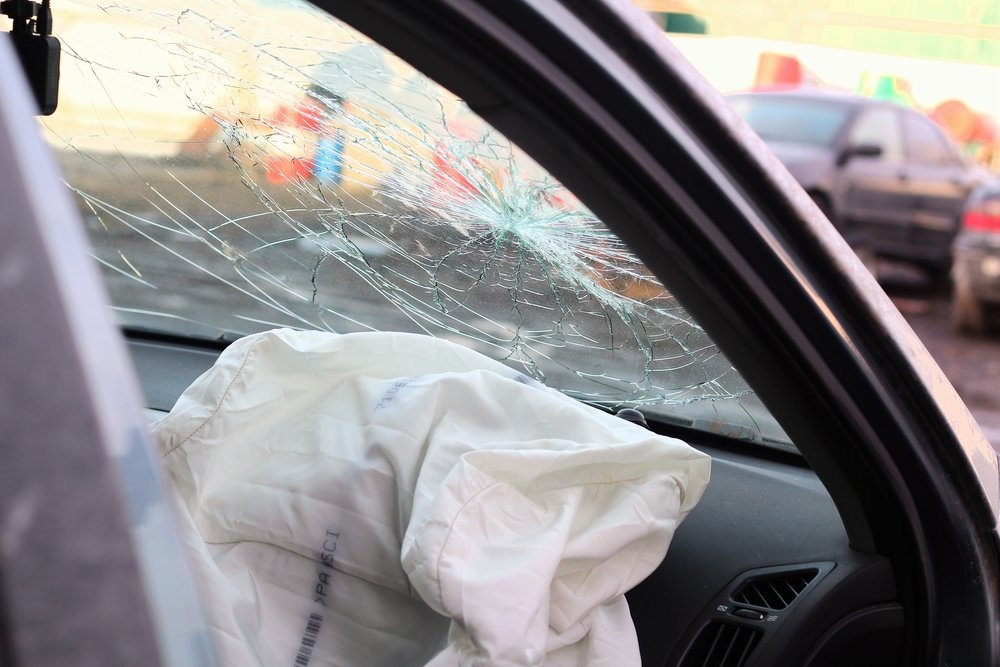
If nobody was injured and the collision involved limited forces or an impact direction the frontal airbags were not designed to address, undeployed airbags may be completely consistent with the system’s design.
A serious injury-producing crash is different. NHTSA advises reporting an airbag that failed to deploy in such circumstances so a possible defect can be investigated. The vehicle should also be examined by a qualified professional who can retrieve crash information, inspect sensors and determine whether warning codes were present.
A lit airbag warning lamp before the crash is an important detail. So is previous accident damage.
Used cars, particularly those with salvage or rebuilt histories, deserve careful inspection. A deployed airbag should be replaced using correct components and procedures. Unfortunately, a dashboard can be cosmetically repaired without restoring the complete restraint system beneath it. Warning lights can also be tampered with.
When starting a used car, the airbag warning light should generally illuminate briefly as the system performs its check, then switch off. A light that remains on, never appears at all or behaves strangely calls for investigation. The exact sequence should be confirmed in the vehicle’s manual.
Airbags staying closed after a crash do not automatically prove that something failed. They also do not prove that everything worked perfectly.
The useful question is not whether the car looks damaged enough. It is whether the collision created the direction and severity of force that a particular airbag was designed to address. Answering that may require crash data and professional inspection, not a photograph of the bumper.