
Your Front Tires Hop During a Tight Turn, but the Suspension May Be Perfectly Healthy
by AutoExpert | 13 August, 2026
A slow turn into a parking space should not feel dramatic. The car is barely moving, the steering wheel is wound around and there is little opportunity for anything exciting to happen.
Then a front tire hops.
The steering judders through the driver’s hands, the rubber scrubs loudly across the pavement and the car seems to stumble sideways by a fraction. It can feel like a worn CV joint, damaged suspension or tire about to detach itself out of protest.
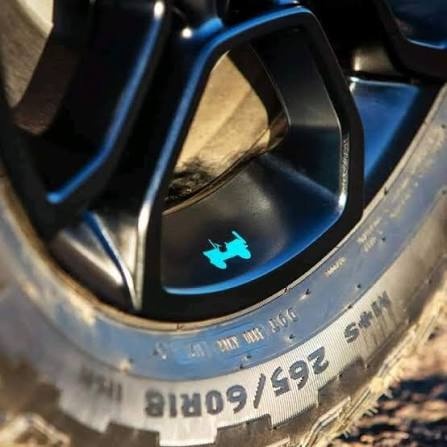
On certain performance cars and SUVs, particularly those wearing wide, low-profile tires, the sensation may be completely normal.
The reason hides in a piece of steering geometry most drivers never need to think about: Ackermann.
The front wheels cannot turn at the same angle
During a corner, the inside front wheel follows a smaller circle than the outside wheel. Since the two wheels are traveling along different paths, they should not point in exactly the same direction.
The inside wheel needs to turn more sharply. The outside wheel follows a wider arc and requires a smaller angle. Ackermann steering geometry describes the relationship between those two angles.
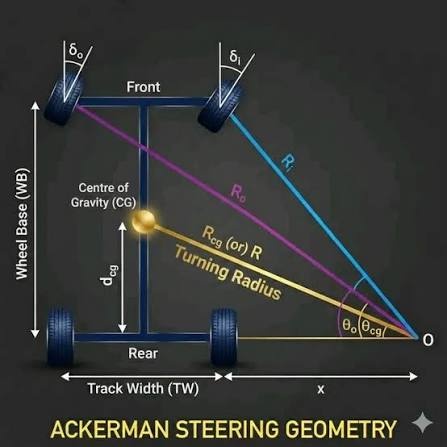
In a simple, low-speed world, the ideal arrangement would allow both tires to roll neatly around the same turning center without dragging sideways. Shopping carts would be impressed. Tires would remain quiet. Parking garages would be peaceful.
Cars have to work outside parking garages, though.
At higher speeds, tires bend, load up and develop slip angles as they generate cornering force. Suspension components move through their travel. Weight shifts across the car. Engineers may therefore choose steering geometry that improves the vehicle’s response during fast corners rather than producing perfectly clean behavior at walking speed.
The trade-off can appear when the wheel is turned close to its limit. One front tire may be asked to follow a path that does not quite match the direction it is pointing. The rubber grips, twists and eventually releases with a small hop.
It feels unpleasant because tires are not usually expected to move sideways. Mechanically, however, it may simply be the tire resolving an argument between steering angle and pavement.
Cold weather makes it much more obvious
The effect is often strongest on a cold morning. Summer performance tires become stiffer as temperatures fall, making them less willing to flex and accommodate the difference between their intended and actual paths.
Wide tread, short sidewalls and grippy pavement can add to the drama. Smooth painted concrete in a parking structure may produce a different noise from coarse asphalt. A wet surface may reduce the hopping by allowing the tire to slide more easily, although the exact behavior varies.
Some manufacturer service information describes this low-speed tire skipping as a normal characteristic rather than a fault, particularly when it occurs only near full steering lock. Performance-focused steering geometry is the usual explanation.
That qualification matters. Not every clunk during a turn can be blamed on Ackermann, and not every vehicle should hop across a parking lot.
Normal tire scrub tends to have a recognizable pattern. It appears during very slow, tight maneuvers with the steering close to full lock. It may be worse when the tires are cold and disappear when the steering is unwound slightly. The sound comes from the tire meeting the pavement rather than a sharp metallic knock inside the car.
A failing CV joint usually tells a different story. It may produce repeated clicking under power during a turn. Worn suspension parts can clunk over bumps as well as during steering. A wheel bearing may hum or growl with road speed. Misalignment can cause pulling and uneven tire wear rather than a brief hop only at maximum steering angle.
Four-wheel-drive systems and differentials can also produce shuddering during tight turns, so a new or worsening symptom should not be diagnosed from geometry alone.
Small changes can make a difference
If the behavior is a known characteristic of the vehicle, avoiding the last fraction of steering lock may reduce it considerably. The turning circle becomes slightly larger, but the front tires are no longer being forced into their most awkward angles.
Using the correct tire size, type and pressure also matters. A switch from the manufacturer-approved tire to a very different construction can change how strongly the effect is felt. Mixing tires across the same axle is particularly unhelpful because each side may flex and grip differently.
Drivers with summer tires should pay attention to the manufacturer’s temperature guidance. A tire designed for warm-weather grip may become unpleasant or unsuitable in cold conditions long before snow arrives.
An inspection is sensible if the hopping appears suddenly, continues with the steering well away from full lock or comes with grinding, repeated clicking, looseness, warning lights, uneven wear or changes in handling. Steering and suspension faults deserve more than a theory borrowed from a performance-car forum.
Still, a front tire juddering during a tight parking maneuver does not always mean the chassis is falling apart. Sometimes it reveals the opposite.
The car may simply be showing, rather inelegantly, that its steering was designed with faster corners in mind.