
The Check-Engine Light Is Off, but the Car May Be Hiding an Unfinished Story
by AutoExpert | 3 August, 2026
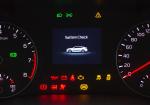
The seller has polished the paint, vacuumed the carpets and arranged the service receipts in a folder that looks reassuringly thick. The engine starts without complaint. No warning lights remain on after the usual dashboard check.
So far, so promising.
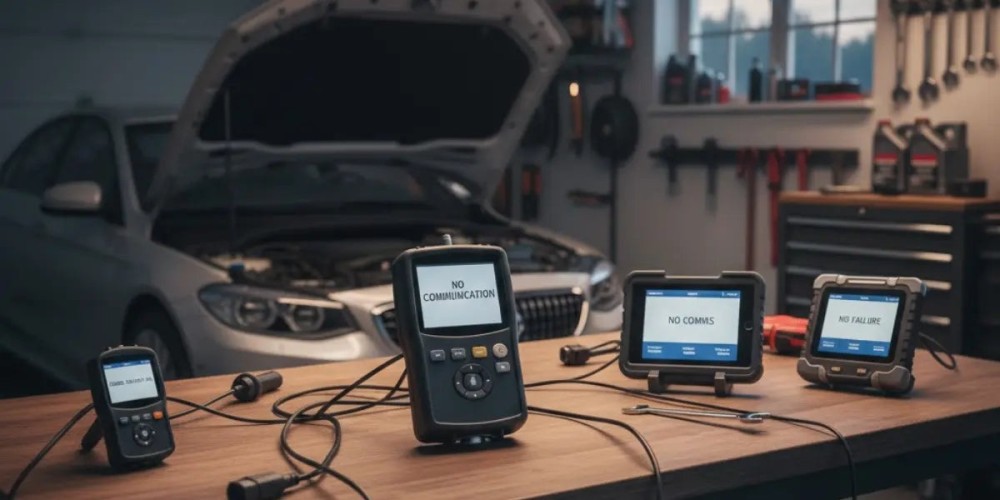
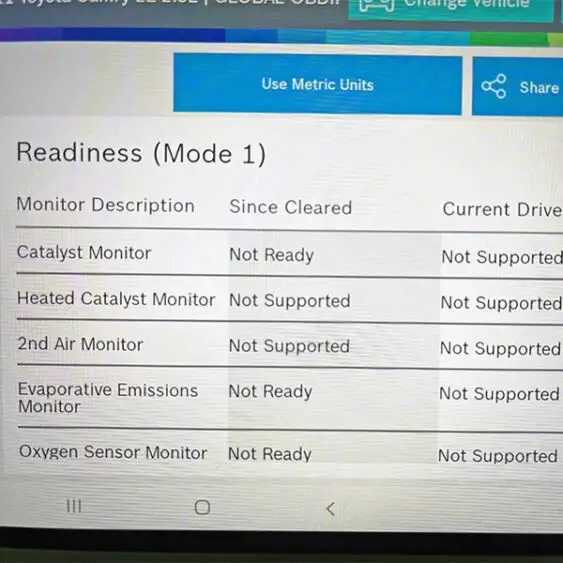
Then an inexpensive diagnostic scanner is plugged into the port beneath the dashboard. There are no fault codes, but several emissions monitors show the same irritating message: “Not ready.”
That phrase deserves attention.
It does not prove the seller has cleared a check-engine light five minutes before the viewing. It does not prove that the catalytic converter is failing or that an oxygen sensor is about to submit its resignation. What it does reveal is that the car’s computer has not completed some of its internal checks.
Until those checks are finished, the apparently clean dashboard may not be telling the whole story.
What readiness monitors actually do
A modern car does not wait for something to break completely before paying attention. Its onboard diagnostic system regularly tests parts of the engine and emissions equipment while the car is being driven.
These tests are known as readiness monitors. Depending on the vehicle, they may watch the catalytic converter, oxygen sensors, evaporative-emissions system, exhaust-gas recirculation system and other components.
They do not all run the moment the engine starts. Each one waits for a particular set of conditions. The engine may need to be cold. The fuel tank may need to be within a certain range. The car might have to accelerate, cruise and decelerate in a specific pattern.
Once a test has run successfully, its monitor changes to “ready.” That does not mean the component will remain healthy forever. It simply means the computer has had an opportunity to test it.
A “not ready” result means that opportunity has not arrived yet.
That matters because erasing diagnostic trouble codes also resets the readiness monitors. Disconnecting or replacing the battery can do the same thing. The warning light disappears, but so does the evidence that the car has completed its self-checks.
A seller who clears an emissions fault before a viewing may therefore present a car with no light, no stored code and several monitors that have mysteriously forgotten everything they knew.
A clue, not a conviction
There are perfectly innocent reasons for finding OBD readiness monitors not ready.
Perhaps the battery was replaced that morning. Maybe the car received a legitimate repair and the technician cleared the codes afterward. Its software may have been updated, or the owner may simply have driven too little since the battery was disconnected.
Even an honest seller may have no idea that any of this happened.
The number and type of incomplete monitors provide useful context. Finding one monitor incomplete is less suspicious than finding most of the emissions system waiting to run, particularly if the seller claims the car has been driven normally for weeks.
The scanner should also be checked for pending and permanent codes, not merely confirmed ones. A pending code can appear when the computer has noticed a problem but has not seen it often enough to illuminate the check-engine light. Permanent codes, where supported, are intentionally more difficult to erase and may remain until the vehicle confirms that a repair has worked.
This is why the cheerful phrase “No codes!” should not end a used-car inspection. It should begin a slightly better conversation.
Ask whether the battery has been changed or disconnected. Ask whether repairs were recently completed. Look at the service paperwork and see whether the explanation fits the dates.
If the answer is vague, rushed or accompanied by a sudden desire to discuss the stereo, caution is justified.
Why a quick drive around the block proves very little
Readiness monitors do not necessarily complete during a ten-minute test drive. Some require a cold start followed by a mixture of urban and highway driving. Others need the car to sit for several hours before they will run. The evaporative-emissions monitor can be particularly selective about temperature and fuel level.
There is no universal drive cycle that works for every vehicle. Instructions found online may apply to one engine, model year or market and do nothing useful on another.
That leaves a used-car buyer with a few sensible options. An independent mechanic can examine the scan results alongside the car’s condition and history. The seller can drive the vehicle until the relevant monitors complete, after which it can be scanned again. In places with emissions testing, a current inspection record may provide additional reassurance, though it should never replace a proper mechanical inspection.
If the seller refuses every reasonable opportunity to let the monitors run, the decision becomes rather easier.
The dashboard is only the front page
A dark check-engine light feels reassuring because warning lights are designed to demand attention. When one is absent, the natural assumption is that nothing is wrong.
Cars are not quite that simple.
The computer may have completed its checks and found everything healthy. It may also be standing at the beginning of the process, with no results available yet. Both situations can produce the same quiet dashboard.
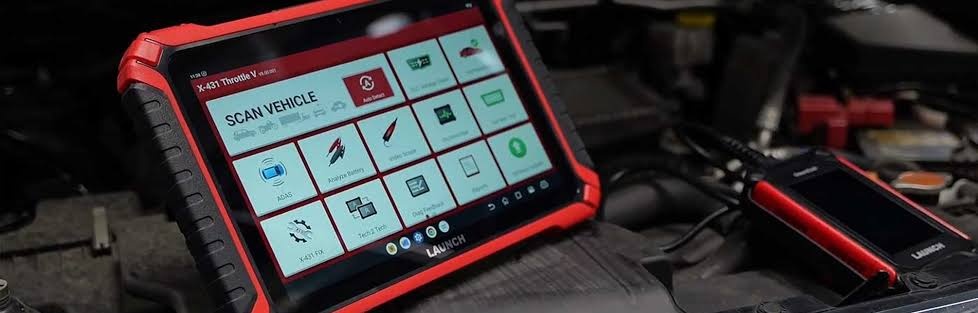
A basic scanner capable of displaying readiness status adds only a few minutes to a used-car viewing. Those minutes may reveal an innocent battery replacement, a recently completed repair or a car that needs more investigation before any money changes hands.
“Not ready” is not a verdict. It is the car politely asking for more time before anyone believes its alibi.