
“Sealed for Life” Does Not Mean Your Transmission Fluid Is Immortal
by AutoExpert | 20 July, 2026
There was a time when checking automatic transmission fluid involved a dipstick, a rag, and five minutes under the hood. Now the dipstick has vanished. The filler may be buried beneath the car, the fluid level must be checked at a specific temperature, and the maintenance schedule may not mention transmission service at all.
The transmission is “sealed for life.” It is a wonderfully confident phrase. It also leaves one fairly important question unanswered. Whose life? The fluid’s life? The transmission’s life? The warranty period? The amount of time the first owner is expected to keep the car?
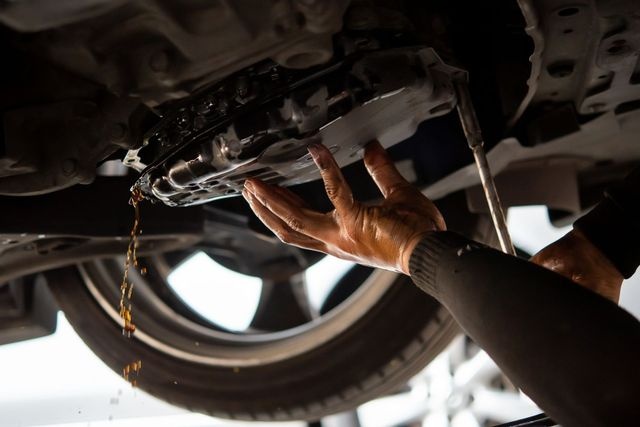
“Sealed” does not mean there is no fluid inside. It usually means the transmission was not designed for casual checking or topping up by the owner. There may be no dipstick, but there will still be a way for a trained technician to drain, fill, and measure the fluid.
In many modern automatics, getting the level right is a procedure rather than a glance.
The car may need to be perfectly level. The engine must be running. The transmission has to move through a particular sequence of gears. Fluid temperature must sit inside a narrow range before the fill plug is opened. Too little fluid can cause pressure loss and poor lubrication. Too much can foam, overheat, and interfere with operation.
This is one maintenance job where enthusiasm and a socket set are not necessarily enough.
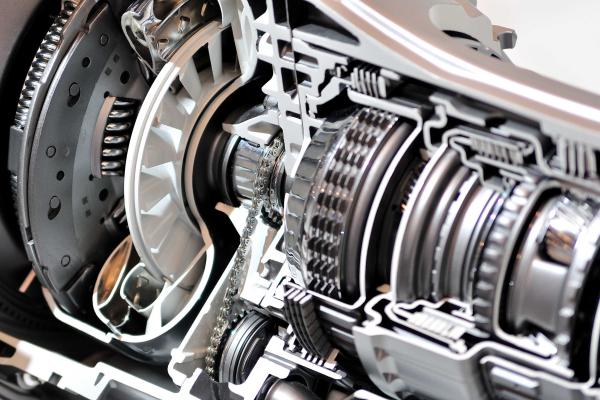
Automatic transmission fluid has several jobs. It lubricates gears and bearings, carries hydraulic pressure, removes heat, and provides the carefully controlled friction needed for clutches to engage smoothly.
Those jobs are not gentle.
The fluid is heated, cooled, compressed, pumped through tiny passages, and worked between clutch surfaces for thousands of miles. Its additives do not remain untouched forever. Contamination builds. Heat takes its toll.
Towing, steep roads, heavy loads, high temperatures, and endless stop-and-go traffic can make that life harder. So can aggressive driving, although a vehicle need not spend weekends at a racetrack to stress its transmission. Pulling a trailer through summer traffic will do perfectly well.
This is where “lifetime” becomes more complicated.
ZF supplies automatic transmissions to numerous automakers. Its July 2026 lubricant guide describes several five-, six-, eight-, and nine-speed transmissions as maintenance-free, yet it also recommends changing their oil after 150,000 kilometers, or roughly 93,000 miles. ZF says shorter intervals may make sense when the transmission has faced high temperatures, heavy loads, or an uncertain history.
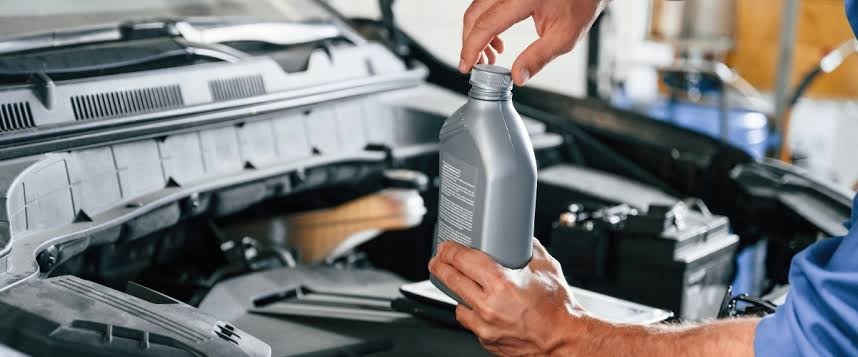
That does not automatically mean every car with a ZF transmission should be booked for service at precisely 93,000 miles. The vehicle manufacturer’s instructions still matter, as do the exact transmission model and how the car has been used.
It does show why the words “filled for life” should not end the conversation.
Some automakers publish clear transmission-fluid intervals. Others list a change only under severe-use conditions. Some recommend inspection rather than replacement. A few make no routine provision at all.
Start with the owner’s manual, then identify the actual transmission fitted to the car. Two vehicles wearing different badges may use the same gearbox, while two versions of the same model may use completely different transmissions.
The fluid specification matters just as much as the interval.
Modern automatic transmission fluids are not interchangeable red liquids that differ only by label. Their viscosity and friction characteristics are matched to specific transmission designs. Using the wrong fluid can produce rough shifts, slipping, shuddering, or expensive internal damage.
Universal additives deserve the same caution. If the transmission manufacturer does not approve an additive, pouring it into a healthy gearbox introduces an unknown chemical mixture into a system that depends on tightly controlled friction.
Then there is the eternal workshop debate: drain and fill, fluid exchange, or flush?
A conventional drain-and-fill removes the fluid that leaves through the drain opening. Some old fluid may remain in the torque converter, cooler, and internal passages. A properly performed exchange can replace a larger percentage, but the correct method depends on the transmission and manufacturer instructions.
The word “flush” is used rather loosely. It can describe anything from a controlled fluid exchange to pumping chemicals through a transmission with a machine. Before agreeing, ask exactly what will be done, which fluid will be used, whether the filter or pan is replaced, and whether the procedure is approved for that gearbox.
A neglected transmission with high mileage needs an honest assessment before anybody promises that fresh fluid will transform it.
New fluid does not destroy a healthy transmission. It also cannot rebuild worn clutch packs, repair damaged bearings, or remove metal from a failing gearbox. If a transmission begins slipping or shuddering shortly after overdue service, the underlying wear may already have been there.
That is why maintenance is better than rescue.
On a used car with no transmission-service records, an experienced specialist can inspect for leaks, scan for fault codes, evaluate shift quality, and sometimes examine the condition of the fluid before recommending the safest approach.
Pay attention to the car as well. Delayed engagement after selecting Drive or Reverse, harsh shifting, slipping, shuddering, fluid leaks, or a burning smell deserve diagnosis. Waiting for the transmission to produce a warning light can be an expensive form of patience.
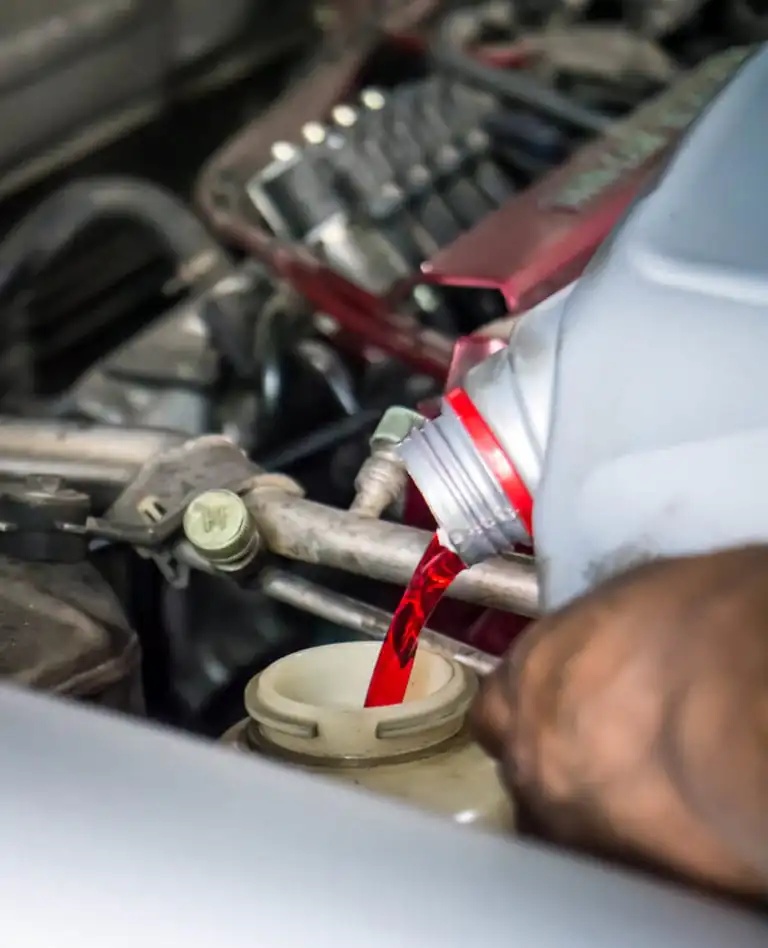
A sealed transmission is not a jar that left the factory permanently closed. It is simply a component that expects maintenance to be done with the correct fluid, tools, temperature, and procedure.
As for “lifetime fluid,” the fluid may indeed last until the transmission stops working.
Most owners would prefer a slightly longer definition of lifetime.