Tire Wear Patterns: What Your Rubber is Trying to Tell You (2026 Guide)
by AutoExpert | 19 January, 2026
Weird wear patterns aren't just annoying—they're basically your car screaming for help.
Tires don't just randomly wear out in strange ways. That weird bald spot or uneven tread you're seeing? It's actually telling you exactly what's broken. And ignoring it doesn't just kill your tires faster—it can mess with your safety too.
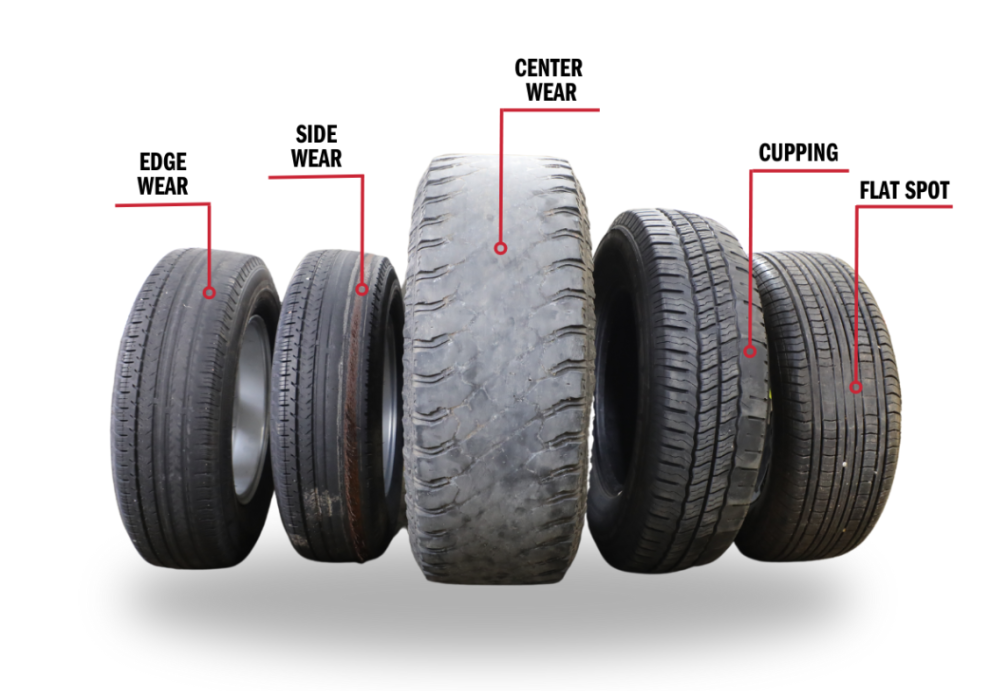
Center Wear Means You're Overinflating
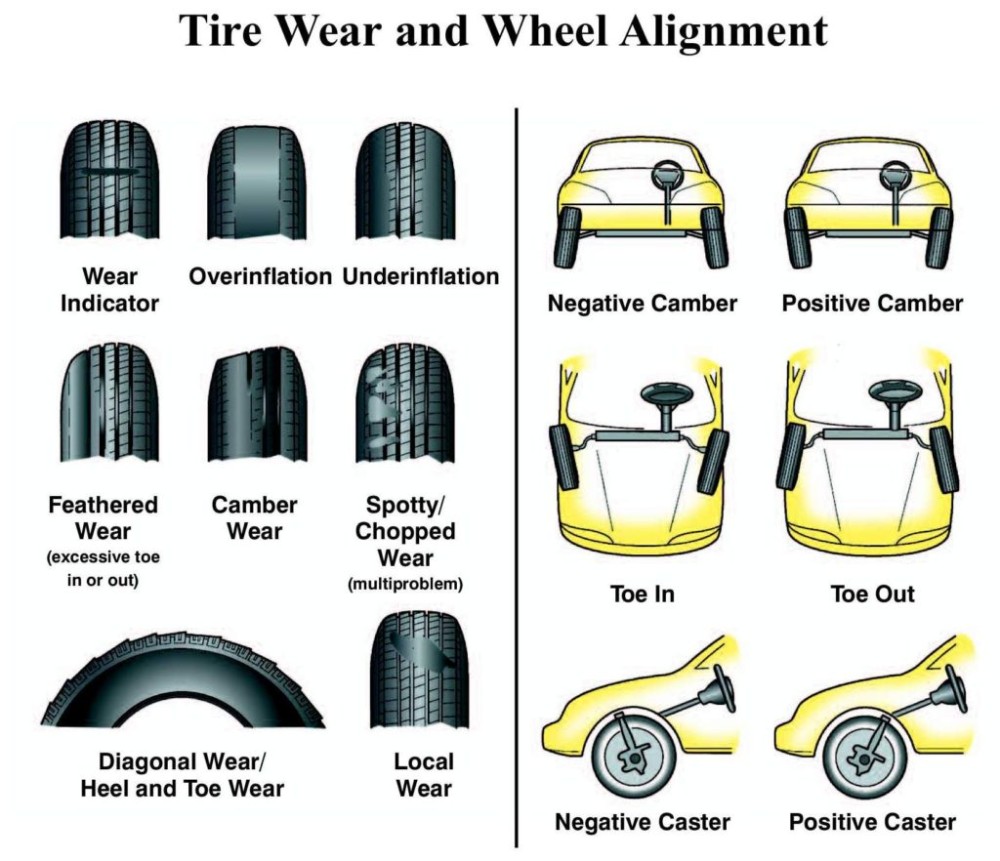
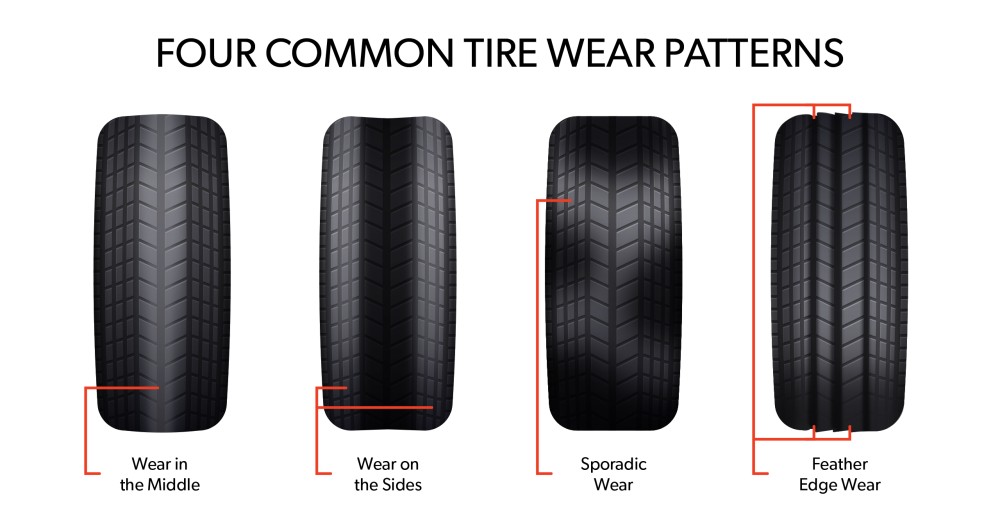
If the middle of your tire is bald but the edges look fine, you've got too much air in there. Overinflated tires bulge out in the center, so that's the only part touching the road. A 2025 study confirmed what mechanics have known forever—more air pressure means less contact with the pavement.
And here's the thing: inflating to whatever PSI number is stamped on the tire itself? That's wrong. Check your door jamb, owner's manual, or fuel door for the actual number your car needs. Your tires will last longer and the ride won't feel like you're bouncing on basketballs.
Edge Wear Means Not Enough Air
The opposite problem—tires wearing on both outer edges—usually means they're underinflated. More tire hits the road, which sounds good until you realize it's killing your fuel economy and making those tires work way harder than they should.
According to NHTSA, tires that are 25% underinflated are three times more likely to cause a crash. Not great odds.
But low pressure isn't the only culprit. Aggressive cornering, bad alignment, or worn suspension parts like sway bar links can do the same thing.
Cupping Means Your Suspension's Toast
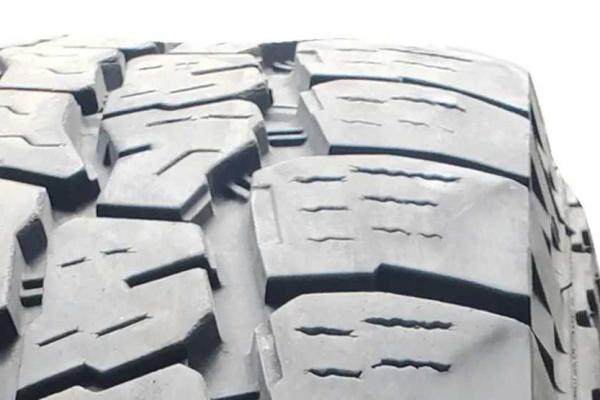
Ever see tires that look like someone took an ice cream scoop to them every few inches? That's cupping, and it usually means your shocks or struts are dead. When they can't absorb bumps anymore, your tires start bouncing and wearing unevenly.
Bad alignment, cheap tires, or wheels that aren't balanced right can also cause it. Either way, you need new tires and probably new suspension parts too.
Feathering Means Your Alignment's Off
Run your hand across the tread blocks. If one edge feels smooth and the other feels sharp—like a sawtooth—that's feathering. It happens when your wheels aren't pointed straight, so the tires scrub sideways while you drive.
Catch it early and an alignment might save the tires. Wait too long and you're buying new ones plus fixing whatever else is bent or broken underneath.
You can try aligning your car yourself with jack stands and string, but honestly? Just pay someone. It's finicky work and getting it wrong just means you're back where you started.
One-Sided Wear Means Camber's Screwed Up
If just one shoulder of the tire is toast, that's camber wear. Your wheel's tilted at a weird angle, so only one edge is doing all the work.
It looks similar to toe wear, but the pattern's different—camber hits one side hard while toe wear creates that feathered look. Either way, you need an alignment yesterday. Cars with independent rear suspension love developing this on the inside edge.
Bottom line? Your tires are basically a diagnostic tool. Pay attention to how they're wearing and you'll catch problems before they get expensive—or dangerous.