
Watch an Old Mercedes Wiper Closely. It Does More Than Swing Across the Glass
by AutoExpert | 4 November, 2026
The Mercedes monowiper used a mechanism that changed the blade’s reach as it crossed the windscreen. This extending and retracting movement helped it clean beyond a simple circular arc. Mercedes recorded an 86% swept area for the W124 when it was introduced.
Most windscreen wipers attract attention only when they squeak. The single blade on a W124 Mercedes is worth watching even when everything is working perfectly.
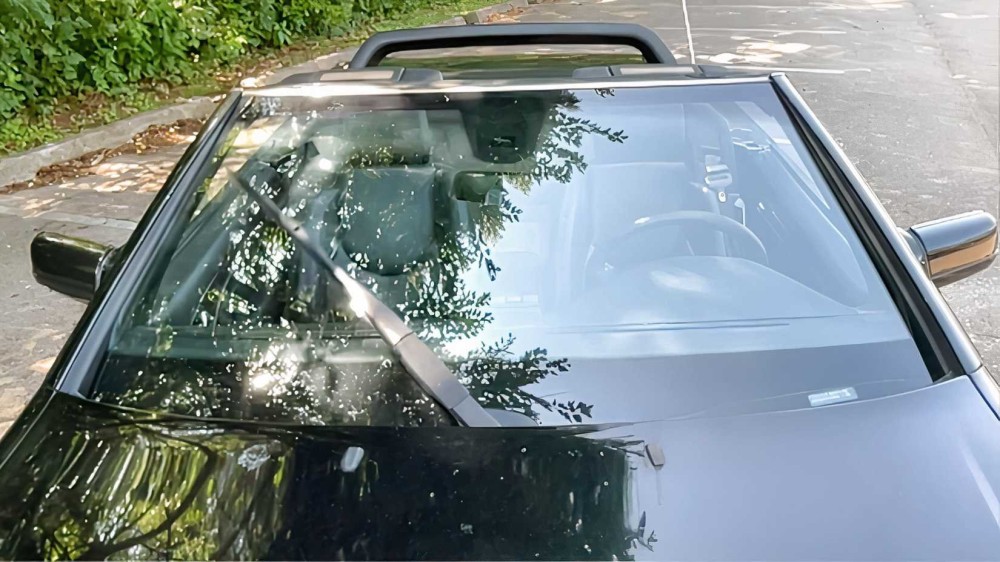
At first, it seems to be making an ordinary sweep. Then the arm reaches outward, draws back and reaches again as it crosses the glass. There is a slightly restless quality to the movement, as though the wiper is stretching for the corners.
That is more or less what it is doing.
A conventional arm turning around a fixed pivot traces an arc. The windscreen, inconveniently, has corners. Making the blade longer helps only until it starts running out of glass elsewhere in its travel. Mercedes tackled the mismatch by changing the blade’s distance from the pivot during the sweep.
The resulting eccentric movement gave one blade a broader working area than a straightforward swing would provide. Mercedes’ historical account identifies the W124’s single-arm system as a notable innovation and records how much of the screen it cleared.
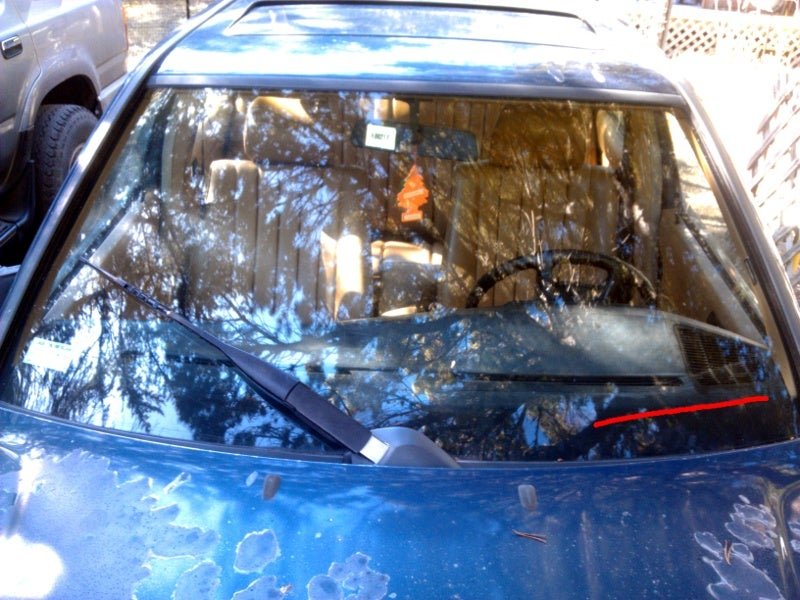
The effect is easiest to appreciate from outside the car. On wet glass, the outline of the cleaned area shows what the mechanism achieves. The blade does not simply draw half a circle and return. Its path has been shaped around the job.
There is also something wonderfully characteristic about the amount of thought involved. A windscreen wiper is an ordinary piece of equipment, used without much consideration on thousands of rainy journeys. Here, someone took the geometry seriously enough to give it an unusually elaborate answer.
Mercedes-Benz Classic still singles out the lift-controlled panoramic wiper in its description of the 124 series, alongside details such as electrically heated washer nozzles. Visibility was clearly part of the car’s engineering brief.
For someone looking at an old example today, the movement is worth checking as well as admiring. Ask to see it operate on wet glass. A hesitant or interrupted sweep deserves attention, rather than being accepted as part of the car’s personality.
The monowiper’s appeal is easy to miss in a photograph. Parked at the bottom of the windscreen, it looks like one less blade. Turn it on in the rain and the interesting part finally reveals itself.