This Mercedes Taxi Covered 4.6 Million Kilometres. One Engine Didn’t Do It All

by AutoExpert | 12 October, 2026
How did a Mercedes taxi reach 4.6 million kilometres? Gregorios Sachinidis kept his 1976 Mercedes-Benz 240 D working in Thessaloniki for decades. Its recorded distance came with substantial mechanical work: a contemporary account describes the original engine and two replacements being rotated through the car.
A used car with more than 200,000 kilometres behind it rarely inspires thoughts of a museum. Usually, the questions are more immediate. What needs replacing? What will the next inspection find? Has the previous owner kept the receipts?
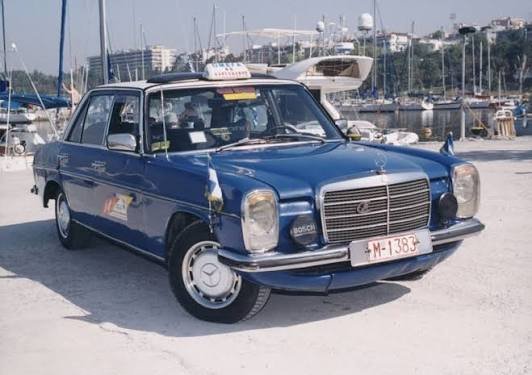
When Sachinidis bought his Mercedes in Germany in 1981, it was already well travelled. According to the Mercedes-Benz club’s account, it had roughly 220,000 kilometres on it before he took it to Greece. He then used it as a taxi until July 2004, eventually handing it over to the Mercedes-Benz Museum that September. By then, its total had reached around 4.6 million kilometres. The contemporary account also records Mercedes presenting him with a new C 200 CDI.
That distance is difficult to picture because it has so little in common with ordinary ownership. A family car spends much of its life parked while its owner works, sleeps or takes the train. A taxi earns its living by moving. Even so, this was an extraordinary amount of work for one vehicle.
The detail that gets lost in the retelling
The same 2004 account describes three engines, including the original, swapped through the car eleven times. That means eleven changes using those units, rather than eleven different replacement engines. It certainly doesn’t mean one engine covered the whole distance untouched.
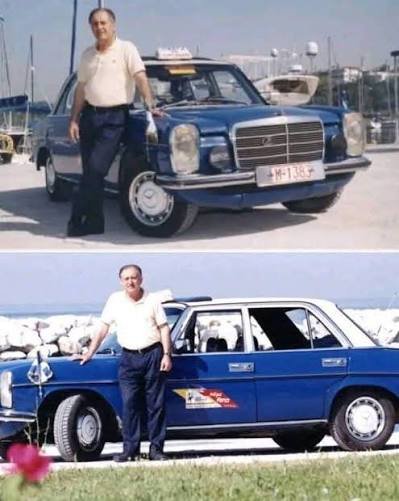
The distinction makes the story more interesting. Someone had to keep the car available for work, deal with mechanical wear and decide, repeatedly, that repairing it still made sense.
High-mileage cars are often discussed as though their owners have won a contest against maintenance. The parts that were replaced get left out because “nothing ever went wrong” makes a tidier headline. It also gives anyone shopping for an old car a rather unhelpful idea of what durability means.
A car can remain useful through repairs. Indeed, being worth repairing is part of its appeal. An engine change is a major job, but it needn’t erase everything the rest of the vehicle has done.
For a buyer, the useful question is how the car has been kept going. A large number on the odometer accompanied by a coherent repair history tells a different story from an unusually small number with years of missing paperwork. Neither number answers all the questions on its own.
Sachinidis’s taxi eventually became a museum piece because of the working life it had accumulated. The replacement engines belong in that history just as much as the impressive mileage. They are evidence of the effort behind it.