The Hidden Signs a Used Car Was Underwater — and Dealers Hope You Never Find Them
by AutoExpert | 16 June, 2026
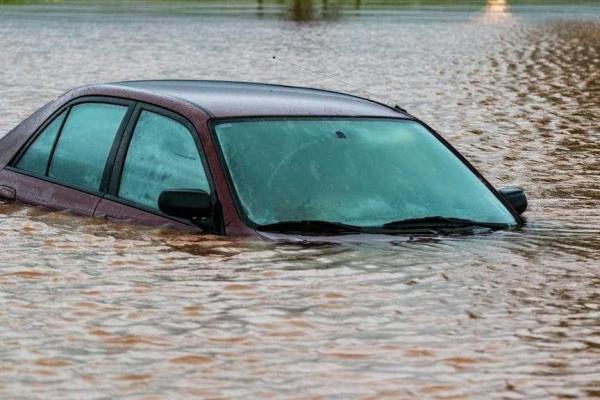
Every hurricane season, every major flood event, something predictable happens in the used car market. Thousands of damaged vehicles get cleaned up, retitled in different states, and quietly put back on dealer lots. The practice even has a name: title washing. And the only person who ends up holding the problem is the buyer who didn't know what to look for.
Flood-damaged cars can look immaculate on the outside. A good detail, a carpeted trunk, a new set of floor mats, and some air freshener can hide a lot. What they can't hide, if you know where to look, is everything else.
How to Tell If a Car Was in a Flood: Start With Your Nose
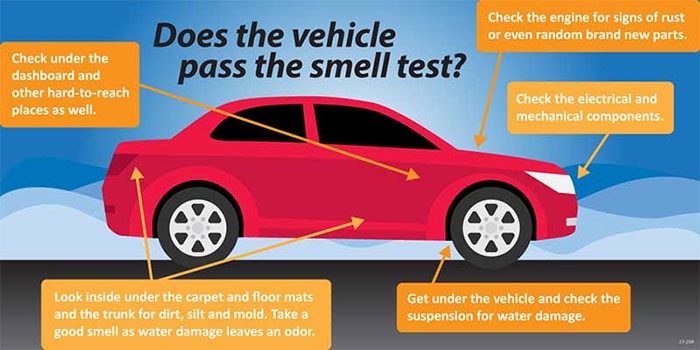
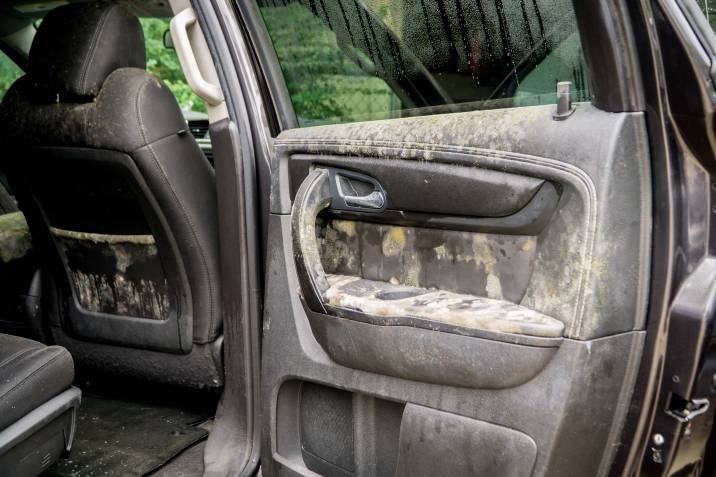
Seriously, your nose is one of your best tools here. Sit inside the car and breathe. If you smell mildew, mold, or an unusually strong cleaning product, something is being masked. Fresh pine scent or heavy air freshener in a used car is a yellow flag — sellers who have nothing to hide don't usually prep cars like hotel rooms.
Run the air conditioning for a few minutes before you buy. The AC pulls air through the evaporator, which sits low in the dashboard. If there's mold in the HVAC system, the AC will smell like a wet basement.
Check the Floor and Trunk
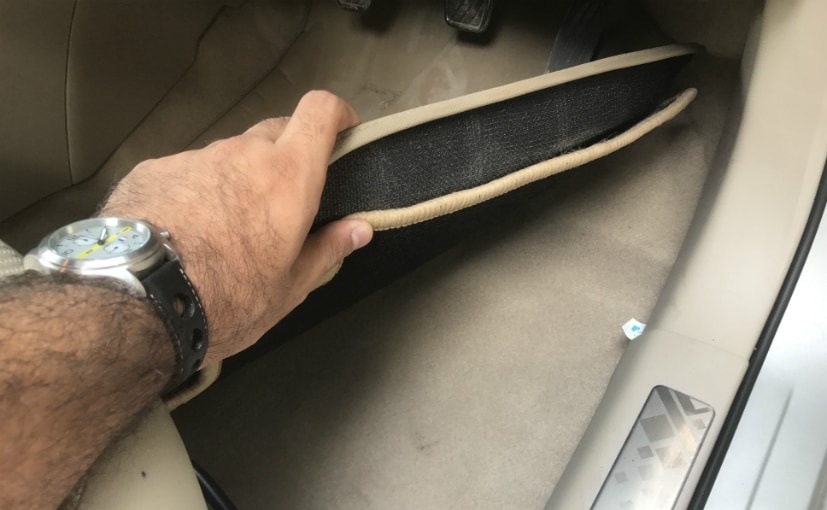
Pull up the floor mats completely. Flood water soaks into carpets and doesn't come back out — it just sits there and grows things. Look for staining, discoloration, or a slightly darker color at the edges where the carpet meets the door sills. If the carpet feels stiffer or crunchier than it should, that's water damage that dried in place.
Open the trunk and press the carpet against the spare tire well. Water pools there. If that carpet is even slightly damp, or if there's any rust in the wheel well area, pay close attention.
Look for recently replaced carpet that doesn't quite match the rest of the interior — wrong shade, slightly loose fit, or different texture. Dealers replacing flooded carpet often don't match it perfectly.
Look Under the Dashboard and in the Engine Bay
Bend down and look up under the dashboard. This area is hard to clean thoroughly. You're looking for mud lines — a faint sediment mark that shows where the water level sat. On a severely flooded car, you can sometimes see a distinct waterline on the firewall or inside the door jambs.
Gently flex the wiring harness under the dash. Flood damage dries out wire insulation and makes it brittle. If the plastic coating cracks or crumbles under light pressure, water was in there.
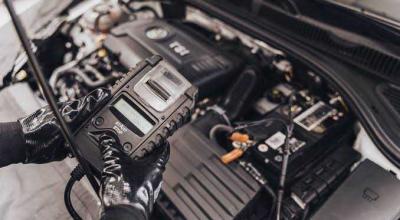
In the engine bay, look for rust in places that shouldn't rust on a relatively recent car: the underside of the hood, bolt heads, the firewall. Check behind the alternator and around the fuse box. Mud and sediment love to hide in the gaps between components.
The Seat Track Trick
Slide the driver's seat all the way back and look at the rails. Seat tracks sit low in the car and they're rarely cleaned well. Rust on seat tracks in a car that's supposedly only three years old is a significant flag.
Run the Carfax, but Don't Stop There
A CARFAX or AutoCheck report will show if a car has a salvage or flood title — but only if the damage was reported to an insurer. Title washing means moving the car through a state with looser title laws, which can wipe the branded title from the history. The National Insurance Crime Bureau (NICB) offers a free VinCheck at nicb.org that pulls from a different database and sometimes catches cars that slip past the commercial reports.
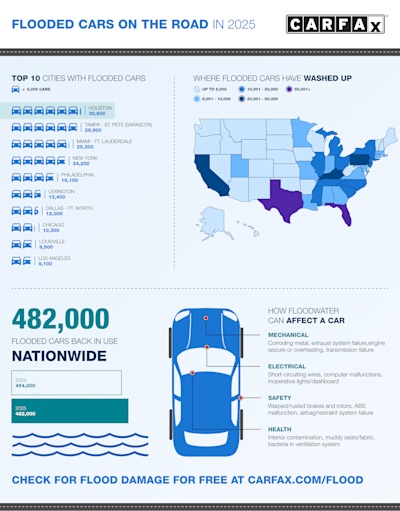
Your best tool is an independent mechanic. Pay $100 to $150 for a pre-purchase inspection, and ask them specifically to check for flood damage. A mechanic who inspects the car on a lift can see the undercarriage — the most revealing part of any flood history.
Buying a used car is already complicated enough. A flooded car that runs fine today can take two or three years to fully reveal itself through failing electronics, corrosion, and electrical gremlins that no one can quite diagnose. The 30 minutes you spend checking these things is worth every minute.