That Cushion Behind Your Head Is a Safety Device, and It Is Probably Set Too Low

by AutoExpert | 28 July, 2026
Most people call it a headrest, which makes it sound like somewhere to relax during a long traffic jam. Its proper name is head restraint, and that description is much closer to its real purpose.
The padded section behind the head is designed to limit movement during a collision, particularly when another vehicle strikes from behind. Yet adjustable restraints are frequently left at their lowest setting, where they sit neatly against the neck and do very little for the part of the body they are supposed to support.
It looks tidy. It may even feel comfortable. Neither makes it correct.
What happens during a rear impact
In a rear-end collision, the seat pushes the occupant’s torso forward with the vehicle. The head initially lags behind. That difference in movement can bend and stretch the neck rapidly, producing the injury commonly called whiplash.
A properly positioned head restraint helps the head and torso begin moving together sooner. It cannot make every neck injury impossible, but its height and distance from the head can influence how effectively it performs.
The Insurance Institute for Highway Safety emphasizes two basic qualities: the restraint should be high enough and close to the back of the head.
A beautifully padded restraint sitting below the ears is badly placed for the job.
How to adjust car headrest correctly
Start with the seat rather than the restraint.
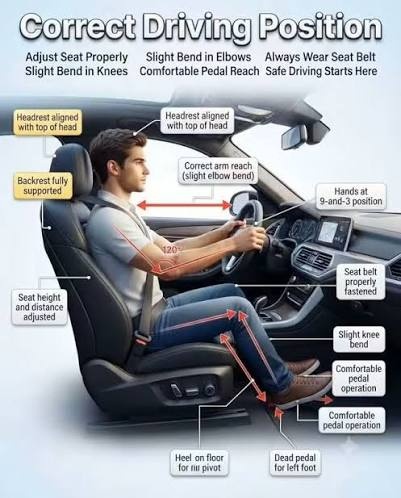
Sit fully back, with the hips and shoulders against the seat. Adjust the distance from the pedals, then set the backrest reasonably upright. A deeply reclined driving position increases the gap between the head and the restraint and can also compromise seat-belt positioning.
Once the seat is correct, raise the head restraint.
Its center should sit roughly level with the back of the head rather than the neck. Ideally, the top should reach at least as high as the top of the ears and preferably closer to the top of the head. Taller occupants may need the restraint at its highest position.
If the restraint also adjusts forward and backward, move it as close to the back of the head as is comfortable. A large gap gives the head more room to accelerate before meeting the restraint.
That does not mean driving with the head pressed against it. The aim is a small, comfortable distance, not an enforced military posture.
Thick seat covers, aftermarket cushions and devices strapped around the restraint can alter the seating position or interfere with its movement. They may also affect seat-mounted airbags. If an accessory changes the way the occupant sits, it deserves more scrutiny than its packaging usually receives.
The rear seats count too
Rear head restraints are often folded, removed or pushed down to improve visibility through the back window. That may be acceptable while a seat is empty if the vehicle is designed for it, but the restraint needs to be returned to the correct position before a passenger sits there.
This is particularly easy to miss after folding the rear seats for luggage. The seats go back up, the restraint stays buried, and nobody notices until a passenger has already buckled in.
Some restraints must also be removed before installing particular child restraints, while others should remain in place. The child-seat instructions and vehicle manual should agree on the correct arrangement. Forcing a child seat against a head restraint can change its angle or prevent it from sitting properly.
A missing rear restraint should not be treated as a cosmetic inconvenience when inspecting a used car. Replacement may be necessary before the seat can offer its intended protection.
What about active head restraints?
Some vehicles use active systems designed to move forward or upward during a rear impact. Others integrate the restraint into a seat structure engineered to manage the occupant’s movement as a complete system.
That clever engineering does not give the driver permission to ignore the adjustment. An active restraint still needs a sensible starting position.
Fixed head restraints remove the guesswork, although they may not suit every body shape equally well. If a fixed design pushes the head uncomfortably forward, changing the seatback angle slightly may help. Adding a random cushion behind the lower back can easily create a different problem elsewhere.
Seat position is usually adjusted for pedals, steering reach and mirror visibility. The head restraint tends to receive whatever setting the previous driver left behind.
It takes seconds to correct. For once, the most valuable safety adjustment in the cabin does not involve a touchscreen, a subscription or a visit to the dealership.