Your Brake Pedal Started Fighting Back, but It May Be Trying to Help
by AutoExpert | 31 July, 2026
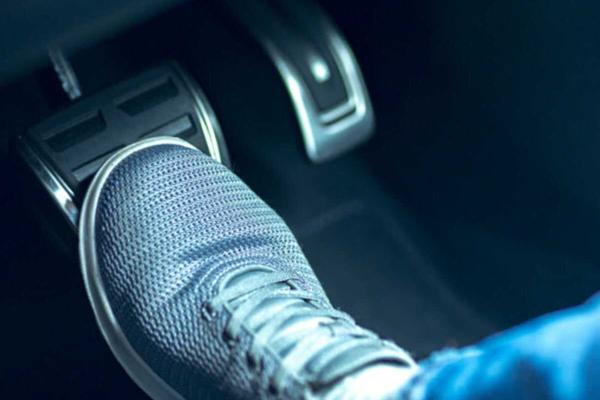
There is no graceful way to discover how ABS feels for the first time. Something enters the road. The brake pedal goes down hard. Then, at precisely the moment when calm would be useful, the pedal begins hammering against the driver’s foot. A harsh buzzing or grinding sound joins in, and the entire car seems to be protesting the emergency stop.
The natural response is to ease off. That is usually the wrong response.

When the pedal pulses during hard braking, the anti-lock braking system may be working exactly as intended. The noise and vibration are not particularly elegant, but neither is sliding toward an obstacle with four locked wheels.
A rolling tire can still generate steering force. A locked tire mostly follows momentum, which is why a car with its wheels skidding may refuse to change direction even when the steering wheel is turned.
ABS watches the speed of each wheel. When it detects that one is about to stop rotating while the vehicle is still moving, it briefly adjusts brake pressure at that wheel. It can repeat this process many times in quick succession, allowing the tire to regain rotation and helping the driver retain some ability to steer.
Those pressure changes are what the driver can feel through the pedal. The buzzing or mechanical growl may come from the hydraulic pump and valves doing their work.
Honda describes slight brake-pedal pulsation during ABS operation as normal and advises drivers to keep the pedal firmly depressed rather than pumping it.
Older generations of drivers were often taught to pump the brakes on a slippery surface. That technique belonged to vehicles without ABS, where releasing and reapplying pressure could help prevent the wheels from remaining locked.
In an ABS-equipped car, the system is already performing that job, faster and independently at individual wheels. Pumping the pedal can reduce the braking force the driver is trying to maintain and interfere with the system’s ability to manage the stop.
The modern advice is much simpler: press firmly, keep pressing and steer toward a safe path if one is available.
Some safety instructors call it “stomp and steer.” The phrase is blunt, but memorable.
ABS may activate sooner than expected on snow, ice, wet leaves, gravel or a rough road. A pothole or manhole cover can briefly unload a wheel, allowing it to slow more quickly than the others. The system notices the difference and may intervene even though the driver was not attempting a cinematic emergency stop.
It can also feel different from one car to another. Some pedals pulse gently. Others kick back with enough enthusiasm to make a first-time driver wonder whether a piece of the braking system has fallen onto the road.
NHTSA research has found that drivers sometimes misunderstand this feedback and react inappropriately, which is hardly surprising. A brake pedal that suddenly moves beneath the foot does not feel reassuring unless someone has explained it beforehand.
ABS is helpful, but it does not create grip. The car still needs enough tire traction to slow and turn. On ice, the stopping distance may remain very long. On loose gravel or deep snow, ABS can sometimes require more room than a fully locked wheel that builds a wedge of loose material ahead of it.
Its main advantage is control, not a promise that every vehicle will stop in the shortest imaginable distance on every surface.
There is also a difference between ABS pulsation and a brake pedal that vibrates during ordinary stops.
ABS activity usually appears during hard braking or when grip is poor. It arrives suddenly, often with noise, and disappears when the emergency has passed.
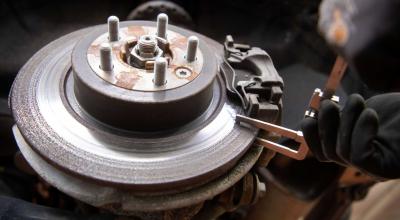
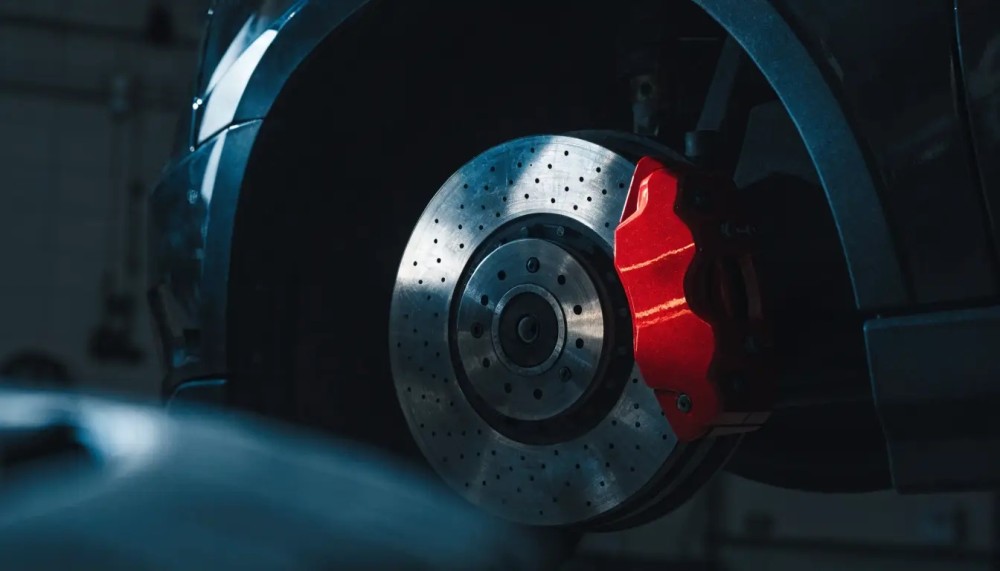
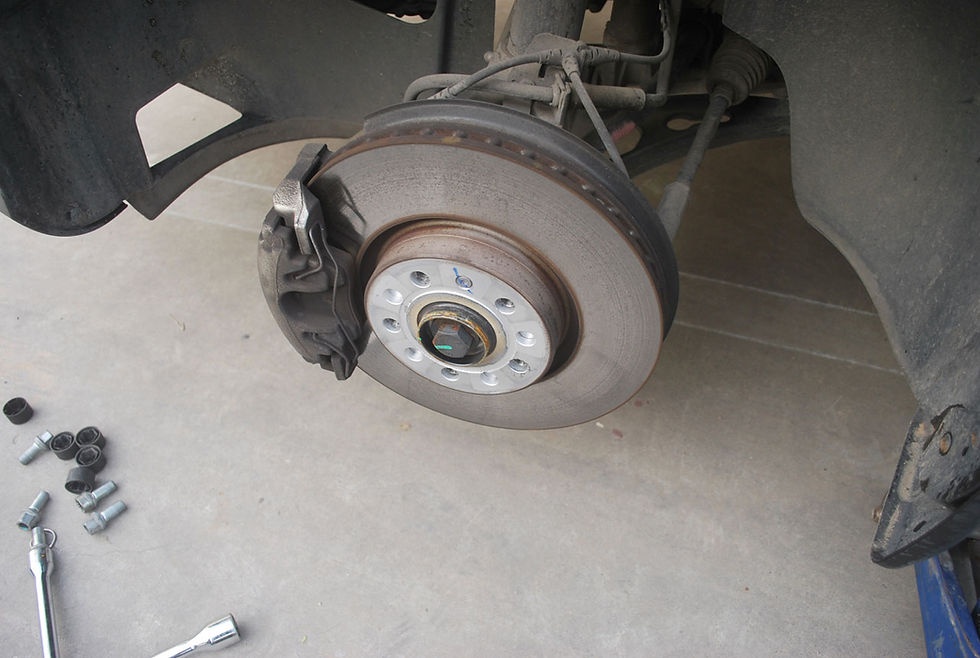
A pedal that pulses every time the car slows from highway speed may be telling a different story. Uneven rotor thickness, excessive runout, worn suspension components or another mechanical issue could be involved. A steering wheel that shakes during routine braking also deserves inspection.
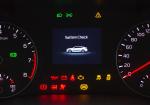
The dashboard ABS warning light matters too. If it stays illuminated after startup, the anti-lock function may be unavailable even though the conventional hydraulic brakes still operate. The car should be inspected rather than driven indefinitely with the warning glowing.
A red brake warning, a soft pedal, sinking pressure, fluid loss or noticeably reduced braking ability is more urgent. Those symptoms should not be dismissed as normal ABS behavior.
No one should deliberately trigger ABS on a public road just to see what happens. A safe driver-training course or controlled closed area is the proper place to experience emergency braking.
Still, knowing what to expect is valuable. If the pedal suddenly chatters during a genuine emergency, the car is not necessarily fighting the driver.
It may be fighting the skid.