Ford Imagined a Reactor Behind Your Seats. The Car Never Ran
by AutoExpert | 6 October, 2026
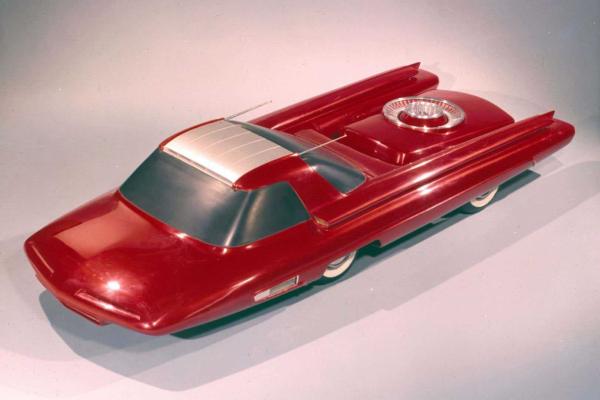
The Ford Nucleon looks as though someone moved the passengers forward to make room for a very important piece of luggage. Its cabin sits near the nose, leaving an enormous rear section between the fins. In Ford’s imagined future, that space would carry a nuclear reactor.
It is an extraordinary thing to propose for a vehicle that would presumably share roads, parking spaces and minor collisions with everybody else. Yet the 1958 concept had a shape, a name and promotional material. That is enough to make photographs of it feel like evidence of a technological breakthrough.
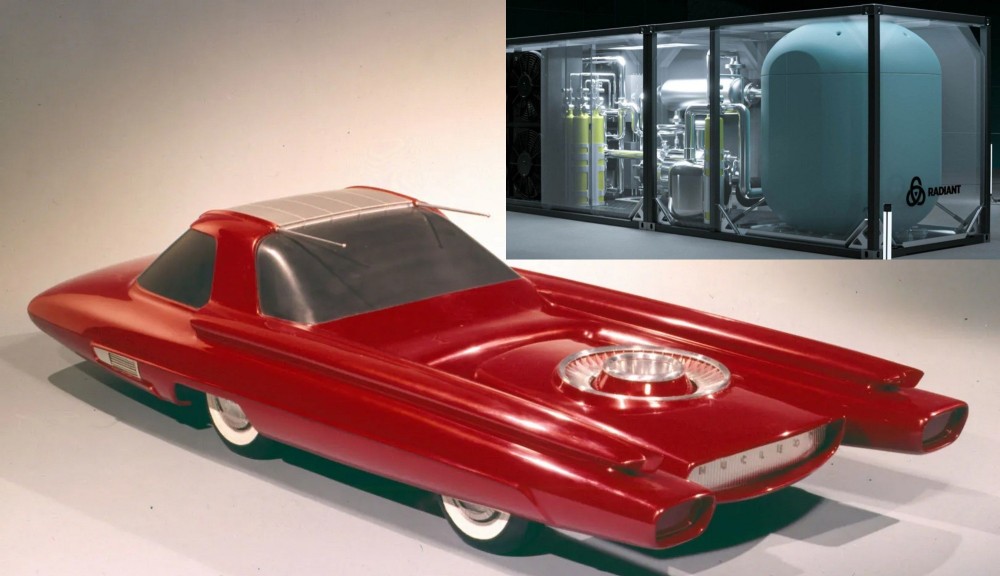
The object Ford actually built was a nonfunctional model at three-eighths scale. There was no working reactor inside it and no nuclear-powered test drive. The Henry Ford’s record of the original brochure describes the exercise as closer to publicity than serious research and development.
That qualification makes the Nucleon more interesting. It shows how far a styling department could travel once the hardest engineering questions were left for the future to answer.
The bodywork arrived before the power source
Ford imagined a self-contained nuclear power unit at the rear. The museum’s record of the surviving model explains the underlying assumption: reactor size, weight and safety would eventually become manageable enough for automotive use.
Those are rather large conditions to attach to a car design.
A gasoline tank stores fuel that an engine burns when needed. A nuclear reactor requires a controlled nuclear process, with the accompanying demands of heat management, radiation protection and safe handling. Making room in the body is only a small part of that problem. A passenger vehicle also has to survive the unpredictable treatment of public roads.
The Nucleon’s unusual proportions let Ford illustrate the possibilities of a different power source without supplying a finished system. Looking at it now, the long rear section is almost an architectural placeholder: here is where the remarkable machinery will go, once somebody has made it practical.
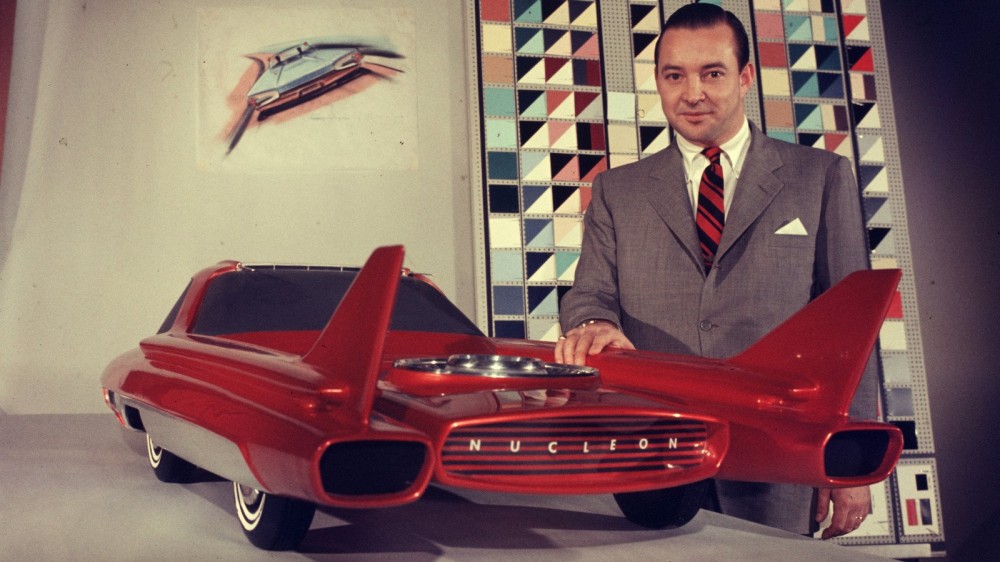
The original brochure is important for that reason. Ford presented a speculative future whose central technology depended on advances still to come. Later retellings can lose that conditional language, particularly when a photograph of the model accompanies the claim that Ford “built a nuclear car.”
Ford built the model. The distinction changes the entire story.
A very persuasive piece of automotive fiction
There is a recognizable appeal to the idea. Imagine releasing car design from the familiar arrangement of engine, fuel tank and repeated filling-station visits. Even before the practical questions are answered, a designer has something new to draw.
The Nucleon captures that freedom beautifully. It also illustrates its limits. A convincing body shape cannot demonstrate that the power source will fit, that its weight can be accommodated or that occupants can be protected. None of those things was proved by the model.
The Henry Ford preserves both the physical object and Ford’s contemporary literature, allowing the proposal to be examined without inventing a missing development program. The model itself is made of plastic. That wonderfully ordinary detail brings the atomic dream back down to the workshop where it took shape.
No production Nucleon followed. There was no fleet to recall and no retired reactor to remove from a prototype. What survived was a small, striking representation of a future Ford thought worth showing.
The photograph still does its job almost seven decades later. Before noticing the scale or reading the accompanying explanation, it is easy to look at that enormous rear deck and wonder how anyone thought this would work. Ford’s own premise supplied the answer: the difficult parts would have to be solved first.