Your Diesel Won’t Let You Fill Up. It May Be Trying to Save You from a Costly Mistake
by AutoExpert | 8 October, 2026
Being unable to put fuel into an almost-empty car is a peculiarly annoying problem. There is diesel in the pump, space in the tank and apparently no reason the two should have trouble meeting. Yet the nozzle won’t go in properly, or the pump keeps cutting out.
Before assuming something expensive has broken, have a look at the handbook’s refuelling section. Some diesels have a small protective mechanism inside the filler neck, where most owners never have reason to look. Its job is to discourage an easy, potentially costly mistake: putting petrol into a diesel.
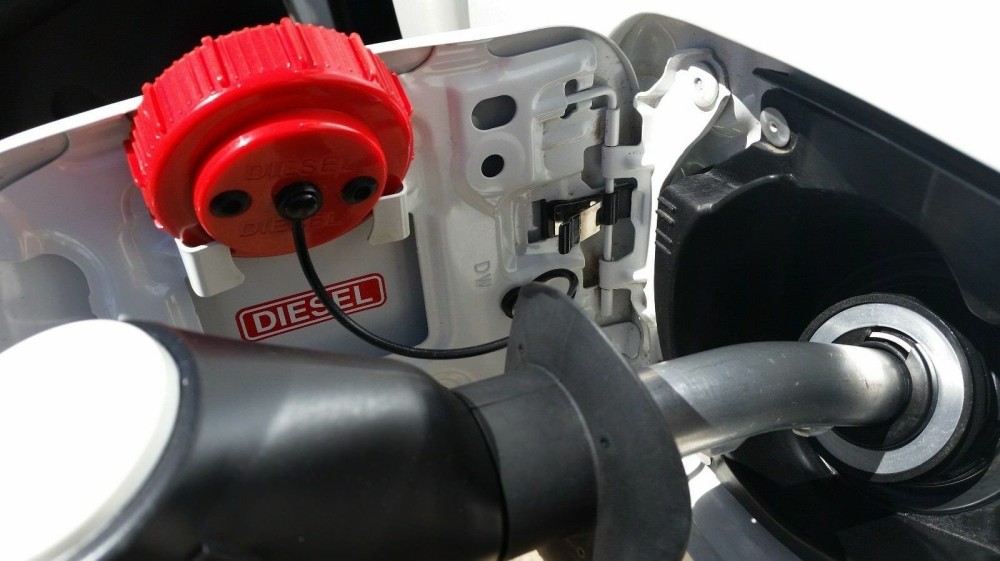
The device relies on nozzle size. In the systems described by Jaguar Land Rover, a narrower petrol nozzle behaves differently from the correct diesel nozzle. That sounds straightforward until a driver encounters an unfamiliar pump, borrows a fuel can or buys a used car without the little tool that originally came with it.
The flap may be closed for a reason
There are two arrangements, and knowing which one the car has saves a lot of fruitless poking around.
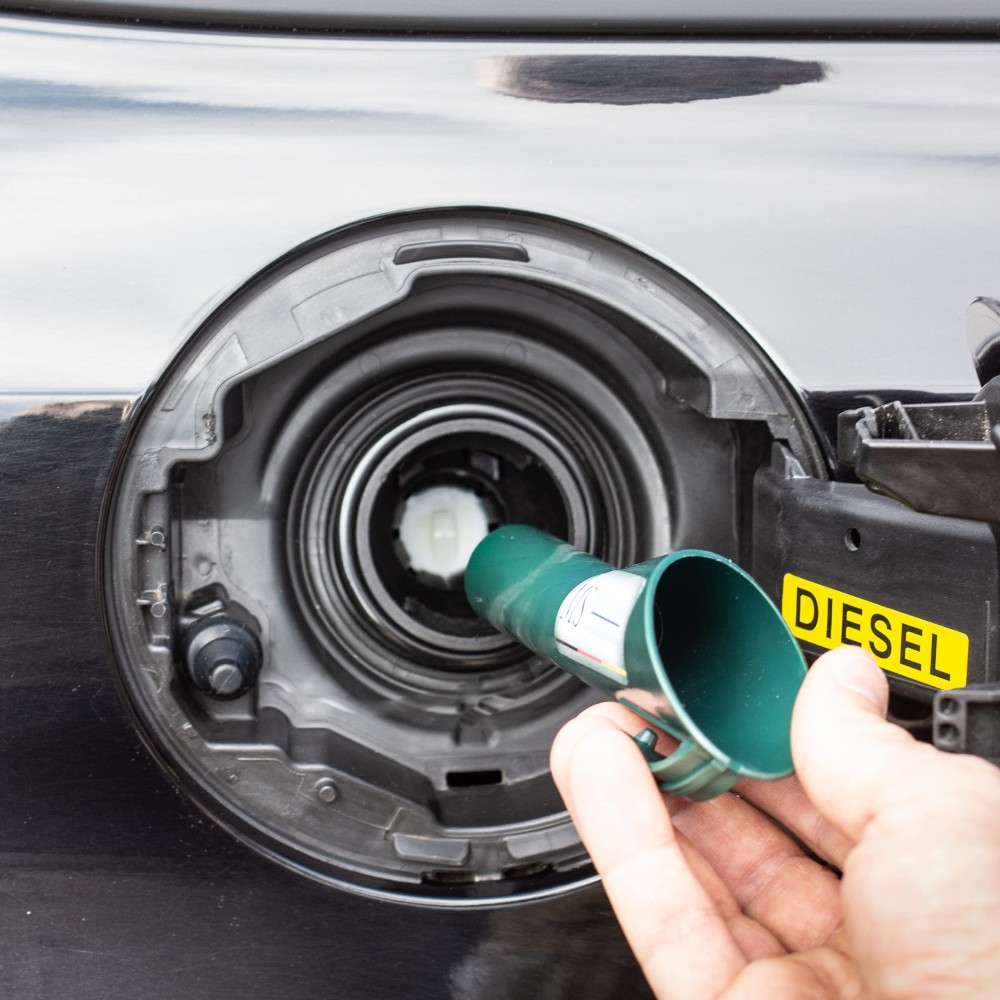
Jaguar Land Rover describes its active device as normally closed. Insert the correct diesel nozzle fully and squarely, and the mechanism opens. If the nozzle meets resistance, its position or size may be the problem; there is no deployed barrier to reset. Some non-standard nozzles require a suitable adapter.
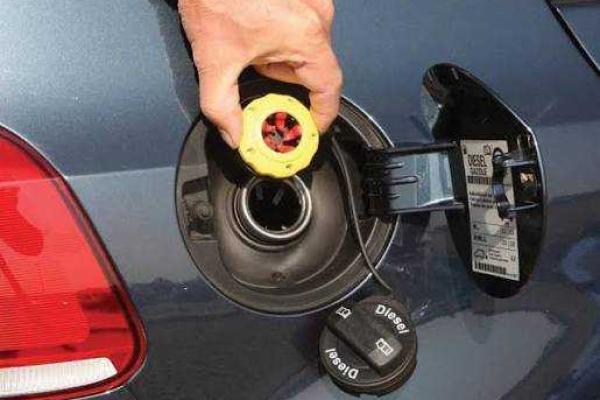
The passive version behaves differently. It normally allows refuelling, but inserting a petrol nozzle can trigger a barrier. On the system in Jaguar Land Rover’s guidance, a yellow plastic flap becomes visible inside the filler neck. Once deployed, it needs the proper reset tool.
This is why “just push the nozzle in farther” can be poor advice. A driver dealing with a closed active device and one looking at a triggered passive device have different problems, even if both are standing beside a car that refuses fuel.
A fuel can adds another wrinkle. Jaguar’s XF handbook warns that some can spouts and smaller pump nozzles can activate the protection. The can might contain perfectly good diesel; its spout can still resemble the wrong nozzle closely enough to trip the mechanism.
Leave the screwdriver where it is
A visible obstruction invites an obvious response: find something long enough to move it. Resist that temptation. Forcing the flap can damage the very part intended to prevent an expensive fuel-system problem.
Check the instructions for the particular model and year instead. Where a reset tool is required, the handbook should explain where it is kept and how it is used. If it has disappeared, which is entirely possible in a used car, ask roadside assistance or a workshop about the correct replacement and procedure.
There is one question to settle before resetting anything: could petrol already have entered the tank? If so, leave the engine off and get qualified help. Opening the filler again does nothing to correct the fuel already inside.
Nor does every reluctant diesel pump point to this device. A nozzle that continues cutting out despite the correct positioning and the appropriate procedure needs further investigation. Repeatedly squeezing the trigger is unlikely to explain why the fuel won’t go in.
When booking assistance, describe what you can actually see: a yellow flap, a metal flap that stays closed, or a nozzle that fits but keeps shutting off. That is a much better starting point than “the car won’t fill up,” and it may get you away from the forecourt considerably sooner.