The 5 Quickest Cars of the 1970s Were Fast Enough to Be Frightening
by AutoExpert | 17 August, 2026
Speed has become ridiculously easy to buy. A modern electric crossover can pin its passengers to the seats while carrying three children, a week’s shopping and a suspicious amount of sports equipment. Even ordinary sedans now produce acceleration figures that once belonged to cars with bedroom posters, unmanageable insurance premiums and a realistic chance of catching fire.
The 1970s asked considerably more of both the car and the driver.
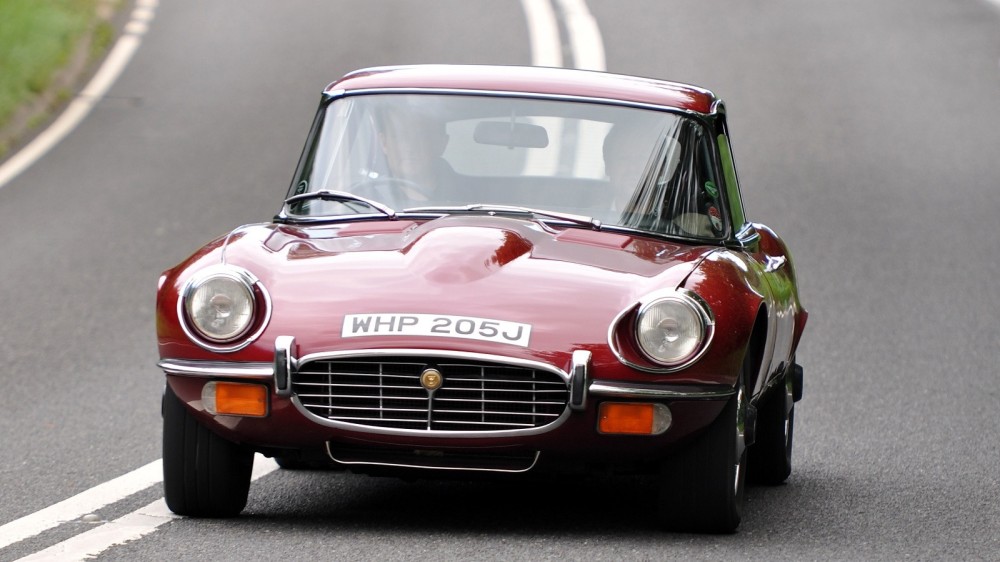
There was no launch control deciding how much wheelspin looked tasteful. Tires were narrow, manual gearboxes were expected and horsepower often arrived through carburetors that had moods of their own. If a car reached 60 mph in around five seconds, it was not simply quick. It was probably noisy, expensive and slightly alarming.
Old acceleration figures come with an important warning. Testing methods varied, road surfaces varied and manufacturers were not always shy about choosing the most flattering number available. Tenths of a second should therefore be taken with a period-correct pinch of salt.
Even so, these five cars were outrageously quick for their time.
5. 1971 De Tomaso Pantera: 0 to 60 mph in 5.5 seconds
The Pantera was an Italian supercar that spoke with an American accent.
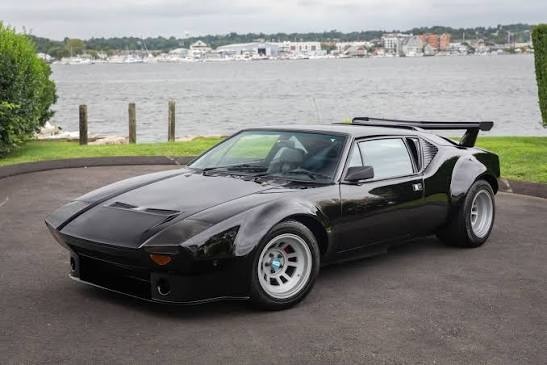
It had everything expected from an exotic of the period: a dramatic wedge shape, a cabin pushed forward and an engine sitting behind the seats. What it did not have was a small, complicated Italian engine requiring an expert with a tuning fork and infinite patience.
De Tomaso installed Ford’s 351-cubic-inch Cleveland V8 instead.
The combination was wonderfully unsubtle. Around 330 horsepower went to the rear wheels through a five-speed manual gearbox, giving the 3,100-pound Pantera enough muscle to reach 60 mph in approximately 5.5 seconds.
There were prettier engines in 1970s supercars. There were certainly more exotic ones. Few sounded quite as happy about being started.
The Pantera also cost considerably less than the Ferraris and Maseratis it resembled. That did not make it cheap, but it made the idea of Italian styling and mid-engine performance slightly less absurd for an American buyer.
Ford sold the car through Lincoln-Mercury dealerships in the United States, which must have created some memorable showroom conversations. A customer could arrive looking for a comfortable Continental and leave considering a two-seat Italian wedge with a V8 pressed against the back of the cabin.
U.S. sales ended in 1974, but the Pantera continued evolving elsewhere for years. Later versions became wider and more powerful. The early car remains the most charming, partly because its entire personality can be explained in one sentence: somebody put a Ford muscle-car engine in the middle of an Italian supercar and somehow made it work.
4. 1976 Ferrari 512 BB: officially, 5.4 seconds
Ferrari claimed the 512 BB could reach 60 mph in 5.4 seconds. Autocar tested one and recorded 6.2.
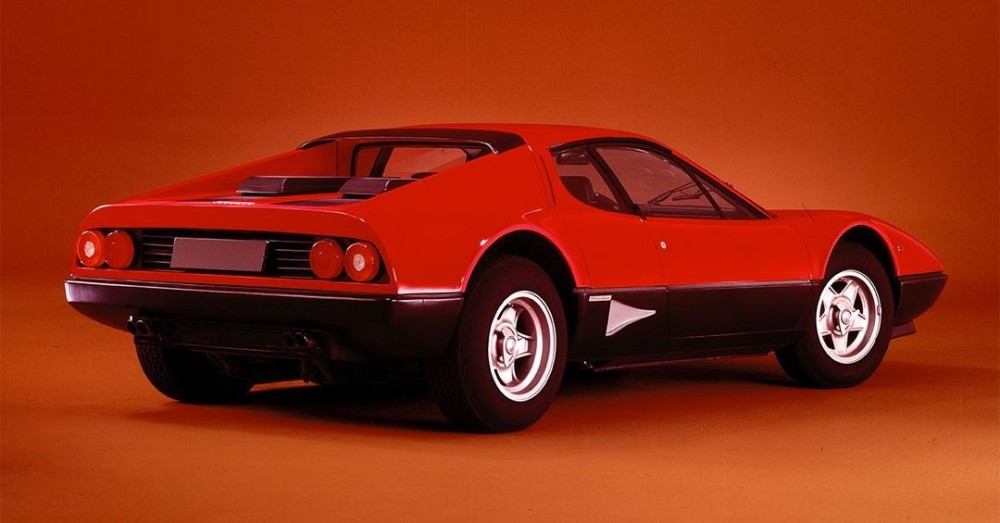
Welcome to the wonderfully untidy world of 1970s performance figures.
The 512 BB replaced the 365 GT4 BB and became Ferrari’s flagship road car. Its 5.0-liter flat-12 sat behind the cabin, producing around 355 horsepower and a soundtrack capable of making almost any numerical disagreement feel unimportant.
Ferrari also claimed a top speed of 188 mph. Autocar managed 163 mph and questioned whether the gearing would allow the car to reach the larger figure at all.
That is a substantial difference, but it does not turn the 512 BB into a slow car. Even the less flattering test result was exceptional for the period. The Ferrari was low, demanding and vastly faster than almost anything likely to appear beside it on a public road.
Its ranking here uses the widely quoted 5.4-second figure, so this position deserves an asterisk roughly the size of the rear engine cover. Still, arguments over old Ferrari performance figures are part of the entertainment. These were cars tested on different days, on different roads, with different drivers trying to persuade expensive manual gearboxes to cooperate.
The 512 BB may or may not have been the fourth-quickest car of the decade. It was definitely one of the few that could make 160 mph look elegant.
3. 1971 Chevrolet Corvette LS6: 0 to 60 mph in 5.3 seconds
The Corvette LS6 arrived just before the American horsepower party ran out of fuel, insurance and political patience.
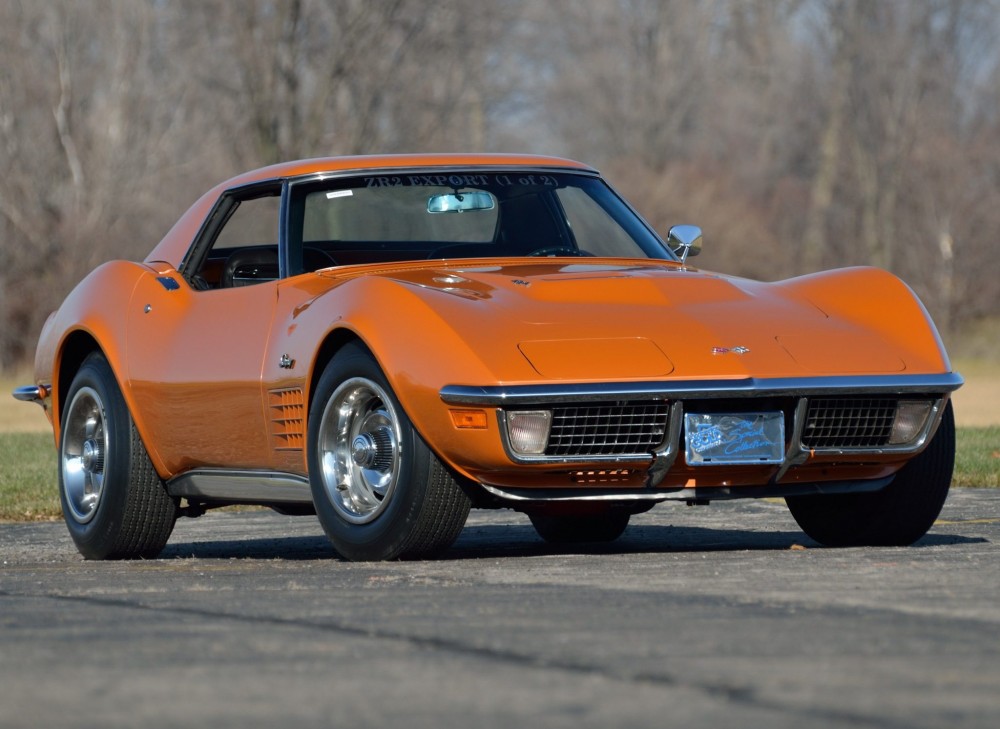
Under its long hood sat a 454-cubic-inch V8 rated at 425 horsepower. There was nothing delicate about it. The LS6 had seven and a half liters of displacement, rear-wheel drive and the general attitude of a car that considered restraint somebody else’s problem.
Period testers recorded 60 mph in approximately 5.3 seconds and the quarter mile in 13.8 seconds at 105 mph. Those numbers still sound healthy. In 1971, they were startling.
Only 188 LS6 Corvettes were built, all during that single model year. The option was expensive, and the complete car cost almost twice as much as a new Mustang Mach 1. Buyers had to want this particular Corvette badly.
Those who signed the order form received one of the last great big-block machines produced before performance began disappearing from American showrooms. By the middle of the decade, emissions regulations, soaring insurance rates and the oil crisis had changed the mood entirely.
That timing gives the LS6 a certain end-of-the-party quality. The music was still playing, the drinks were still being poured and Chevrolet had arrived with 454 cubic inches just before somebody switched on the lights.
2. 1974 Porsche 911 Carrera RS 3.0: 0 to 60 mph in 5.2 seconds
The Carrera RS 3.0 produced only 230 horsepower.
Today, that figure would not look unusual in a mildly enthusiastic hatchback. In 1974, Porsche paired it with low weight, excellent traction and the ruthless absence of anything the car did not need.
The result reached 60 mph in roughly 5.2 seconds.
The RS 3.0 followed the famous Carrera RS 2.7, gaining a larger naturally aspirated flat-six, wider rear tires, a limited-slip differential and more serious brakes. It existed because Porsche needed a homologation model for racing, not because somebody in marketing wanted a new trim level.
Only 109 were built. Of those, 55 were road cars and 54 were race-spec RSRs. None were officially offered new in the United States, although every surviving example is now old enough to enter the country without upsetting the import authorities.
The performance came from using every horsepower properly. With the engine hanging over the driven wheels, the Porsche could leave the line with remarkable urgency. There was less power than in the Pantera, Ferrari or Corvette, but also far less car for that power to drag along.
Finding one today is difficult. Buying one is the sort of financial decision that involves several advisers and possibly the sale of a building. Seven-figure values have turned the RS 3.0 into something owners are more likely to display beneath flattering lights than repeatedly launch from traffic signals.
That seems a shame. Porsche built it to move, and it moved brilliantly.
1. 1978 Porsche 911 Turbo: 0 to 60 mph in 4.9 seconds
The early Porsche 911 Turbo did not deliver its power smoothly. It made the driver wait.
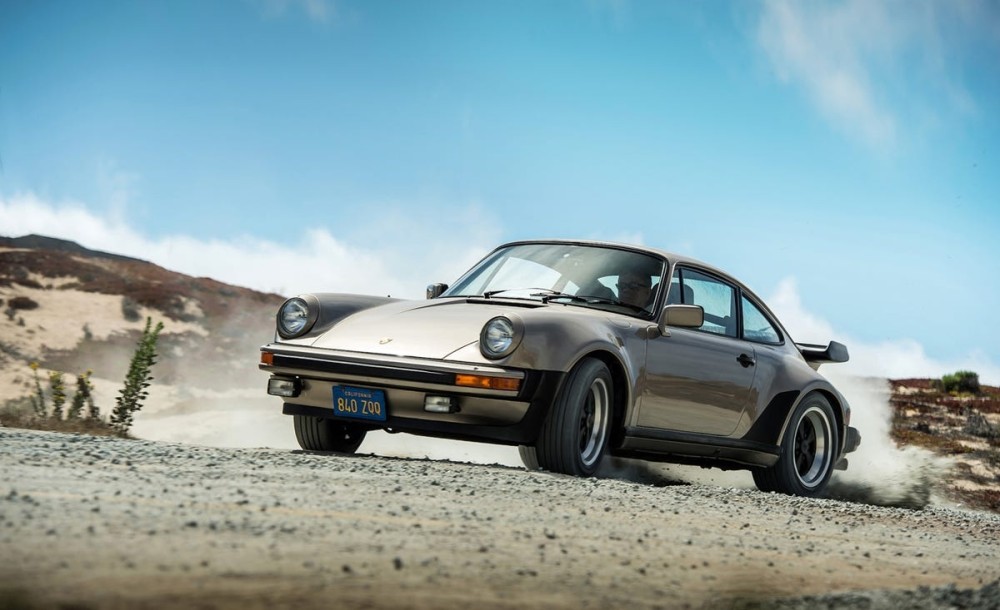
At lower engine speeds, there was noise, anticipation and time to wonder whether all the stories had been exaggerated. Then the turbocharger woke up.
Suddenly, every one of the rear-mounted flat-six’s horses appeared to arrive together.
For 1978, Porsche enlarged the Turbo’s engine from 3.0 to 3.3 liters and added an intercooler beneath that enormous rear spoiler. U.S. output rose to approximately 261 horsepower, with other markets receiving still more.
Period testing produced a 0-to-60-mph time of 4.9 seconds. Breaking five seconds was extraordinary in a road car of the late 1970s, especially one with a manual gearbox and no electronic launch assistance.
The speed came with complications. Turbo lag made power delivery unpredictable for anyone accustomed to a naturally aspirated engine. The rear-engine layout demanded care, particularly if the driver lifted the accelerator abruptly during a fast corner. The 911 Turbo developed a fearsome reputation, and the “widowmaker” nickname followed.
Some of that reputation has been polished by decades of storytelling. The car did not throw every owner into the nearest hedge. It simply expected the person behind the wheel to pay attention.
That expectation was part of the appeal. The Turbo could be driven calmly, but it never felt entirely domesticated. There was always the knowledge that another personality was waiting beyond 4,000 rpm.
A new performance car would outrun every vehicle on this list while keeping its seats ventilated and its passengers connected to Wi-Fi. That does not make the old cars feel irrelevant.
Modern acceleration is brutally efficient. These cars made it an event. There was noise, clutch work, wheelspin, turbo lag and the occasional gear change that did not go exactly as planned.
The stopwatch remembers the numbers. Drivers remember everything that happened while trying to achieve them.