
Battery Or Alternator? This One-Minute Test Can Save You From Buying The Wrong Part
by AutoExpert | 8 June, 2026
There are few sounds more discouraging than a car almost starting. The key turns. The dash lights flicker like they are thinking about it. The engine gives one slow, tired grind, then another, and suddenly the whole morning has a new problem.
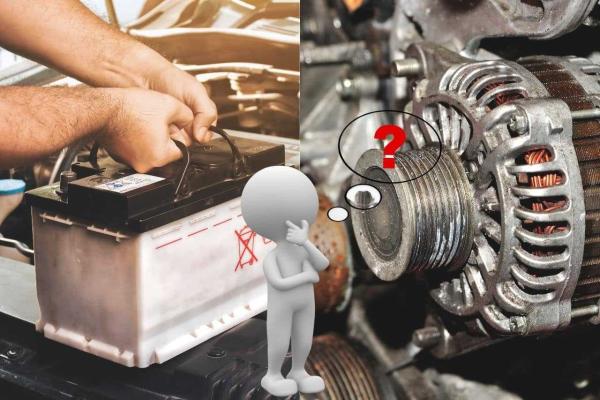
And right away, the same question shows up. Is it the battery, or is it the alternator? This is where a lot of people lose money.
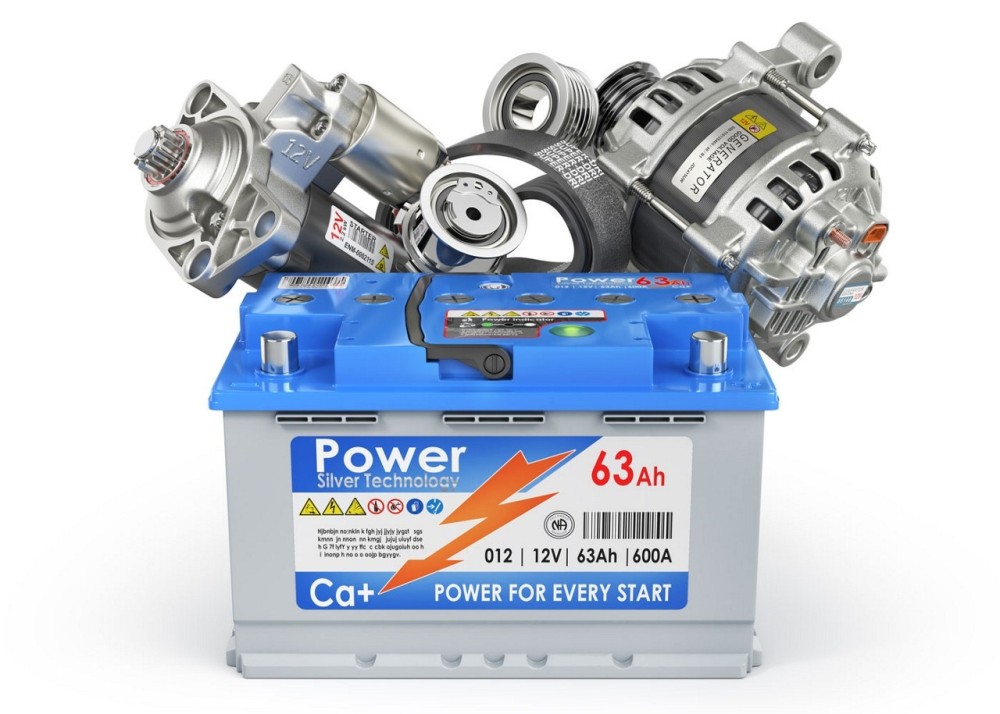
They buy a new battery because the car would not start. For a week or two, everything seems fine. Then one morning, the same thing happens again. Now the new battery is dead too, and the real problem turns out to be the alternator that was not charging it.
Or they do the opposite. They hear the word “alternator,” panic, and prepare for a bigger repair, when the battery was simply old, weak, and ready to retire. The symptoms overlap just enough to make guessing expensive.
The good news is that a driver does not need to be a mechanic to separate the two. A cheap meter, a quick jump-start, or even the headlights can tell most of the story.
The Fastest Answer Comes From A Voltmeter
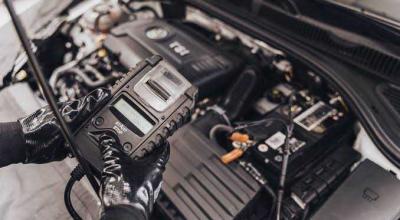
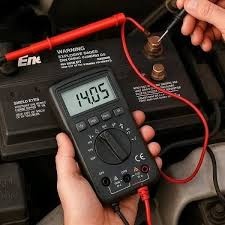
If there is one small tool worth keeping in the glove box, it is a basic multimeter. Nothing fancy. The cheap one from an auto parts store is enough. With the engine off, pop the hood and check the battery first. Red probe on the positive terminal. Black probe on the negative.
A healthy, fully charged battery should be around 12.6 volts. If it is sitting below 12.4, it is weak. Below 12.0, it is either dead or close enough that it is not going to be helpful. That tells you the battery’s condition while the car is off. But it does not tell you whether the alternator is doing its job.
For that, the engine needs to be running. If the car starts, great. If not, get a jump and let it idle. Then check the voltage at the battery again. This time, the number should be higher. Usually somewhere around 13.7 to 14.7 volts. That jump is the alternator working. It is charging the battery and keeping the car’s electrical system alive at the same time.
If the reading stays low, especially under about 13.5 volts, the alternator is not keeping up. If it climbs over 15 volts, that is not good either. An alternator that overcharges can cook a battery over time. People do not always think of “too much voltage” as a problem, but it absolutely is.
So the meter gives the cleanest answer. Battery low with the engine off, but charging properly once running? The battery is the likely suspect. Voltage stays low while running? The alternator is probably the villain.
No Meter? Use The Headlights
This is not as precise, but it is useful. Start the car, turn on the headlights, and aim them at a garage door, wall, or the back of another parked car. Then rev the engine gently to around 2,000 RPM and hold it there for a few seconds.
Watch the beams. If the headlights get noticeably brighter when the engine revs, the alternator may be weak at idle. It is only waking up when the engine spins faster, which is not a great sign.
If the brightness stays steady, that is better. It usually means the alternator is doing its job.
If the lights get dimmer, or flicker in a weird way, stop pretending this is fine. Something in the charging system is unhappy, and the car should not be trusted for a long drive. This test is old-school, but it still tells on a bad alternator pretty quickly.
The Jump-Start Clue People Forget
A jump-start can also give a strong hint, as long as the driver pays attention to what happens after the cables come off. If the car starts with a jump and keeps running after the cables are removed, the alternator is probably alive. The battery may have been too weak to start the car, but once the engine is running, the charging system is carrying the load.
If the car starts, then dies again a few minutes later, that points toward the alternator. The battery got just enough help to wake the car up, but the alternator could not keep it alive.
That is the difference. A bad battery has trouble starting the party. A bad alternator cannot keep the party going.
The Dashboard Light Is Sneakier Than It Looks
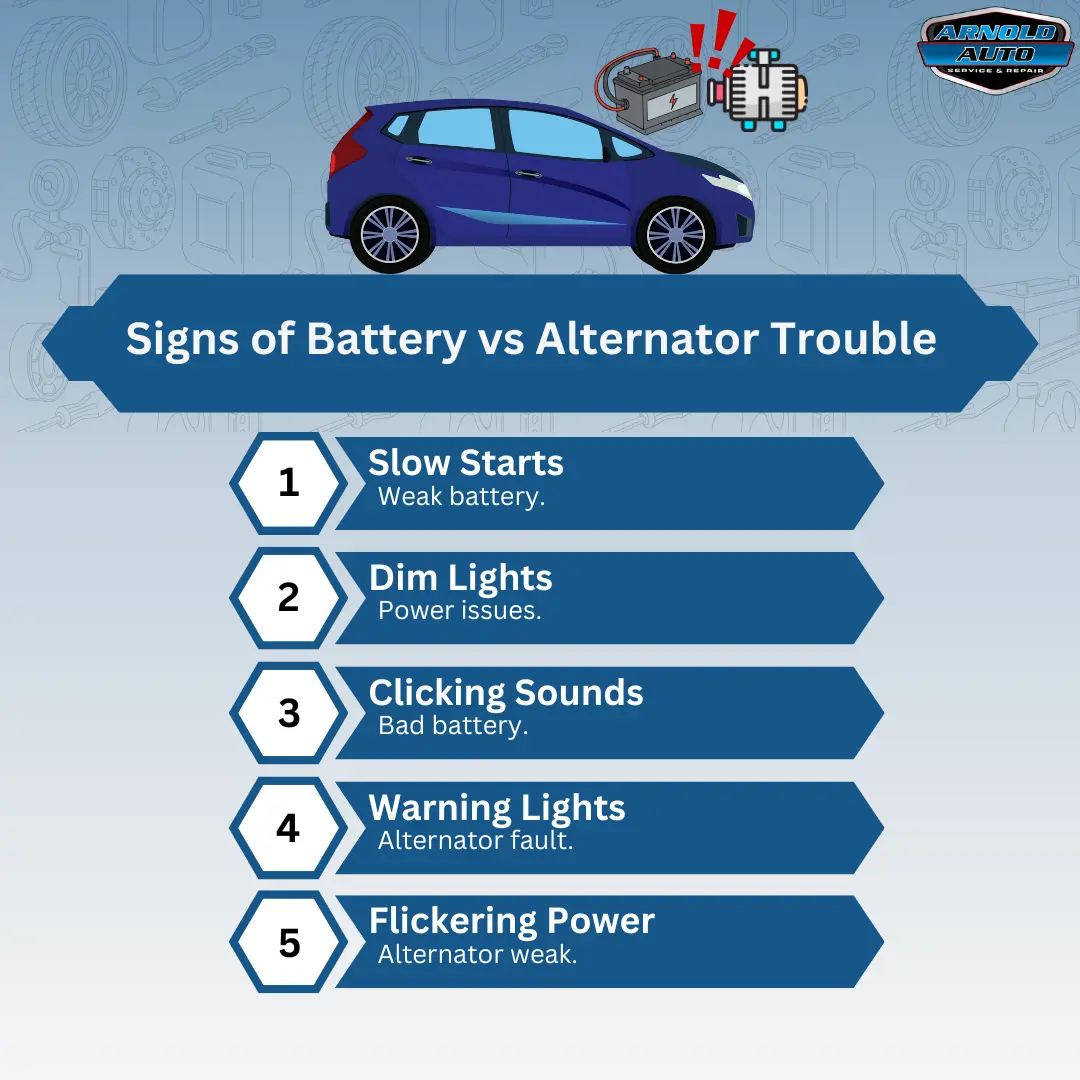
Here is the little trap: the red battery light on the dashboard does not automatically mean the battery is bad.
It means the charging system has a problem. That could be the alternator. It could be the belt that drives the alternator. It could be a loose connection. But it is not the car politely saying, “Please buy a battery.”
Plenty of people see that little battery icon and go straight to the parts store. Sometimes they get lucky. Sometimes they buy a perfectly good battery and install it into a car that still cannot charge.
That light deserves attention, not assumptions.
So Which One Is It?
There is no need to make this more mysterious than it is. If the car cranks slowly, the dash lights are weak, and the battery reads low with the engine off, the battery may simply be dead or worn out.
If the car starts with a jump but dies again soon after, or if the voltage does not rise when the engine is running, the alternator is the stronger suspect. If the battery warning light comes on while driving, especially with dimming lights or weird electrical behavior, think charging system first.
And if the car has an old battery, corroded terminals, a loose belt, and a dash full of warning lights, congratulations, it may be trying to make the diagnosis as annoying as possible.
But even then, start with the simple tests. Check the voltage. Watch the headlights. Pay attention after a jump-start. Look at the battery terminals while the hood is open, because sometimes the “major electrical problem” is just a dirty connection ruining everyone’s day.
The goal is not to become a mechanic in the driveway, but to stop guessing. Because guessing is how people buy batteries they do not need, alternators they did not have to replace, and tow trucks that could have been avoided.
A minute of checking can change the whole conversation at the repair shop. Instead of walking in and saying, “My car won’t start,” the driver can say, “The battery reads 12.2 off, but only 12.6 running,” or “It dies right after a jump.”
That is a much better place to be. The car may still need fixing. But at least it is no longer speaking a language nobody understands.