
That Little Lurch After Selecting Park Is Your Car Asking for the Parking Brake
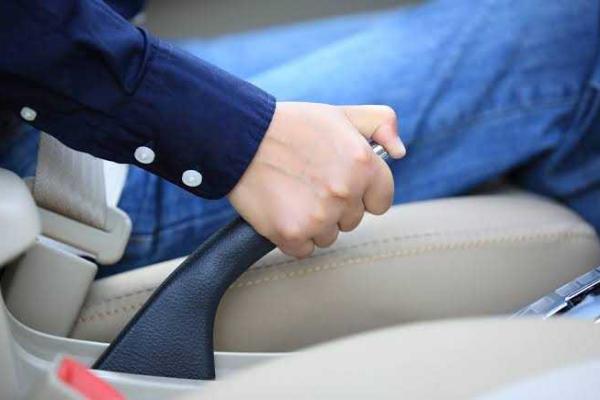
by AutoExpert | 15 July, 2026
Park on a slope, move the shifter to P, take a foot off the brake, and most automatic cars will perform a small, familiar shuffle. The body rolls a fraction of an inch, stops with a muted clunk, then rocks once more on its suspension.
Plenty of drivers accept this as part of parking. It is not exactly a fault, and the car is unlikely to roll away simply because it moved an inch. Still, that little lurch reveals something worth knowing: the weight of the vehicle has just settled onto a piece of metal inside the transmission that is much smaller than most people imagine.
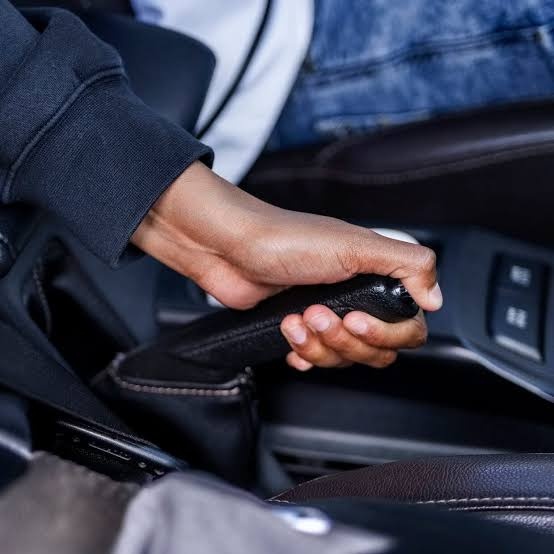
It is called the parking pawl.
The pawl is a strong metal catch that locks into a toothed wheel when Park is selected. Once engaged, it prevents the transmission’s output shaft from turning. It is a clever, simple mechanism, but it was never meant to be the only thing standing between a parked vehicle and the bottom of a steep driveway.
That is what the parking brake is for.
Park is not really a brake
The confusion begins with the letter on the shifter. P feels definitive. Drive makes the car move forward, Reverse sends it backward, and Park appears to fasten it to the ground.
Mechanically, however, Park does not apply the wheel brakes. It locks part of the transmission. The parking brake does the more literal job, holding the car through its rear brakes or, on some vehicles, a dedicated braking mechanism.
Using both gives the car two separate ways to remain where it was left. It also keeps the vehicle’s weight from resting against the pawl, which is why AAA recommends applying the parking brake every time, even on level ground.
The benefit becomes obvious the next time a car is parked on a hill without it. When the driver returns and pulls the shifter out of Park, the lever may resist and release with a fairly unpleasant bang. That sound does not necessarily mean anything has broken. It is usually the load coming off the pawl all at once. Even so, making a habit of loading a transmission component for no reason is hardly generous treatment.
The order matters more than most drivers realize
Simply pulling the parking brake at some point during the parking routine is better than ignoring it, but there is a sequence that allows it to do the actual holding.
Come to a complete stop and keep the foot brake pressed. Apply the parking brake firmly. Then select Park and switch off the engine. Only after that should the foot brake be released.
The important moment is the release of the foot brake. With the parking brake already set, the car’s weight settles against the brakes at the wheels. The pawl remains engaged as a backup rather than becoming the main anchor.
Some drivers prefer to stop, shift into Neutral, apply the parking brake, release the foot brake briefly so the vehicle settles, then press the pedal again and select Park. That also keeps the weight off the pawl, although it adds a few steps that most drivers do not need.
The owner’s manual should have the final word because the recommended sequence can vary, particularly with newer electronic shifters. Toyota, for example, instructs drivers of some models to stop completely, set the parking brake, and then select P. The detail is buried in the manual, but the logic behind it is refreshingly old-fashioned: secure the car before asking the transmission to hold it.
What if the car has an electronic parking brake?
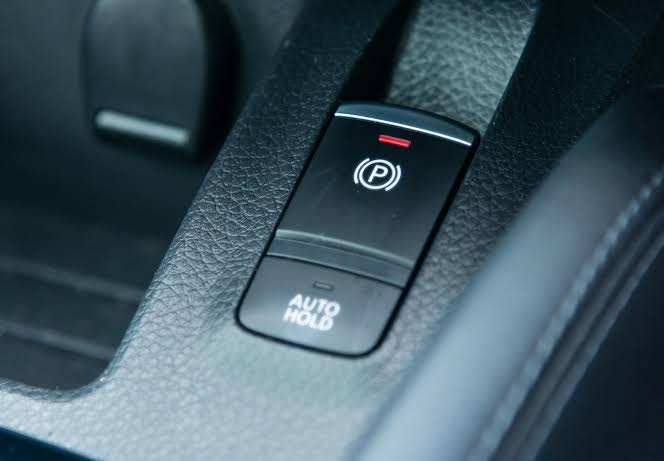
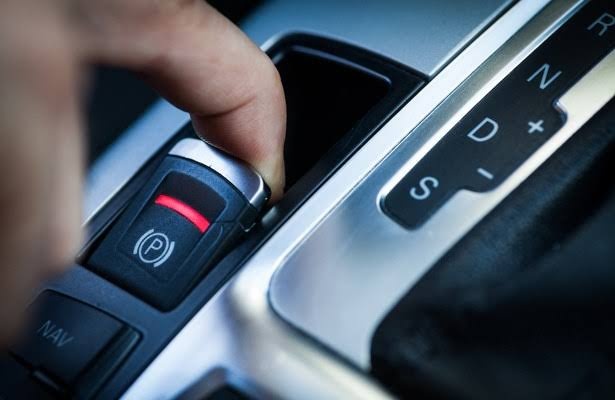
The small switch found in many newer cars does the same basic job as a traditional handbrake lever or foot-operated pedal. An electric motor applies the brake rather than the driver pulling a cable.
Many systems engage automatically when Park is selected or the engine is switched off. Some even release as soon as the accelerator is pressed. That convenience makes the entire process almost invisible, which is lovely until a driver borrows another car and assumes it will behave the same way.
Watch the instrument panel for the parking-brake symbol, usually a red circle containing a P or an exclamation mark. If the car does not apply the brake automatically, use the switch. If it does, wait for the indicator to confirm that the brake has actually engaged before lifting a foot from the pedal.
Electronic parking brakes are also one reason not to improvise during maintenance, towing, or a battery failure. The owner’s manual may include a service mode or emergency-release procedure specific to the vehicle.
Yes, use it on flat ground too
On a perfectly level garage floor, the parking pawl is carrying very little load. The car probably will not perform that familiar backward nod when the brake pedal is released. So why bother?
Because habits are most useful when they do not depend on remembering the gradient. Using the parking brake every time means it is less likely to be forgotten on the one hill where it matters. Regular use also keeps many mechanical parking-brake systems moving instead of allowing cables and linkages to remain untouched for years.
There are exceptions. During long-term storage, a parking brake can sometimes stick, particularly if moisture causes the pads or shoes to bond to a rusty braking surface. Severe freezing conditions can also create problems on certain older cable-operated systems if water enters and freezes. In those situations, the vehicle manufacturer’s storage or winter guidance should take priority, and wheel chocks may be appropriate.
For ordinary daily parking, though, the answer is wonderfully uncomplicated. Use the parking brake.
Manual cars need their own backup
A manual transmission has no Park position. Drivers normally leave the car in first gear when facing uphill or on level ground, and in reverse when facing downhill. The parking brake remains the primary restraint, while the selected gear adds another layer of protection.
Wheel direction matters on a slope as well. When parked downhill beside a curb, turn the front wheels toward it. When facing uphill with a curb, turn them away so the tire would catch the curb if the vehicle moved. Without a curb, the wheels should be turned toward the edge of the road rather than toward traffic.
None of this takes more than a few seconds. That may be why the habit is so easy to dismiss and so difficult to defend skipping.
The next time a parked car rocks back and rests with a clunk, it is offering a small mechanical confession. Park is holding it, but Park would appreciate some help.