
Buying Only Two New Tires? They May Belong on the Opposite End of Your Car
by AutoExpert | 14 July, 2026
At the tire shop, the choice seems too obvious to question. The front tires on a front-wheel-drive car handle the steering, put the power down, and do most of the braking. They usually wear out first. So, if only two tires are being replaced, surely the fresh pair should go on the front.
Then the technician says they belong on the rear. It sounds backward. It can even sound as if the shop has misunderstood which wheels drive the car. But in most cases, assuming all four tires are the same size, the technician is right.
The reason has less to do with which axle works hardest and more to do with what happens when grip suddenly runs out.
The front tires do more, but that is not the whole story
There is no argument that the front tires live a busy life. On a front-wheel-drive car, they accelerate, steer, and take much of the load when the car slows down. That is exactly why they tend to wear faster than the rear pair.
If the worn fronts are replaced while the half-worn rear tires stay where they are, the car ends up with its best tread at the front and its weakest tread at the rear. On a dry road at an ordinary speed, that may not feel unusual.
Heavy rain changes the calculation.
Deep tread can move more water away from the tire’s contact patch. As tread wears down, the tire becomes less capable of clearing standing water and more likely to hydroplane.
If the front tires hydroplane first, the car tends to push straight ahead instead of following the steering wheel. This is understeer. It is certainly unpleasant, but easing off the accelerator will often help the front tires regain grip.
If the rear tires lose grip first, the back of the car can begin sliding sideways. That is oversteer, and it develops with far less warning. A driver’s natural reaction, suddenly lifting off the accelerator or making a sharp steering correction, can make the slide worse.
The car may spin before the driver has fully understood what is happening.
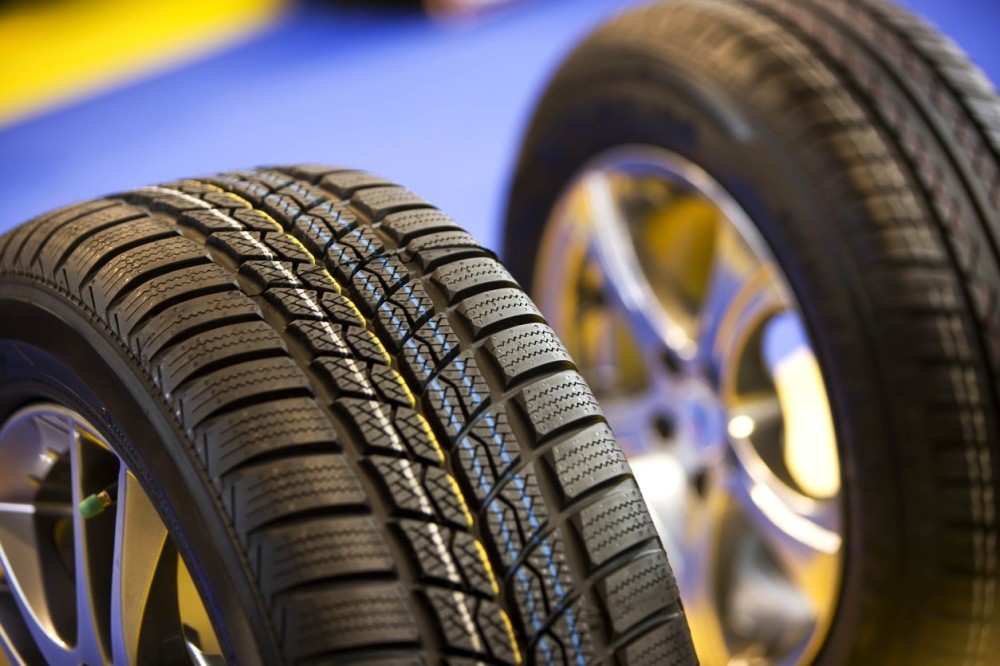
That is why Tire Rack recommends putting a new pair on the rear. The deeper tread helps the back of the car remain settled when water starts collecting on the road.
Yes, even on a front-wheel-drive car
This is the part that catches people out.
The recommendation is not about sending engine power through the new tires. It is about keeping the car stable when traction is uneven between the two axles.
A front-wheel-drive car with better tires at the rear should still steer, accelerate, and brake normally. A front-wheel-drive car with noticeably worse tires at the rear may feel fine until the first wet curve exposes the imbalance.
By then, the difference between the two pairs can become very obvious, very quickly.
In controlled wet-track testing, Tire Rack found that vehicles with the new tires on the front and worn tires on the rear were much more difficult to catch once the back began sliding. Even drivers who knew the slide was coming regularly spun the car.
That is a useful detail to remember at the tire counter. The rear recommendation is not based on an abstract theory about tire wear. It comes from watching what cars actually do when one end has more wet-weather grip than the other.
Goodyear offers the same guidance: if only two tires are being replaced, install them on the rear axle.
New rear tires do not make worn front tires safe
There is an important limit to this advice.
Moving the older pair to the front only makes sense if those tires are still in good condition, have legal and usable tread remaining, hold pressure properly, and show no cracks, bulges, cuts, or irregular wear.
A dangerous tire does not become acceptable because it has been moved to a different axle.
NHTSA says tires should be replaced when tread reaches 2/32 of an inch, although wet-weather performance can begin declining before that legal minimum is reached. Its TireWise guidance also recommends checking for damage, uneven wear, pressure loss, noise, and vibration.
If all four tires are close to the end of their useful lives, replacing the full set is the sensible choice. Two new tires cannot compensate for two that should no longer be on the road.
All-wheel drive can complicate the answer
All-wheel-drive vehicles deserve extra care because some systems are sensitive to differences in tire circumference.
A new tire has deeper tread and therefore a slightly larger rolling diameter than a heavily worn one. If that difference becomes too large, the drivetrain may interpret it as wheel slip or force components to compensate constantly.
Manufacturers set their own tolerances. Depending on the vehicle, replacing two tires may be acceptable, while another model may require four closely matched tires. In some cases, a new tire can be professionally shaved to match the remaining tread depth, although that is a specialist solution rather than a general recommendation.
The owner’s manual should settle the question before tires are ordered.
Staggered setups are another exception. Performance cars sometimes use different tire sizes at the front and rear, which prevents moving an existing rear pair to the front. Mixing tire models, tread patterns, or performance categories can also affect handling.
The simple rear-axle rule applies best to cars using the same tire size and type at all four corners.
Regular rotation can prevent the problem
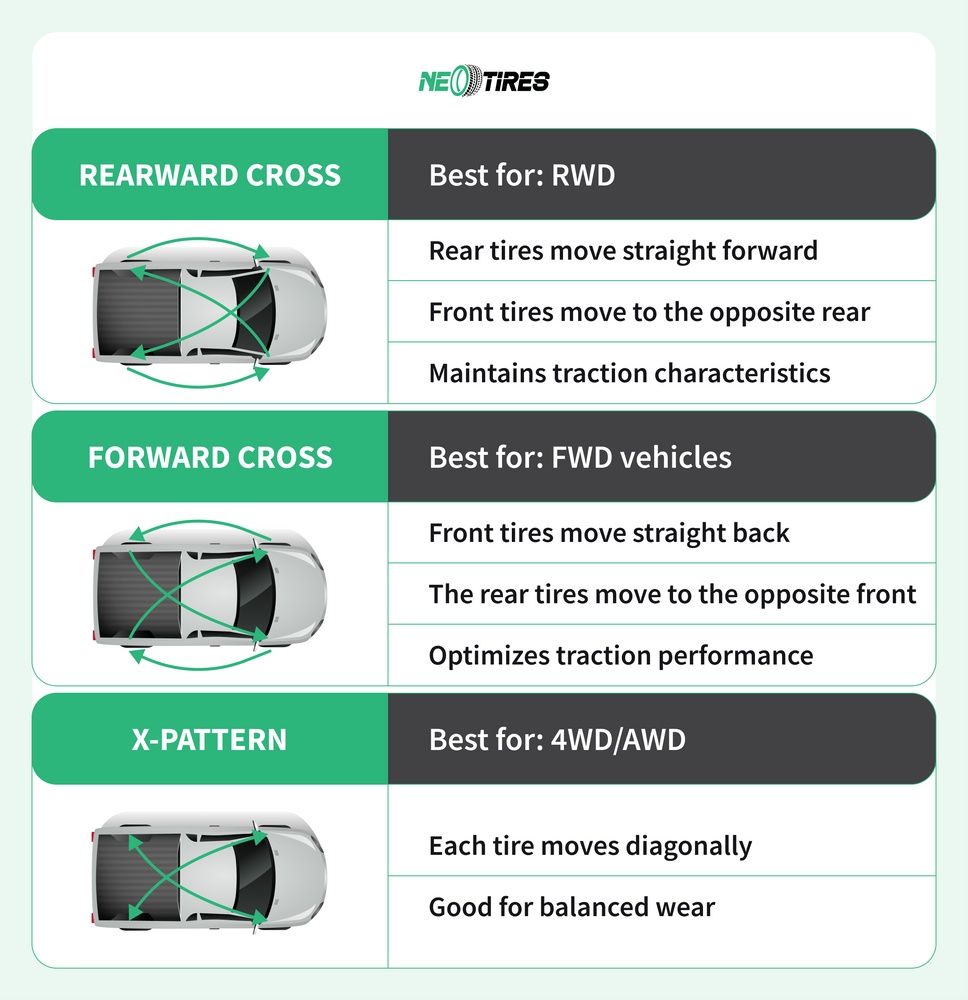
The easiest way to avoid choosing between two worn tires and two fresh ones is to keep all four wearing at roughly the same rate.
Regular rotation moves tires between positions before one axle gets too far ahead. The correct pattern and interval depend on the vehicle and tire design, so the owner’s manual should be the starting point. Directional tires, staggered sizes, and certain performance setups may have limited rotation options.
When rotation is done consistently, all four tires are more likely to reach replacement time together. That preserves the handling balance the car was designed to have and removes the awkward decision entirely.
The answer feels wrong until the road gets wet
Putting new tires on the rear of a front-wheel-drive car can feel like protecting the axle that does the least work.
That is not really what is happening. The better rear tires are protecting the part of the car that becomes hardest to control when it loses grip.
The front can slide and give the driver time to react. When the rear lets go, the conversation tends to become much shorter.
If only two tires are being purchased, and the remaining pair is still safe, put the new ones on the rear. The car may never make the reason obvious.
That is precisely the point.