These Are the Car Repairs That Go Badly Wrong When You Try to Do Them Yourself

by AutoExpert | 16 June, 2026
There's real money to be saved by doing your own car maintenance. Oil changes, air filters, wiper blades, bulbs — these are legitimately easy, and the savings are real. A cabin air filter that costs $18 in a parts store is $85 at a dealership. The math is clear.
But somewhere between "change your cabin filter" and "rebuild your transmission," there's a wide gray zone of repairs that look manageable in a video and turn into expensive disasters in a driveway. Not because the person watching was stupid. Because the video skipped the part where things go wrong.

Here's where to draw the line.
Airbag Replacement or Clock Spring Repairs
This one is first because it's the most dangerous, not just the most expensive to get wrong. Airbag systems contain a pyrotechnic charge. If the system deploys while your hands are in there, the result is serious physical injury. The sensors, wiring, and clock spring (the component that maintains electrical continuity to the airbag while the steering wheel turns) are all part of a system that requires specific tools, training, and a reset procedure that most home mechanics cannot replicate.
If your airbag light is on, have a shop pull the codes and assess it. This is not the place to save $200.

Timing Belt or Timing Chain Replacement
This repair requires removing a significant portion of the engine's front end, precisely aligning multiple components, and torquing everything back to exact specifications. On interference engines — which is most modern engines — if the timing is even slightly off when you start the car, the pistons and valves collide. That's a destroyed engine. A timing belt replacement at a shop runs $500 to $900 depending on the vehicle. Engine replacement runs $4,000 to $8,000. The math does not favor the driveway attempt.
HVAC Refrigerant (AC Recharge)
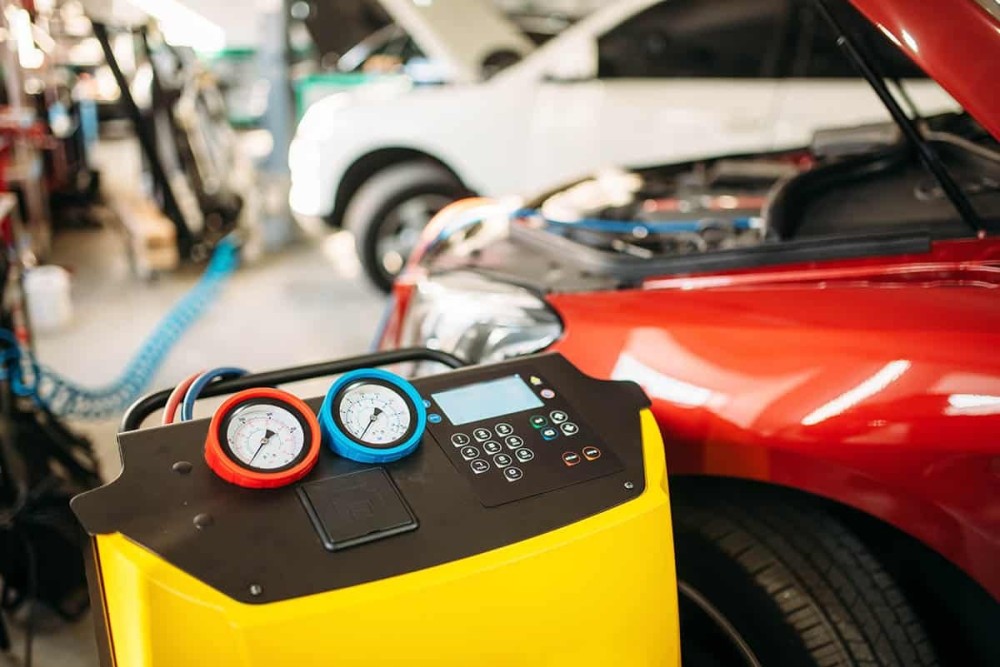
Handling refrigerant without EPA 608 certification is technically illegal in the US. More practically, those $30 "AC recharge" cans at auto parts stores only work if your system has a low refrigerant level from normal seepage — not from a leak. If you have a leak, you're pushing refrigerant into a broken system, and it will be gone again in weeks. A shop can pressure-test the system, find the leak, repair it, and recharge it correctly. This is one of those cases where the DIY shortcut delays the real fix and costs more in the end.
Brake Line Replacement
Changing brake pads is genuinely DIY-friendly. Replacing a brake line is not. Brake lines run the full length of the vehicle, snake through the frame, and require flaring tools, the right tubing material, and correct routing. If a brake line fails after a DIY repair, the result is loss of braking ability at speed. There's no margin for error in this one. Have a shop handle any brake line corrosion, cracks, or leaks.
Transmission Work
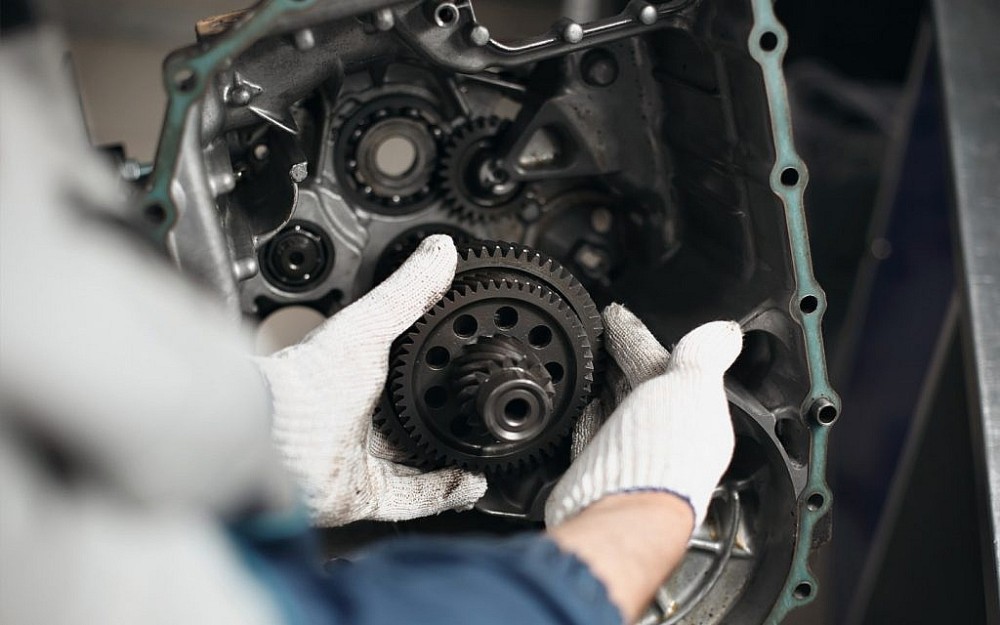
Modern automatic transmissions are extraordinarily complex, and the tolerances involved in reassembling them are measured in thousandths of an inch. Even experienced mechanics often send transmission rebuilds to specialists. A botched transmission repair can take a car that shifts rough and turn it into a car that doesn't move at all. If you're having transmission issues, diagnosis by a reputable shop is the starting point.
Fuel System Repairs
Fuel lines, fuel injectors, and fuel pumps all involve working near flammable liquid. A fuel system repair gone wrong can produce a fire risk that doesn't announce itself until something ignites. The tank and lines also work under pressure, which means disconnecting things in the wrong order can spray fuel unexpectedly.
The Honest Rule
If the repair involves something that controls stopping, steering, or fire risk — airbags, brake hydraulics, fuel systems — take it to a professional. If it involves removing significant engine components with tight tolerances — timing systems, heads, transmissions — take it to a professional.
Everything else is worth researching. The line between "do it yourself" and "do it yourself into a much bigger problem" is real, and the people who get into trouble are usually the ones who underestimated how close to that line they were.