AWD, 4WD, FWD: The Drivetrain Badge On Your Car May Not Mean What You Think
by AutoExpert | 9 June, 2026
A lot of drivers know the badge on the back of their car. AWD. 4WD. Maybe nothing at all, which usually means front-wheel drive and a salesperson who did not have much to brag about. But ask what those letters actually mean, and the confidence starts to fall apart pretty quickly.
That is not really the driver’s fault. Automakers have spent years making drivetrain names sound tougher, smarter, safer, and more outdoorsy than they need to be. Half the time, the ad makes it look like a school-run crossover is one gravel road away from entering the Dakar Rally.
So people hear “all-wheel drive” and “four-wheel drive” and assume they are basically the same thing. They are not. And if someone is buying a car, that difference matters.
AWD vs 4WD vs FWD: What Is The Difference?
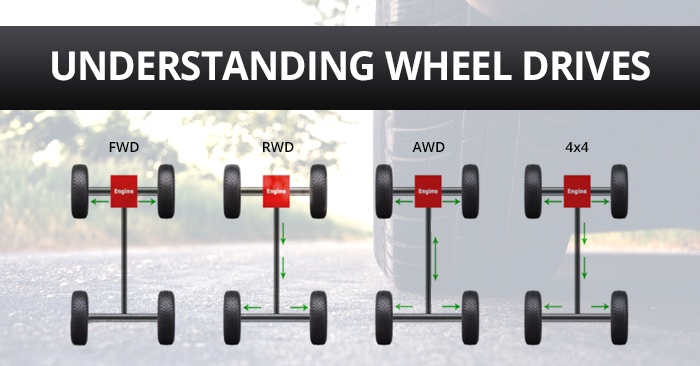
Start with the easy one. Front-wheel drive sends power to the front wheels. That is what most regular cars and plenty of small crossovers use. It is cheaper to build, usually better on fuel, and perfectly fine for normal driving.
Rear-wheel drive sends power to the rear wheels. That is common in sports cars, some luxury sedans, and trucks. It can feel more balanced and more fun, but it is not usually what people are shopping for when they are asking about winter traction.
Then there are the two terms everyone mixes up: all-wheel drive and four-wheel drive. They both involve sending power to all four wheels, but they are not built for the same job.
All-Wheel Drive Is For Real Life, Not Rock Crawling
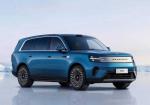
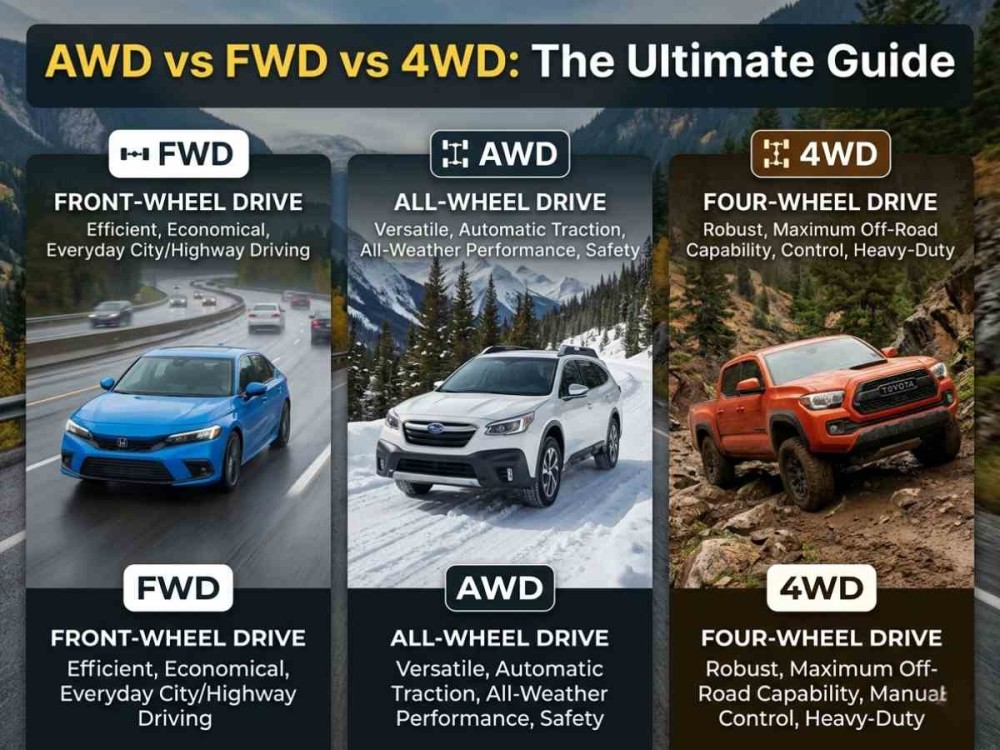
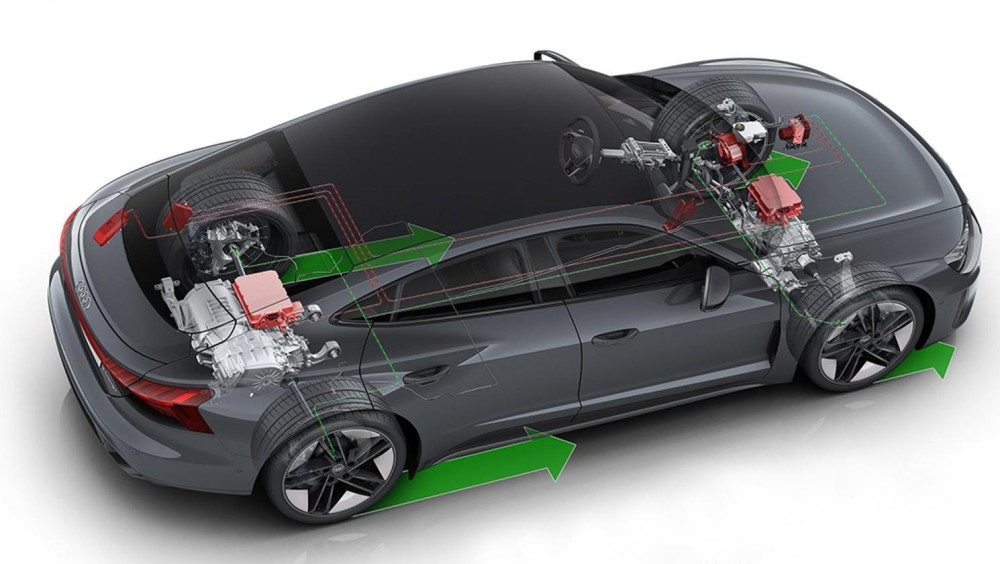
All-wheel drive is what most modern crossovers, SUVs, and some sedans use. The whole point is that the driver does not have to think about it. The system watches for wheel slip and sends power where it is needed. Maybe the front wheels get most of the power most of the time. Maybe the rear wheels get more when the road gets slick. Either way, the driver usually does not press a button or pull a lever.
It just works in the background. That is why AWD makes sense for rain, light snow, steep driveways, gravel roads, and all the annoying weather that happens between “perfectly dry” and “call the plow truck.”
For most families, AWD is not about adventure. It is about leaving the house in February without wondering whether the car will embarrass itself on a slushy hill. But AWD has limits.
It is not magic. It does not turn a crossover into a Jeep. It does not make cheap tires good. It does not help the car stop faster on ice. And it is not designed for serious off-roading where the vehicle is crawling over rocks, pushing through deep mud, or climbing something that looks like it belongs in a truck commercial.
AWD is for confidence on bad roads. Not for pretending the road no longer matters.
Four-Wheel Drive Is The Serious Stuff
Four-wheel drive is different. Real 4WD is usually found on trucks and traditional SUVs. Think Ford F-150, Jeep Wrangler, Toyota 4Runner, and vehicles built with harder use in mind. The big difference is that many true 4WD systems have a transfer case and different modes, including high range and low range. Four-high is for slippery surfaces and lighter off-road use. Four-low is for the ugly stuff: steep climbs, deep mud, loose rock, slow crawling, and situations where the vehicle needs torque more than speed.
That is the kind of thing AWD usually cannot match. But there is a catch, because of course there is. Many 4WD systems are part-time. That means the vehicle is meant to be driven in two-wheel drive on regular pavement, then switched into 4WD when conditions call for it.
Use part-time 4WD on dry pavement, and the drivetrain may not be happy. It can bind, hop, wear parts faster, or in some cases cause damage. That is why 4WD is not automatically “better” than AWD. It is more capable in the right setting, but it also expects the driver to know when to use it.
AWD is the helpful assistant. 4WD is the tool you better understand before you start using it.
Front-Wheel Drive Deserves More Respect
Front-wheel drive gets treated like the cheap option, which is unfair. For a lot of people, FWD is exactly enough.
The engine sits over the front wheels, which helps with traction. The system is lighter and simpler than AWD. It usually costs less to buy, costs less to maintain, and burns less fuel. And in winter, a front-wheel-drive car with proper snow tires can be shockingly capable.
That is the part people forget. Drivetrain matters, but tires matter more than most drivers want to admit. AWD with worn all-seasons is not some unstoppable winter machine. It may accelerate better than FWD, but stopping and turning still depend heavily on the tires.
A good set of winter tires on a front-wheel-drive car can beat a poorly equipped AWD vehicle when the road gets nasty. That sentence should probably be printed on dealership windows every November.
So Which One Should You Buy?
For most drivers, the answer is less dramatic than the marketing makes it sound. If the car will live mostly on pavement, with rain, occasional snow, school runs, highway drives, and normal family life, AWD in a crossover makes sense. It adds confidence and helps in the moments when traction gets messy.
If the car will be used for actual off-road driving, towing in rough conditions, trails, rural work, deep snow, or places where pavement is more of a suggestion, 4WD is the better tool.
If the car is mostly for commuting, errands, and city or suburban driving, FWD is not a downgrade. It is often the smart, cheaper, simpler answer, especially with the right tires.
The mistake is buying AWD just because it sounds safer. Sometimes it is worth it. Sometimes it is just extra weight, extra cost, slightly worse fuel economy, and more parts that may eventually need attention.
A badge on the tailgate should not make the decision. The driver’s actual life should.
The Bottom Line
AWD, 4WD, and FWD are not just different labels for the same thing. AWD is for everyday traction without much driver input. 4WD is for harder work, harder terrain, and situations where a real transfer case matters. FWD is the underrated practical choice that handles normal life better than people give it credit for.
The right drivetrain is not the toughest one on paper. It is the one that fits the roads, weather, budget, and driving the car will actually see. Because paying extra for capability that never gets used is not preparation. It is just expensive decoration.