

Your Garage Door Sensor Is Probably Not Broken. It’s Usually Just Dirty, Off-Target, or Being Ridiculous

by AutoExpert | 6 July, 2026
Nothing makes a normal morning more annoying than a garage door that suddenly decides it has boundaries.
You hit the button, the door starts to move, then stops, blinks at you, reverses for no obvious reason, or just sits there acting like you asked it to solve a math problem. It is one of those household problems that immediately feels expensive, even when the actual cause is often embarrassingly small.
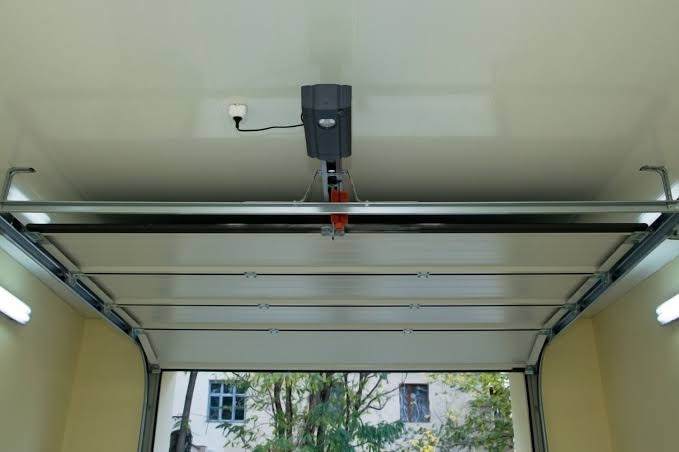
A lot of the time, the problem is not the garage door itself. It is the sensor.
And the good news is that garage door sensor issues are usually not some dramatic mechanical disaster. More often, the sensor is dirty, slightly out of alignment, or having a very minor issue that somehow creates a very major inconvenience.
That is why this is one of those problems worth checking yourself before you call someone and pay them to do something you could have handled in ten minutes.
Garage door sensors are simple in theory. One sits on one side of the door, the other sits across from it, and they send a beam between each other. If that beam is uninterrupted, the opener assumes everything is clear and lets the door close. If the beam gets blocked, or the sensors stop seeing each other properly, the system assumes something is in the way and refuses to cooperate. Which is good, obviously, when the “something” is a child, a pet, or the hood of your car.
Less good when the “something” is a spiderweb.
That is why the first thing to check is the simplest thing: dirt.
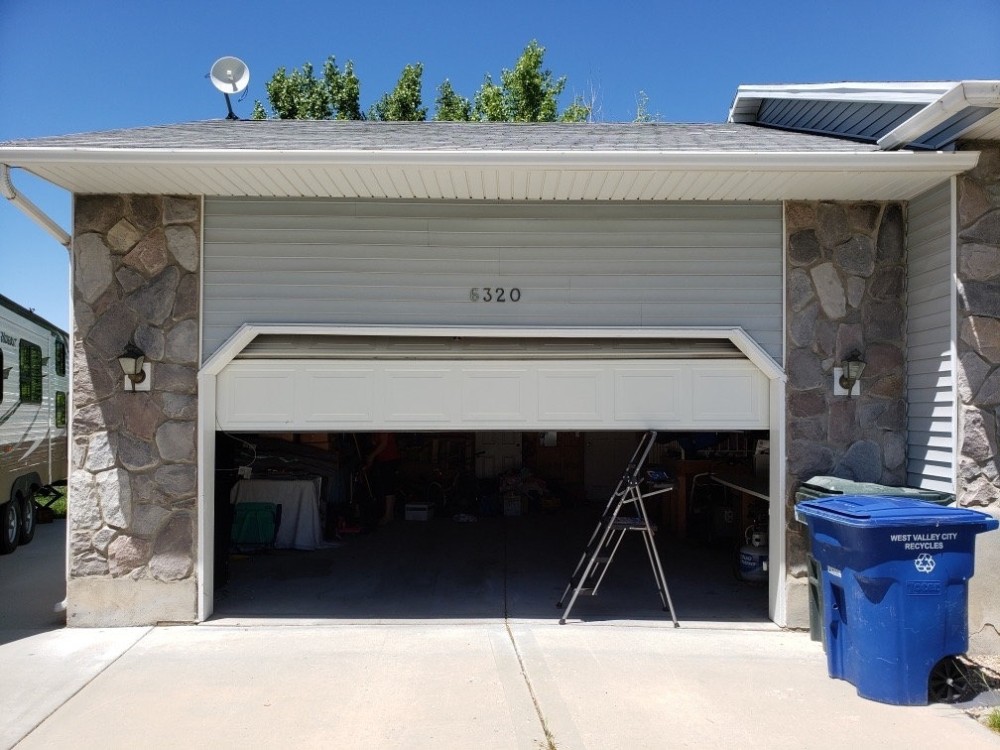
Garage sensors live low to the ground, which is basically the worst possible neighborhood for staying clean. Dust, cobwebs, pollen, garage grime, old grease mist, random debris, all of it builds up down there. It does not take much for those little sensor eyes to get cloudy enough that the beam stops working properly.
So before doing anything else, cut power to the opener so nobody accidentally triggers the door while you are down there. Then take a soft cloth or paper towel and wipe off both sensor lenses. If they are really gross, use a little water or rubbing alcohol on the cloth. Nothing dramatic. You are cleaning something delicate, not trying to sand a deck. Then let it dry completely before restoring power.
You would be amazed how often that alone fixes it.
If cleaning the sensors does nothing, the next likely problem is alignment.
This is the other really common one. The sensors may still be clean, but one of them is no longer pointing properly at the other. It does not take much. A bump, a loose bracket, vibration over time, somebody moving things around in the garage a little too casually, that is all it takes. Suddenly the beam is not landing where it should, and the opener starts acting like there is an invisible hostage situation at floor level.
Usually the fix is easy. Loosen the mounting bracket just enough to move the sensor, point it directly at the other one, then tighten it again. No need to overcomplicate it. You are not calibrating a satellite. You are just helping two tiny plastic boxes make eye contact again.
The indicator lights can help here too.
Most garage door sensors have small lights on them, and they are basically the sensors’ way of telling you how offended they currently are. Solid light usually means good. Blinking light usually means not good. No light at all means definitely not good. The exact colors vary by brand, but the general idea is consistent: steady is happy, blinking is not.
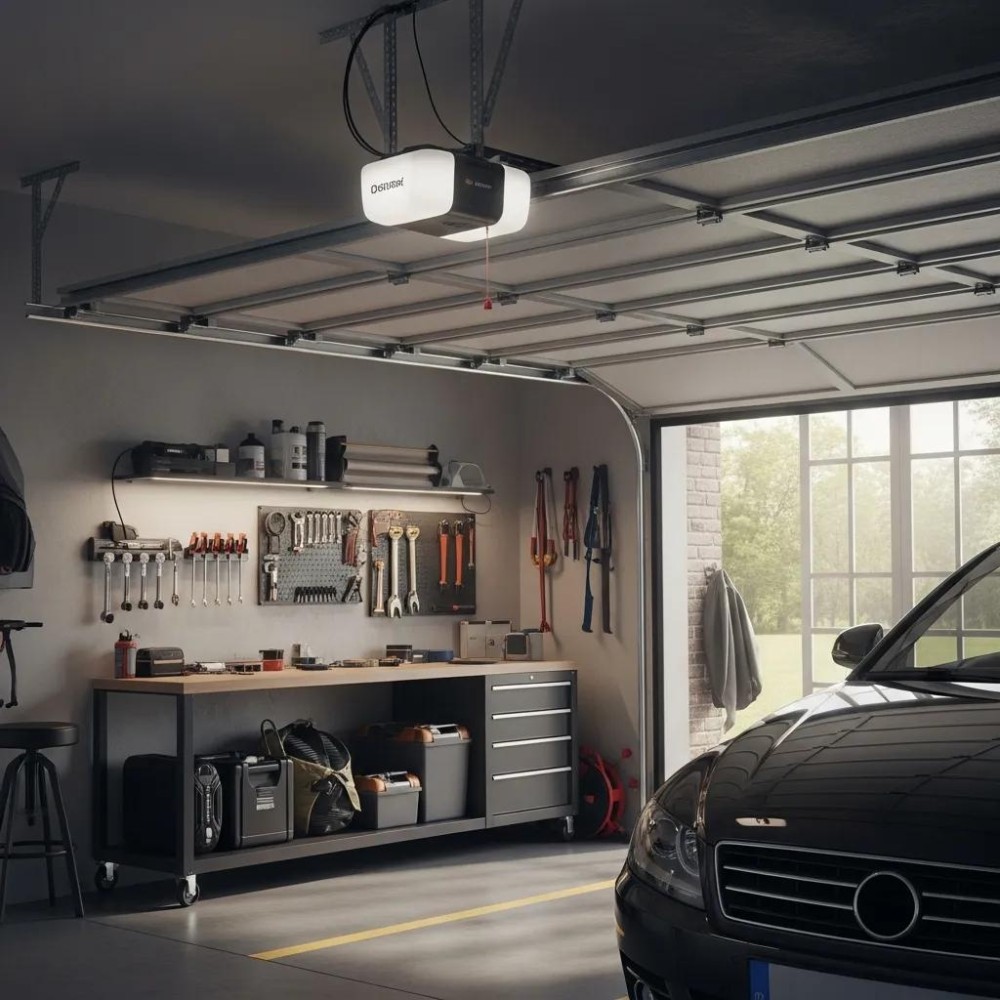
There are a couple of other less common issues too. Direct sunlight can mess with some older systems at certain times of day, which is one of those absurd little problems that sounds fake until it happens to you repeatedly around the same hour every afternoon. If your garage door works fine most of the time but becomes impossible when the sun hits just right, that may be the explanation.
It is also worth taking one extra minute to check the area around the door while you are there. Make sure the tracks are not full of junk. Make sure nothing is blocking the sensor line. Make sure there is not some obvious issue you overlooked because the blinking lights distracted you. Garage door systems are not emotionally subtle. They react to problems in big annoying ways, even when the root cause is tiny.
That is really the main thing to remember here.
A garage door sensor problem often feels more serious than it is. The door refuses to close, the opener blinks, everything suddenly stops working, and your brain jumps straight to “great, now this is broken too.” But in a lot of cases, the fix is not some expensive part or complicated repair. It is cleaning the lens, straightening the sensor, or dealing with some small bit of nonsense that got in the way.
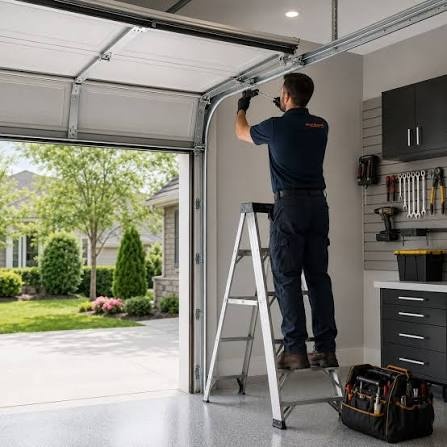
So before you call for help, start with the obvious.
- Clean the sensors.
- Check the alignment.
- Look at the indicator lights.
- Make sure the track and doorway area are clear.
- Try the door again.
A surprising number of garage-door problems end right there.
And if it does turn out to be something bigger, at least you will know you did not pay someone a service fee to wipe dust off a lens and tighten a bracket.