Low Brake Fluid? Put the Bottle Down Until You Know Where It Went
by AutoExpert | 17 July, 2026
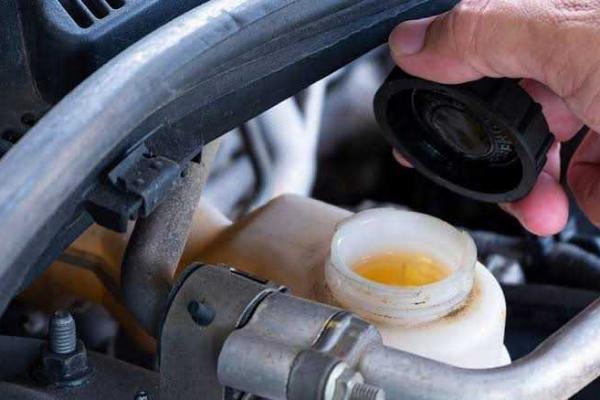
The reservoir under the hood is sitting close to the minimum line. There is a bottle of brake fluid on the shelf. The obvious response seems to be pouring in enough fluid to bring the level back to “MAX.” Problem solved.
Except brake fluid is not windshield-washer fluid. It is not supposed to vanish because the car used some during the week. If the level has dropped, there is a reason. Filling the reservoir before finding that reason can hide one of the most useful clues the braking system has provided.
Sometimes the explanation is ordinary brake wear.
Disc brakes use a caliper to squeeze two pads against a spinning rotor. As those pads become thinner, the caliper pistons have to move farther outward to keep them close to the rotor. Brake fluid fills the extra space behind the pistons, which means the level in the reservoir gradually falls.
Nothing has escaped. The fluid has simply moved farther into the system.
That is why a reservoir sitting slightly below the maximum mark does not automatically mean the car needs more fluid. It may be showing that the brake pads have accumulated plenty of miles and deserve a look.
This is also where an innocent top-up can become messy.
When worn pads are replaced, the caliper pistons are pushed back into their original positions to make room for the thicker new pads. The fluid behind those pistons returns to the reservoir. If somebody has already filled it to the brim, the returning fluid may have nowhere to go except over the top.
Brake fluid is not something anyone wants spilling around an engine bay. It can damage painted surfaces, and it absorbs moisture readily once exposed to air.
A gradual reduction caused by pad wear is one possibility. A leak is the other, and that is the one that should make a driver nervous.
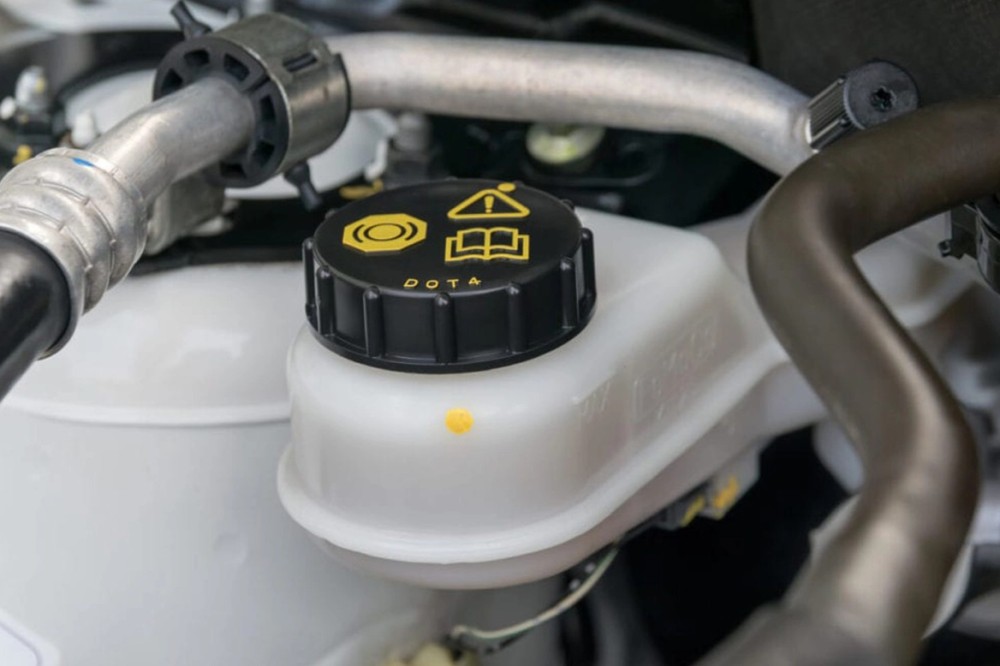
The braking system is hydraulic and largely sealed. Fluid should not need regular topping up. If the level falls noticeably, drops below the minimum mark, or needs to be replenished more than once, the car needs an inspection.
Leaks can appear at brake hoses, metal lines, calipers, wheel cylinders, the master cylinder, or connections between them. Some leave a wet patch near a wheel or beneath the car. Others are less cooperative. A master-cylinder leak may not announce itself with a tidy puddle on the garage floor.
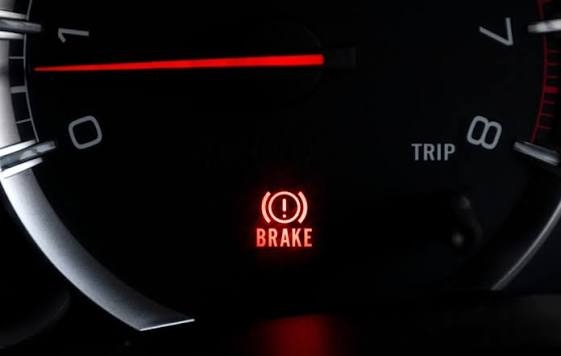
The pedal can provide clues too. A soft or spongy feel, a pedal that slowly sinks while pressure is held, longer stopping distances, or a brake warning light should not be treated as “monitor it for a few days” problems.
Brakes are not especially interested in waiting to see whether things improve on their own.
If the reservoir is empty or nearly empty, the car should not be driven. Adding fluid may restore pedal pressure briefly, but it does nothing to repair the leak that allowed the level to fall. The fresh fluid can simply follow the old fluid out.
There is another point worth clearing up: topping up brake fluid and replacing brake fluid are not the same job.
Brake fluid attracts moisture over time. That moisture can lower its boiling point and contribute to corrosion inside the system. During repeated hard braking, overheated fluid can begin to boil, producing vapor that compresses far more easily than liquid. The result can be a frighteningly soft pedal when strong braking is needed most.
A proper brake-fluid service removes old fluid from the system and replaces it with fresh fluid. Pouring a small amount into the reservoir does not renew the fluid already sitting in the lines, calipers, and hydraulic control unit.
The correct replacement interval varies by vehicle. Some manufacturers specify a time-based schedule, while others recommend testing or inspection. The owner’s manual gets the final vote.
It also specifies the required fluid type. DOT 3, DOT 4, DOT 5, and DOT 5.1 are not labels to choose according to whichever bottle looks most impressive. They have different formulations and properties, and silicone-based DOT 5 fluid is not compatible with the glycol-based fluids used in most road cars.
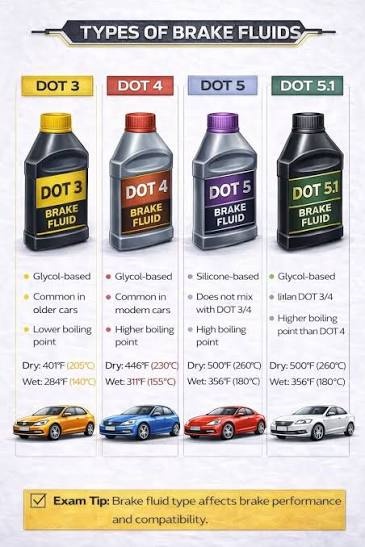
The cap on the reservoir usually identifies the correct specification. If it does not, the manual will.
Before opening anything, clean the dirt from around the cap. A hydraulic braking system has no use for the dust, grit, and oily debris collected under the hood. Use fluid from a fresh, properly sealed container, since an old bottle may have absorbed moisture while sitting around.
Most importantly, read the level before attempting to correct it.
If it is between the minimum and maximum marks, the car may not need any added fluid at all. Check the condition of the brake pads and keep an eye on the level. If it is below minimum, falling quickly, or accompanied by a change in pedal feel, treat it as a warning and have the system inspected.
The reservoir is not asking for a drink. It is telling you something about the brakes. The useful part is finding out what.