Somehow, These Jobs Actually Get Their Own License Plates
by AutoExpert | 23 June, 2026
There are a lot of specialty license plates out there. Too many, honestly.
Some of them make perfect sense. Military plates, university plates, wildlife plates, charity plates, the usual stuff. You see one, you get it immediately. Someone loves their school, supports a cause, served in uniform, wants to save sea turtles, whatever. Fair enough.
Then you get into the stranger corners of the license plate universe, and that is where things get fun.
Because apparently, in parts of America, it is not enough to quietly work in a niche profession or belong to a very specific organization. No, some people also need the rest of traffic to know about it. Right there at the stoplight. Right between the registration sticker and the brake lights. That is how you end up with specialty plates for jobs and organizations so oddly specific that they feel less like normal DMV offerings and more like inside jokes that somehow made it through a committee vote.
And honestly, that is kind of beautiful.
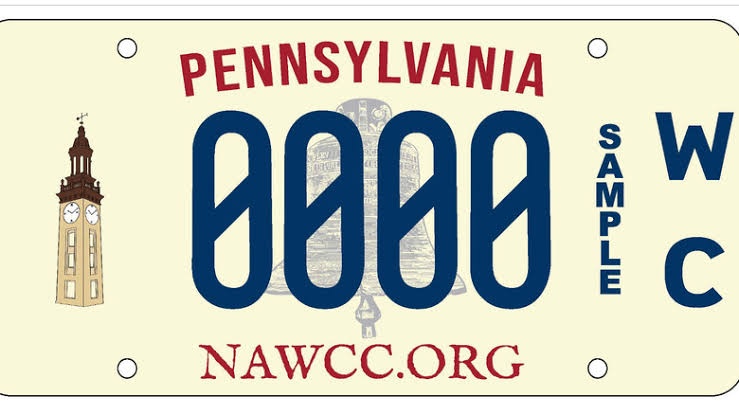
Take the watch and clock people in Pennsylvania. That one is incredible. There is an actual specialty plate tied to the National Association of Watch and Clock Collectors, which is the sort of thing you assume cannot possibly exist until you see it and realize the DMV is apparently deeper into horology than anyone expected. It is also such a specific form of enthusiasm. Not just “I like old things.” Not just “I collect antiques.” No. Timepieces. Precision. Mechanisms. Tiny gears and old clocks and serious people who absolutely have opinions about pocket watches. You have to respect a group that committed so fully to its niche that it ended up with a license plate.
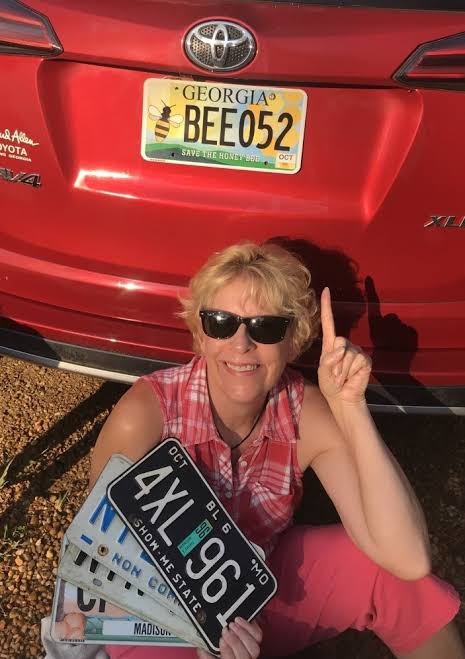
Then there are the Georgia beekeepers, which may be the smartest group of the bunch. Their plate is technically tied to the Georgia Beekeepers Association, but the real genius is that it does not feel limited to beekeepers at all. It taps into that broader “save the bees” energy that a lot of people already support, whether they have ever touched a hive or not. It is one of the few specialty plates that actually understands how people work. Make it about identity and membership, and the audience stays small. Make it feel like someone can quietly support pollinators and feel morally decent in traffic, and suddenly the appeal gets much wider. That is not just a plate. That is strategy.
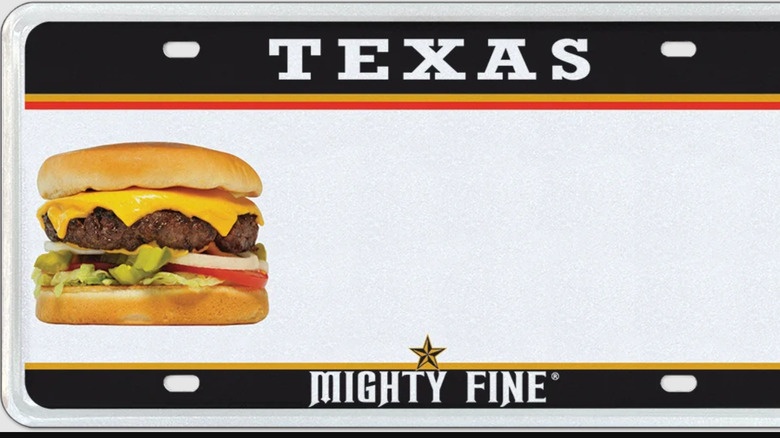
Texas, meanwhile, did something even stranger and somehow more American: it gave a burger chain its own plate.
Not a ranching association. Not a food bank. Not a cattlemen’s federation. A burger place.
And honestly, that may be the most honest specialty plate of them all. At least nobody has to pretend it is about civic virtue. It is just branding, appetite, and local pride all mashed together in one very Texas little package. You can imagine someone spotting that plate in traffic and immediately becoming hungry, which may actually make it one of the most effective advertising tools in the entire list. It is ridiculous, yes. But it is also kind of brilliant.
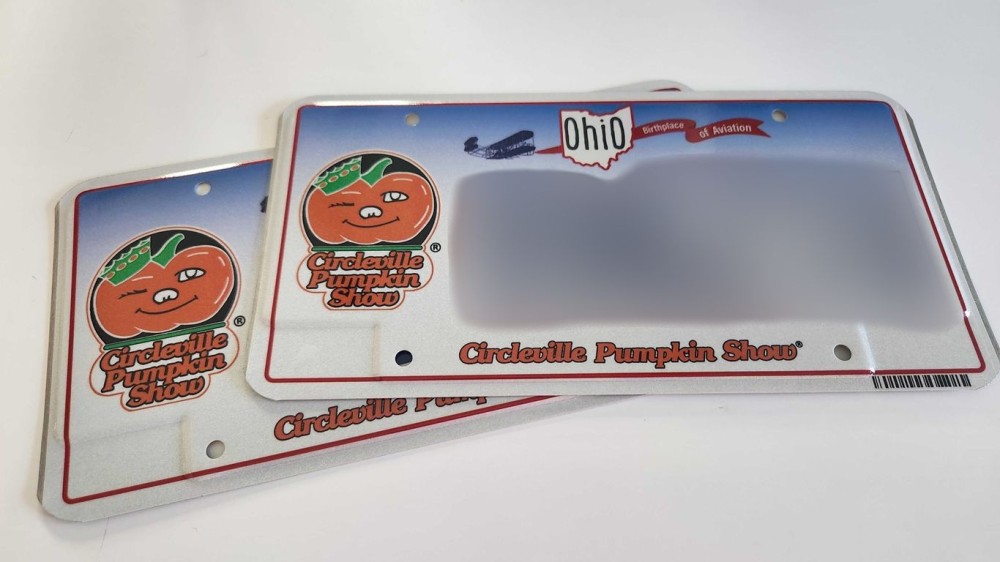
Ohio gets points for pumpkin-related seriousness, which is a phrase that should never feel normal and yet somehow does. The Circleville Pumpkin Show is one of those deeply regional institutions that sounds made up until you realize it is very real and people care about it with the kind of sincerity only local tradition can produce. Once you understand that, the license plate makes more sense. Not total sense, but enough. It is still funny, though, to imagine driving around all year publicly identifying yourself as a person who is, spiritually speaking, very invested in pumpkins.
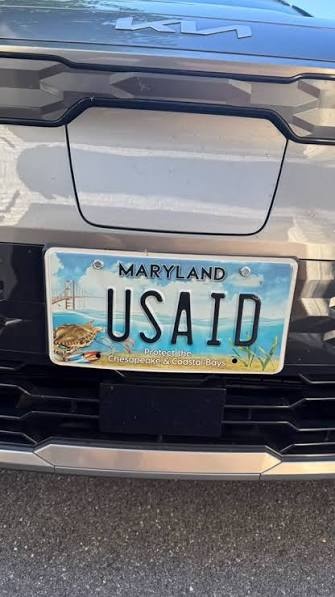
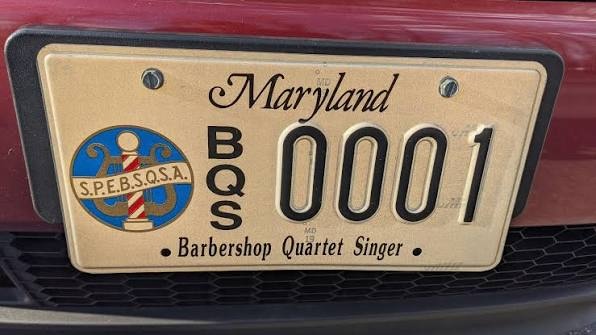
And then there is Maryland, which seems to operate with the broadest possible interpretation of what deserves a plate. Maryland does not so much issue specialty plates as collect them like a hobby. If enough people somewhere care about something, apparently the answer is, sure, give it a design and send it out into the world. That is how you end up with things like National Ski Patrol plates, which are already odd on their own and become even funnier once you remember this is Maryland, not the Alps. Still, there is something admirable about that level of commitment. If the state is going to embrace niche identity, it may as well go all the way.
That is really what makes these plates interesting. They are not just about professions, at least not in the strict sense. They are about little worlds. Subcultures. Tiny communities of people who care deeply about something most of the population barely thinks about. Watches. Bees. Burgers. Pumpkins. Ski patrol. Each one feels like proof that there is a whole parallel America humming along just beneath the obvious one, full of enthusiasts and associations and annual conventions and fundraisers and very earnest people who absolutely want you to ask about their plate in a parking lot.
And maybe that is the charm of it.
Most license plates are forgettable by design. These are the opposite. These are tiny rolling declarations of affiliation. Some are heartfelt. Some are goofy. Some feel like they should not exist and yet obviously do because somebody, somewhere, fought for them.
Which is kind of great.
In a world where so much about cars is becoming generic, overly polished, and algorithmically market-tested, there is something refreshing about a license plate that says, in effect, yes, I am deeply committed to this weirdly specific thing, and no, I will not be explaining myself further.
That may be the most human use of a car ever.