
That Little Shark Fin on Your Roof May Be Running Half the Car’s Digital Life
by AutoExpert | 6 August, 2026
The old-fashioned car antenna made no attempt to hide what it was. It was a long metal whip sticking proudly out of a fender, ready to catch radio stations, snag a car-wash brush or disappear overnight in a parking lot.
Modern cars are less obvious about it.
Near the back of the roof, there is often a small body-colored fin that looks as though it was added by a designer seeking one final sporty detail. It is easy to dismiss as decoration. It is also easy to forget until a roof box bumps into it or an enthusiastic car-wash brush tries to remove it.
That shark fin is usually an antenna housing, and the radio may be only one of its jobs.
Several antennas can live beneath one cover
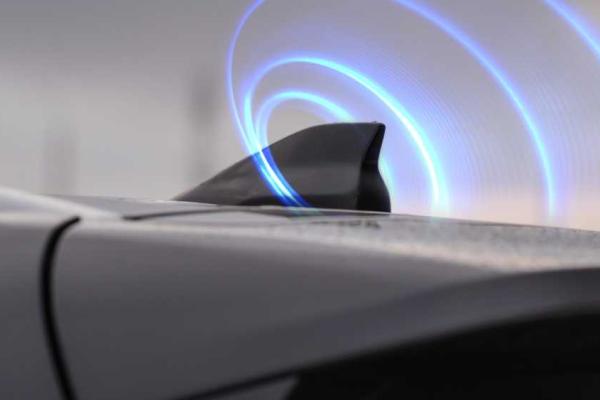
Cars now communicate with the outside world in more ways than an old AM/FM radio ever needed to contemplate. Depending on the vehicle and its equipment, the roof antenna may support broadcast radio, satellite radio, GPS navigation, cellular communication, connected services, Wi-Fi or an emergency-call system.
That does not mean every shark fin contains all of those functions. On a basic model, it may handle only radio reception. A more heavily equipped version of the same car could use an externally identical housing with several antenna elements inside.
Automotive antenna manufacturer Harada notes that early fin antennas were used for mobile communication and GPS, with radio functions becoming more widely integrated later. Modern composite designs can combine several types of reception into a single housing.
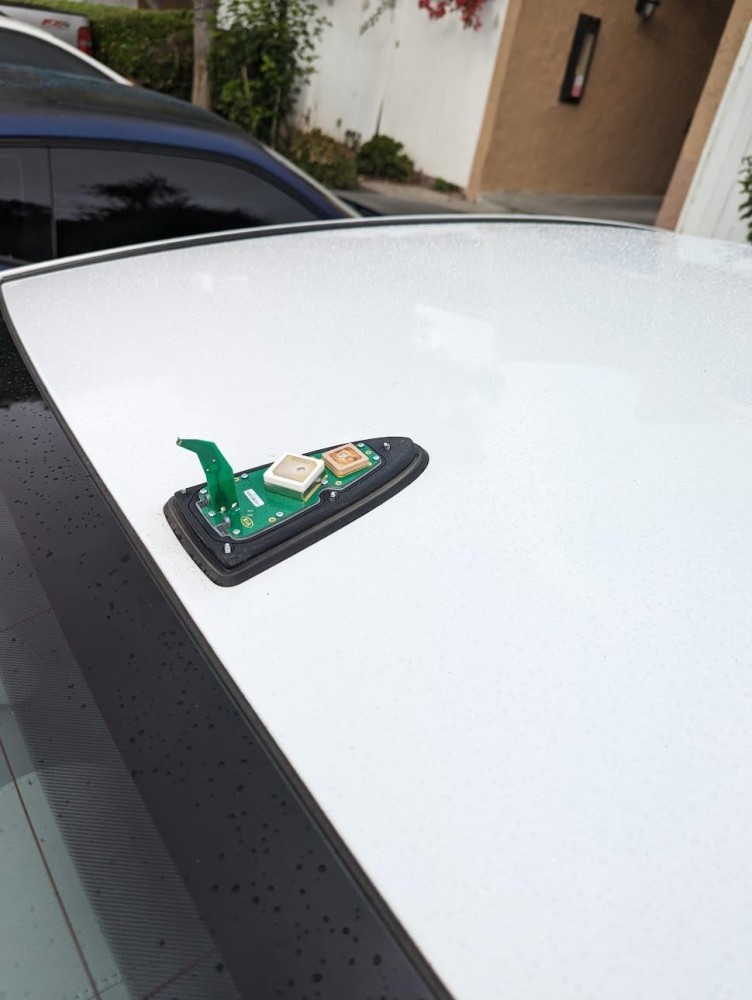
The individual antennas are not interchangeable pieces of wire. Radio, cellular and satellite systems operate across different frequencies, so the shape and positioning of their antenna elements must suit the signals they are meant to receive. Companies such as TE Connectivity produce multifunction fin housings that combine cellular, GPS and Wi-Fi capabilities in one compact assembly.
There is quite a lot happening beneath that little piece of painted plastic.
Why put it on the roof?
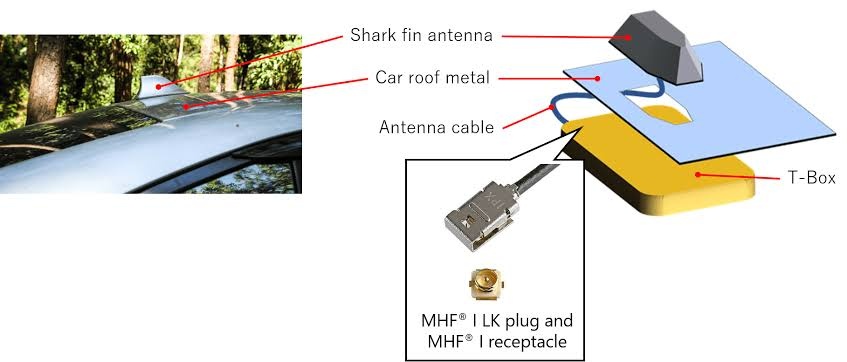
An antenna generally works better when it has a clear view of the surrounding sky and fewer pieces of metal blocking its signal. The roof provides both height and a broad metal surface that can form part of the antenna system.
It is also a convenient place to keep several communication functions away from the electrical noise produced by other equipment inside the car.
The fin shape brings practical advantages of its own. It is shorter than a rod antenna, harder to steal and less likely to strike a low garage door. It produces less wind noise and fits modern styling rather neatly. Even a family crossover looks faintly more adventurous with a shark fin on top.
Not every antenna has migrated to the roof. Some vehicles still place radio elements inside the rear glass. They resemble defroster lines and can be damaged by careless tint removal or scraping. Other antennas may hide inside bumpers, mirrors or sections of dashboard trim. The roof fin is often part of a larger network rather than the car’s single connection to everything.
Damage can cause some puzzling symptoms
A broken fin does not always silence the radio immediately. It may affect one service while the others continue working, especially when different antenna elements or backup antennas are involved.
The radio might become weak only in fringe areas. Navigation may take longer to determine the car’s position. Connected services could become unreliable. Satellite reception might drop beneath trees more easily than before. Water entering around a cracked base can create an entirely different problem, leaving stains on the headliner or corroding electrical connections.
A loose outer cover should not simply be flooded with household glue and pressed back into place. The seal between the antenna base and roof must keep water out, while the housing itself may need to remain serviceable. Some repairs require access from beneath the headliner, which is also where side-curtain airbags and delicate trim fasteners can complicate an apparently simple job.
Replacement parts must match the car’s actual equipment. A cheap fin that looks identical in an online photograph may be little more than an empty plastic shell. It can cover a damaged base, but it cannot replace the antennas or electronics that were originally inside.
Before fitting roof bars, a cargo box or a car cover, check the clearance around the fin. A box placed too close may interfere physically, and loading something heavy against the housing can crack it without producing an obvious mark.
The shark fin is one of those car parts that manages to be discreet and surprisingly busy at the same time. It may look like a small styling flourish, but on the right car it is listening for radio stations, finding satellites and keeping the vehicle connected while asking for almost no attention in return.
Until the car wash gets hold of it, anyway.