The Glow-in-the-Dark Handle in Your Trunk Exists Because Something Went Terribly Wrong
by AutoExpert | 6 August, 2026
There are plenty of things inside a trunk that nobody pays much attention to. A jack that has never left its plastic tray. A spare wheel that may or may not contain air. A collection of reusable shopping bags gradually taking over the place.
Then there is the small plastic handle hanging near the latch. It usually glows green after dark and often carries a little image of a person climbing out of a car. The illustration can look almost comical, right up until its purpose sinks in.
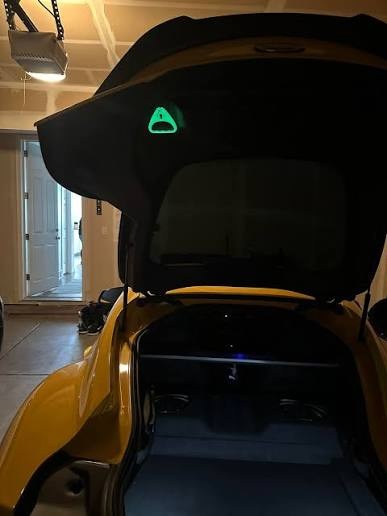
That handle is there so someone trapped inside the trunk can get out.
It is not a clever optional extra, nor is it intended to make loading groceries easier. It exists because trunk entrapment has killed people, particularly children who climbed into parked cars and could not reopen the lid.
What happens when the handle is pulled?
The handle is connected to the trunk latch. Pulling it releases the lid from inside, even when the car is locked.
Its location varies slightly between vehicles. Some handles hang directly beneath the latch. Others sit to one side or are mounted against the trunk lining. The shape varies too, but the fluorescent green material and escape symbol make most of them easy to recognize.
That visibility is deliberate. A closed trunk is properly dark, and searching by touch during a frightening emergency is hardly a reasonable safety plan.
The current federal interior trunk-release standard requires enclosed trunks in passenger cars to have an internal release. A manual release must include lighting or phosphorescent material that makes it visible after the lid closes.
The mechanism is supposed to release the lid completely, not merely pop it open by a fraction. Front trunks, or “frunks,” require slightly different engineering because the hood may also have a secondary safety latch to prevent it from flying open while the vehicle is moving.
Why hatchbacks often do not have one
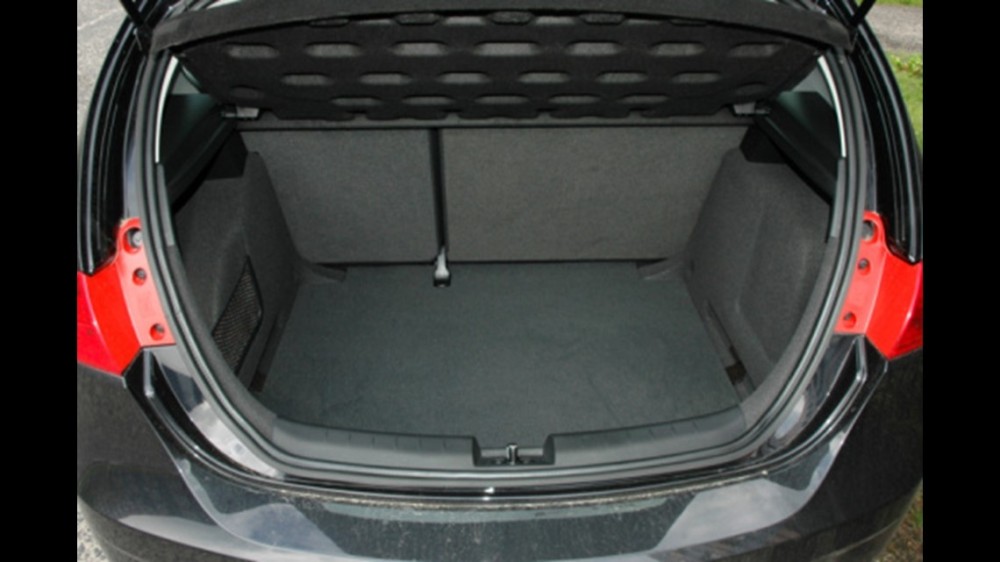
Open the cargo area of a hatchback or SUV and the glowing handle may be nowhere to be found. That does not necessarily mean the manufacturer forgot it.
Federal rules distinguish between an enclosed trunk and a back door. A sedan’s trunk is separated from the passenger compartment and has a conventional trunk lid. A hatchback’s cargo area is part of the cabin, while its large rear opening is legally treated as a door.
As NHTSA explains, hatchbacks and station wagons are therefore excluded from the federal trunk-release requirement. In most of them, a person in the cargo area can fold a seat, reach a passenger door or use an interior rear-door control if one is provided.
Convertibles can be another odd case. Their trunk shape, folding-roof hardware and internal partitions may produce arrangements that look nothing like the familiar sedan setup. The owner’s manual remains the best place to find the model-specific emergency procedure.
Do not let the handle disappear beneath the luggage
A trunk release does little good if it has been tied back, tucked behind replacement carpeting or buried beneath an overloaded cargo organizer.
Owners occasionally secure the dangling handle because it rattles against the trim. That solves a tiny annoyance by compromising a genuine safety feature. If it rattles, the attachment or surrounding trim should be inspected without making the handle difficult to reach.
Used-car buyers should also check that the release is present, undamaged and connected. A repaired rear-end collision, a replacement latch or badly fitted trunk trim can leave the handle hanging uselessly from a disconnected cable.
There is no reason to climb into the trunk and close the lid to test it. With the trunk open, the latch can usually be moved carefully into its closed position using a suitable tool, then released by pulling the handle. Anyone unfamiliar with the mechanism should let a repair shop check it. Slamming the lid against an already closed latch is an excellent way to turn a safety inspection into a repair bill.
Parents should show older children what the handle does, while making it clear that a trunk is never a play area. Keys should also be kept away from young children, and unattended vehicles should remain locked.
The little green handle will probably spend the car’s entire life glowing quietly beneath the trunk lid. That is the ideal outcome. But unlike many forgotten pieces of equipment back there, it is worth knowing exactly where this one is.