
Kenworth’s Cab Beside Engine Was the Weirdest Semi Truck Ever Built
by AutoExpert | 2 February, 2026
Back in the 1950s, trucking companies were obsessed with squeezing every last pound of cargo into their loads. Strict length and weight laws made it tough to turn a profit, so everyone was looking for an edge. Kenworth's solution? Cut the entire cab in half. Meet the Kenworth Cab Beside Engine, the weirdest semi truck ever built.
Trucking Laws Were a Total Mess
Before the 1980s, every state had its own rules about how long and heavy trucks could be. A rig that was perfectly legal in one state could get you a ticket the minute you crossed the border. Maine kicked things off in 1913 with an 18,000-pound weight limit. Massachusetts said 28,000 pounds was fine. Pennsylvania went with 24,000. Nobody could agree on anything except width, which most states capped at 96 inches.
By 1929, almost every state had some kind of size and weight rules. By 1933, all of them did. The craziest restriction was in Illinois, where the railroad lobby convinced lawmakers to limit trucks to just 35 feet long. They wanted to kill trucking and boost rail traffic.
The federal government finally stepped in with the Federal-Aid Highway Act of 1956, setting weight limits at 73,280 pounds and width at 96 inches for interstate highways. But states still controlled length until 1982. Truckers had to get creative to work around all these restrictions.
Cabovers Ruled the Roads
During this era, cab-over-engine trucks dominated because they saved precious feet. Instead of wasting space on a long hood, the cab sat right over the engine. Those extra feet meant more room for cargo, which meant more money.
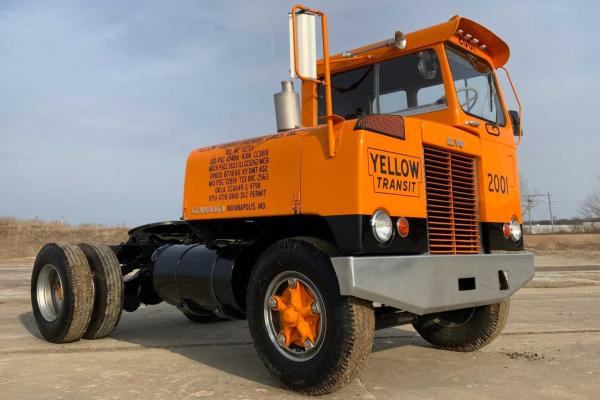
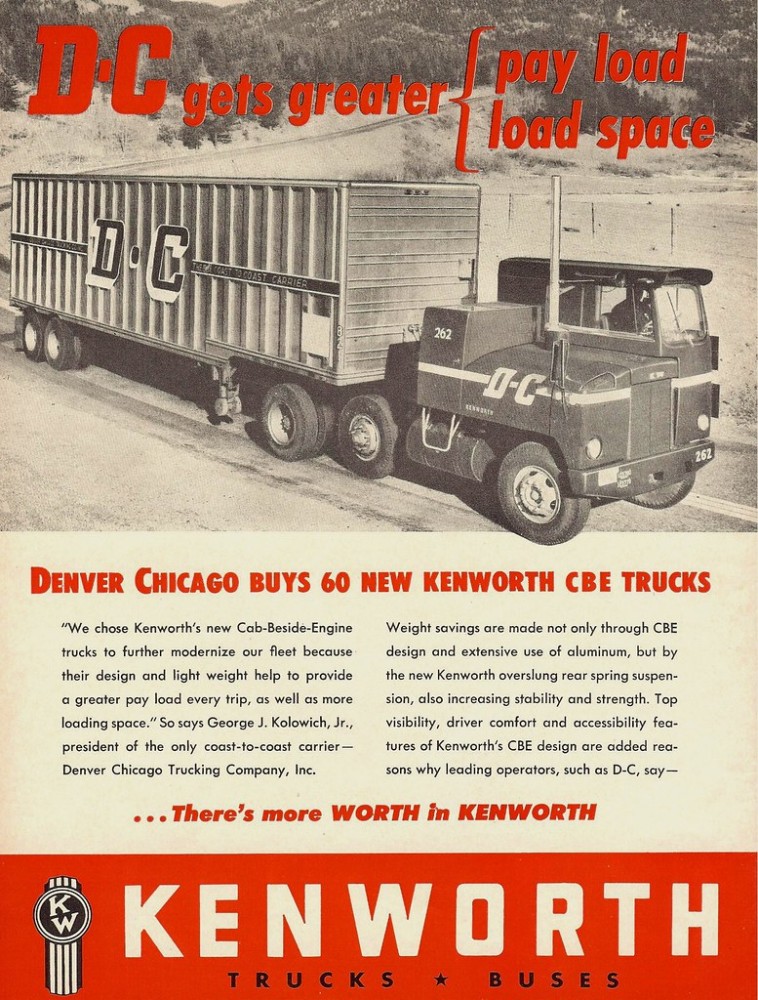
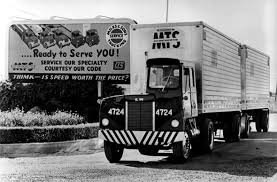
Some companies took it even further. They started building shorter, lighter cabovers that ditched creature comforts entirely. The Kenworth CBE was the most extreme example. It literally cut the cab in half and somehow still managed to fit a passenger seat and even a sleeper berth.
A Truck Designed for Visibility
Kenworth unveiled the CBE in 1954 as a totally new type of truck. Chief Engineer Robert C. Norrie said they started from scratch with one goal: perfect visibility. Most cabovers had awful blind spots. If someone stood too close to the front, the driver couldn't see them at all.
The CBE fixed that. The driver could see a person standing anywhere next to the cab. The corner posts were super narrow, the mirrors were positioned low to eliminate blind spots, and the driver could reach out and clean all the windows from inside. The passenger sat behind the driver like in a jet fighter, tandem style.
The whole cab was welded aluminum. Mechanics loved it because the engine was easy to access without a huge cab in the way. The exhaust ran straight from the engine with no elbows or flexible tubing. Even the door was new - a single aluminum piece that formed the frame, window slide, seal, and drip molding all in one.
The cab was isolated from the chassis with rubber mounts to kill vibration. Engine noise in the cab basically disappeared. Since the cab sat separate from the engine, it stayed cooler too.
Half the Cab, More Payload
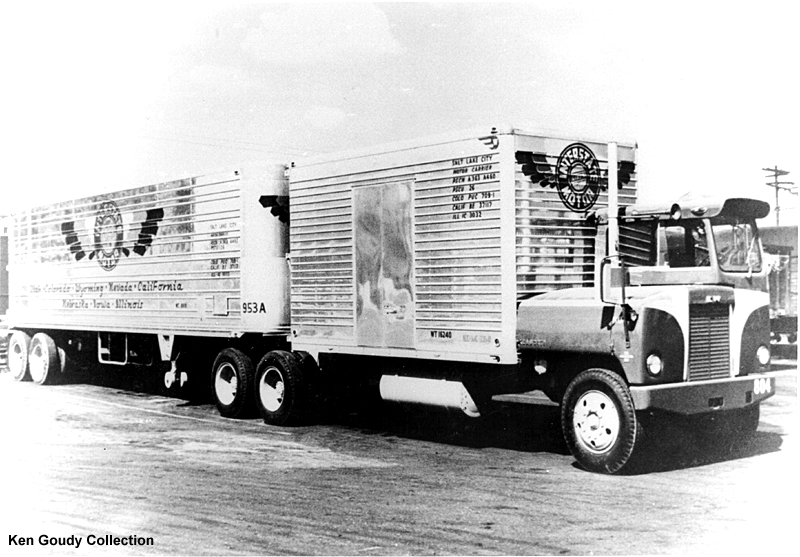
All that engineering saved 1,000 pounds compared to a regular cabover. Using aluminum helped, but so did only needing one windshield wiper, one door, and one pane of glass. The passenger seat was just some canvas stretched over a frame.
Kenworth even built a sleeper version that looked like a coffin bolted to the back of the cab. The whole truck weighed just 9,800 pounds fully loaded with fuel and a driver. Empty, it was 8,900 pounds. That's lighter than a GMC Hummer EV.
The demo truck had a 743 cubic inch Cummins straight-six diesel making 200 horsepower. But Kenworth offered engines up to 300 HP. These weren't speed demons though - most topped out around 55 mph with four or five-speed transmissions.
The big selling point was simple: that 1,000 pounds of weight savings meant drivers could haul an extra half-ton of cargo. That's real money.
Fleets Bought In, Drivers Didn't
Trucking companies loved the idea on paper. Yellow Transit grabbed 350 units. Merchants Motor Freight bought hundreds too. For Yellow, the CBE was a huge deal since it marked their switch from gas to diesel.
But most operators passed. Drivers didn't want to sit in a tiny confined space all day. Passengers definitely didn't want to ride behind the driver on some flimsy canvas seat. Anyone who cared about being comfortable would rather give up the weight savings for a normal cabover.
The trucks ended up working better as terminal tractors, moving trailers around yards instead of running the highway. A lot of purpose-built yard trucks today look pretty similar to the CBE - tiny cab, great visibility, super maneuverable.
Kenworth sold the CBE until 1960. Later models got a tilt cab for easier maintenance and a fiberglass roof. Then they went back to regular cabovers.
Some CBEs survived and got restored. They pop up at auctions occasionally. It was a cool concept - maximum cargo and visibility at the expense of literally everything else. But turns out, traditional truck cabs exist for a reason. Comfort matters, even when you're trying to save weight.