That Puddle Under Your Car Is Trying To Warn You About Something
by AutoExpert | 26 May, 2026
You know the moment.
You head out to the driveway half-awake, coffee in hand, already mentally late for something, and then you spot it. A dark little puddle sitting under the car like the vehicle spent the night bleeding quietly onto the concrete.
Instant mood killer.
Now, to be fair, not every leak means your engine is moments away from exploding into expensive confetti. Some puddles are harmless. Others are basically your car waving a giant red emergency flag while you pretend not to see it. The trick is figuring out which is which before the repair bill starts resembling rent money.
And weirdly enough, your car already gave you the cheat sheet. The fluids are color-coded.
Seriously.
Before you crawl underneath the car and start Googling “why is my Toyota crying,” slide a flattened cardboard box under the engine bay overnight. Old Amazon box, pizza box, whatever. Mechanics do this all the time because it instantly tells you three things: where the leak is coming from, how bad it is, and what fluid you're dealing with.
Without cardboard, the driveway just drinks everything up and turns it into vague driveway soup. With cardboard? Suddenly you’re CSI: AutoZone Edition.
Let’s break down the colors.
Clear puddle? Relax.
That’s usually just water dripping from the air conditioning system. Your AC pulls moisture out of humid air and dumps it underneath the car through a drain tube. On a hot day, especially after sitting in traffic blasting the AC like you’re trying to refrigerate your soul, a little puddle is completely normal.
No smell. No greasy texture. No panic required.
Amber or honey-colored fluid is where things get more interesting.
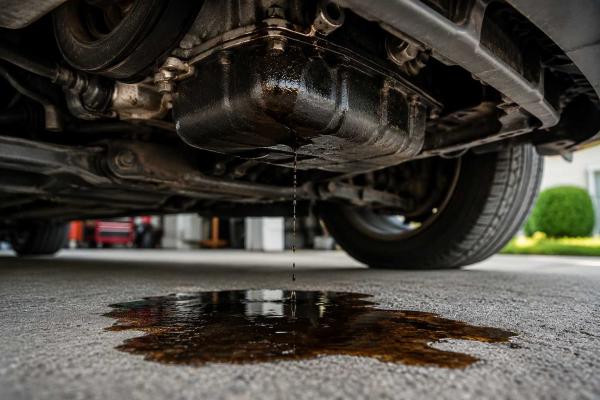
That’s probably fresh engine oil. Usually means a gasket somewhere has decided retirement sounds nice. Valve cover gasket, oil pan gasket, maybe a crank seal if the universe feels particularly creative.
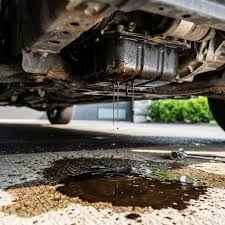
A tiny oil seep isn’t the end of the world. Plenty of older cars mark their territory a little. But if the leak starts growing from “few drops” territory into “small pancake every morning,” stop procrastinating. Engines tolerate a lot of abuse. Running low on oil isn’t one of them.
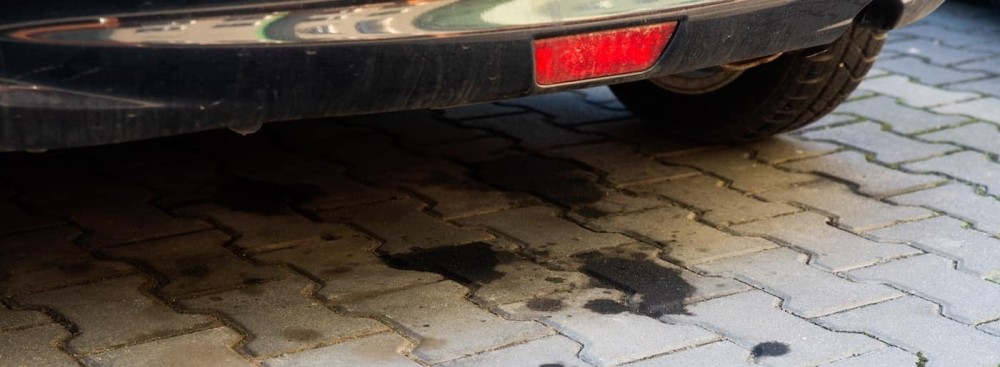
Now if the fluid is dark brown or basically black? Same story, older oil. Which honestly tells you two things at once: you’ve got a leak, and the oil itself has probably overstayed its welcome.
Then comes the one that should genuinely get your attention: red or pink fluid.
Transmission fluid.
And transmissions are not cheap therapy sessions.
Transmission leaks are sneaky because the car can still drive “fine” right up until it suddenly doesn’t. Automatic transmissions depend on fluid not just for shifting but also for cooling and hydraulic pressure. Lose enough of it and things get ugly fast. Like “there goes four grand” ugly.
If you see pink or red spots under the car, deal with it this week, not “eventually.” Future-you will be extremely grateful.
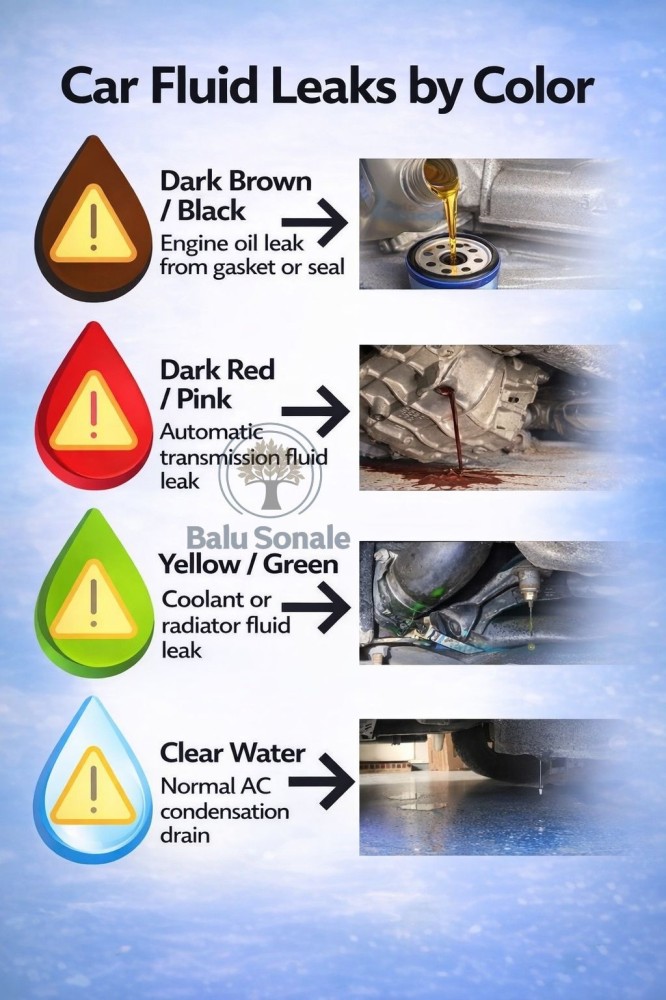
Green, orange, or weird neon pink-orange fluid? That’s coolant.
And coolant leaks are deceptive because people ignore them until steam starts pouring out like a movie scene.
Coolant has that sweet chemical smell, almost syrupy. If you notice that scent while driving, your car is basically begging for help. Small coolant leaks can still cause big problems because once coolant drips onto hot exhaust parts, it can wreck the catalytic converter too. Suddenly your little leak turns into a repair bill with commas in it.
Not ideal.
Blue fluid is the easy one. Windshield washer fluid. Somewhere a hose cracked or the reservoir split. Annoying? Yes. Dangerous? Not remotely.
Now for the important part nobody likes hearing.
Some leaks are “monitor it” problems. Others are “stop driving immediately” problems.
Clear water? Fine. Tiny oil drip? Usually manageable for a short while if you’re checking levels. Washer fluid? Whatever.
But if you see a large puddle, bright coolant colors, transmission fluid, steam, smoke, or your temperature gauge climbing while driving, do not try to “just make it home.” That’s how people turn a manageable repair into a destroyed engine.
A tow truck feels expensive until you compare it to replacing an entire powertrain.
Your car was never being mysterious, by the way. The puddle has been telling you exactly what’s wrong the whole time. You just needed to know how to read the language.