Mechanics Hate How Easy DIY Brake Pad Replacement Actually Is
by AutoExpert | 21 May, 2026
Brakes scare people. And honestly? Fair enough.
You’re dealing with the one system standing between your car and an extremely expensive meeting with the back of somebody else’s SUV. So the second brake pads start squealing, most drivers immediately go into “take my wallet, just fix it” mode at the repair shop.
But here’s the funny part: replacing brake pads is honestly one of the least terrifying jobs you can do on a car once you stop psyching yourself out about it.
Seriously. After the first time, you kind of sit there wondering why shops charge what they charge for something that mostly involves removing a few bolts and not dropping tools on your own foot.
A basic brake pad replacement at a shop can easily run $300, sometimes way more depending on the car and how aggressively the service advisor smiles while printing the estimate. Meanwhile, a solid set of pads online costs less than a dinner date that ends awkwardly.
And no, you don’t need to be “a car person.”
If you can assemble cheap IKEA furniture while mildly irritated, you can probably handle brake pads.
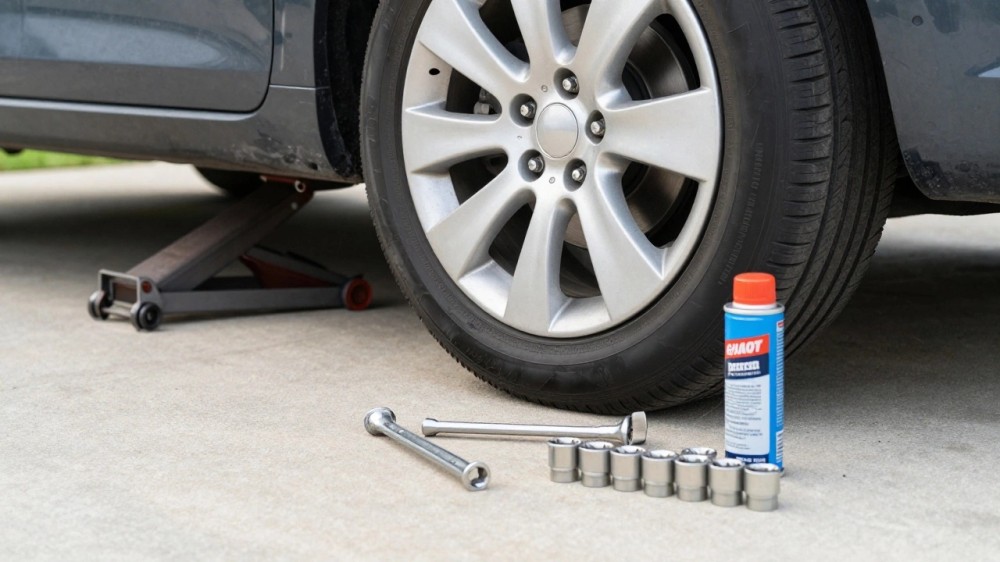
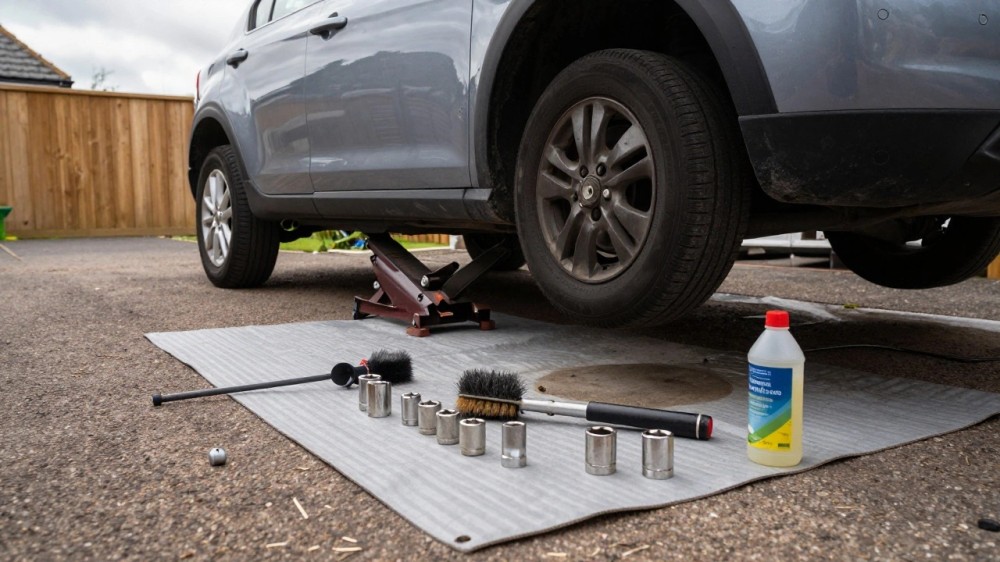
The tool list is refreshingly normal too. Floor jack. Jack stands. Socket set. Lug wrench. Brake cleaner. Maybe a C-clamp. That’s basically it. No mysterious Formula 1 engineering nonsense happening here.
Although one thing absolutely matters: jack stands.
Never trust just the jack alone. Ever. Not even for “one quick second.” Hydraulic jacks fail sometimes, and getting crushed under your own Honda Civic would be an unbelievably stupid ending to a Saturday afternoon.
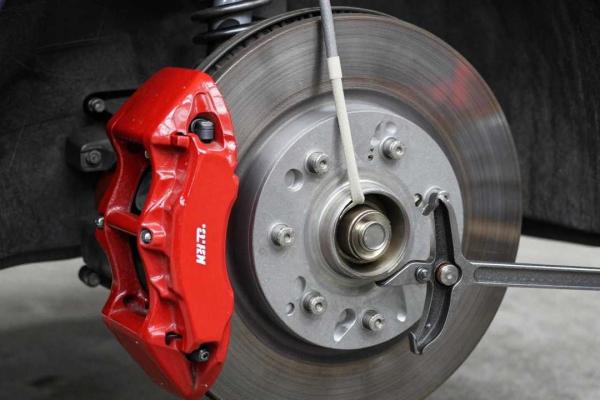
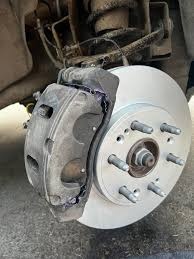
Once the car’s safely up, pull the wheel off and the brake setup suddenly looks way less complicated than people imagine. There’s the rotor. There’s the caliper sitting over it like a clamp. Remove a couple bolts and the caliper slides off.
This is where a lot of first-timers accidentally create extra problems.
Do not let the caliper dangle by the brake hose like it’s hanging off a cliff in an action movie. That hose isn’t designed to hold weight. Stretch it or damage it and congratulations, your cheap DIY brake job just became a whole new brake system repair.
Use a bungee cord. Hang the caliper safely from the suspension spring or strut. Tiny detail. Huge difference.
Then comes the important inspection part people rush through because they’re excited the hard part seems over.
Check the rotor properly.
If it’s smooth, great. Reuse it. If it looks like somebody spent six months grinding forks against it, maybe not. Deep grooves, lip edges, vibration while braking, all signs the rotor may need replacing too.
And honestly, this is where DIY work sometimes ends up better than rushed shop work because you’re actually looking closely at your own car instead of trying to finish twelve brake jobs before lunch.
One thing a lot of guides forget to emphasize enough: clean and grease the slide pins.
Seriously. Do not skip this because you’re tired or hungry or emotionally done with the project. Sticky slide pins are behind a shocking amount of uneven brake wear and annoying squeaks after brake jobs. Two extra minutes now saves future-you from rage-Googling “why do my brakes squeal after replacing pads.”
Then you compress the caliper piston back in with the C-clamp, slide the new pads into place, bolt everything back together, reinstall the wheel, torque the lug nuts correctly, and boom. You’re basically done.
Well... almost.
Before driving anywhere, pump the brake pedal several times.
This part scares people because the pedal initially feels like it disappeared into another dimension. Totally normal. The caliper piston needs to move back outward against the new pads. After a few pumps, firmness returns and your blood pressure can normalize again.
Then take it easy for the first hundred miles or so. New pads need a little time to bed into the rotors properly. No pretending you’re qualifying at Daytona five minutes after finishing the job.
And honestly, there’s something deeply satisfying about doing brakes yourself for the first time.
Partly because you save a bunch of money. Partly because it demystifies car ownership.
And partly because every future brake estimate suddenly becomes hilarious once you realize how straightforward the job actually is.