The Best Cars for Dogs Have Almost Nothing to Do With Luxury and Everything to Do With One Simple Thing
by AutoExpert | 23 June, 2026
People talk about “the best cars for dogs” like dogs are out here comparing trim levels. They are not.
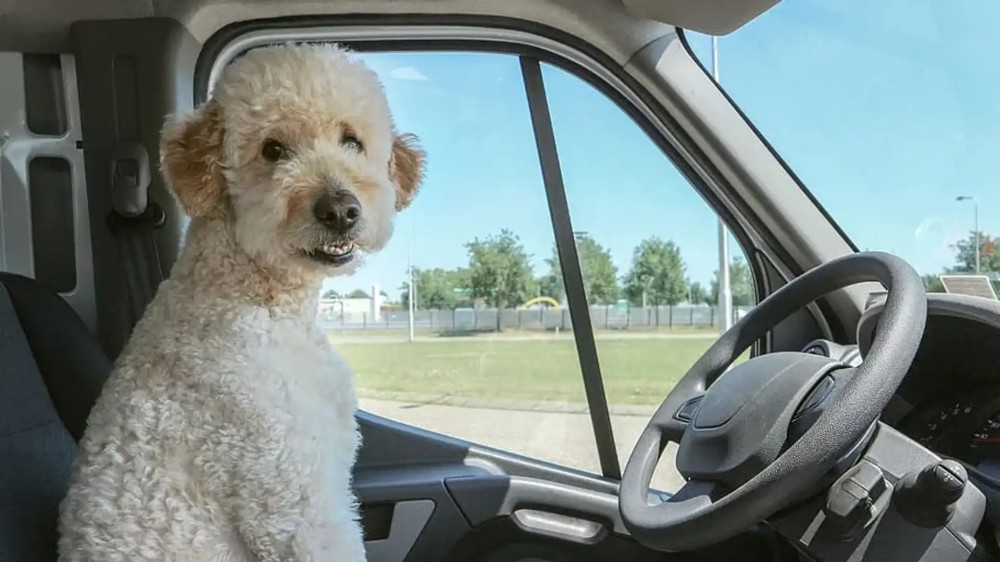
Your dog does not care about quilted leather, ambient lighting, or whether the badge on the hood impresses your neighbors. Your dog cares about a very short list of things: can I get in without humiliating myself, do I have enough room to flop over dramatically, is there air moving, and am I coming with you?
That is basically it.
Which is why the best dog cars are almost never the ones that sound glamorous on paper. They are the ones that make life easy. Easy for the dog to climb into. Easy for the owner to clean. Easy to fit a bed, blanket, crate, harness, slobber, fur, muddy paws, and whatever mystery smell the dog decided to bring home from the park.
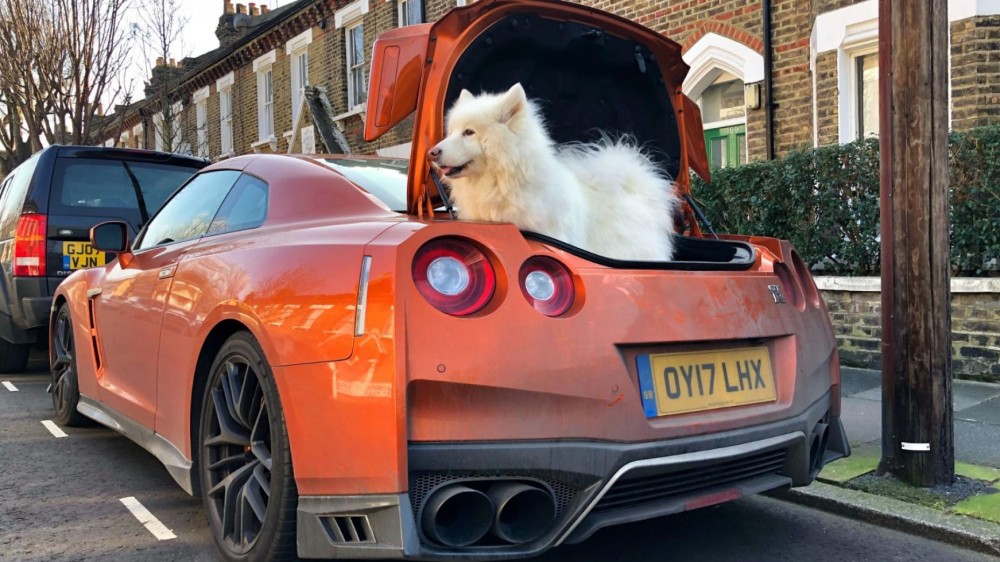
A lot of dog owners figure this out the hard way. They buy the car for themselves, then realize their dog now has to do a vertical leap into the cargo area like it is training for an Olympic event. Or there is technically “space,” but only if the dog folds itself into a weird little comma shape and agrees not to move for forty minutes. Or the seats are so precious that one damp paw print suddenly feels like a financial event.
That is when people start understanding what actually matters.
The best dog car usually starts with a low floor. Not sexy, just true. A dog that can step in is happier than a dog that has to launch itself. This matters even more if the dog is older, heavy, stiff, recovering from something, or just shaped like a loaf of bread with opinions. That is why wagons, hatchbacks, Elements, minivans, and some sensible SUVs make so much sense. They are not trying to make every entry feel like a climbing wall.
A wagon is almost unfairly good at this job. It has enough room, the opening is useful, the ride height is reasonable, and the back actually feels like a space a dog can settle into instead of merely occupy. Same goes for hatchbacks that are smarter inside than they look outside. A good hatchback can be a brilliant dog car because it does not waste space pretending to be something it is not.
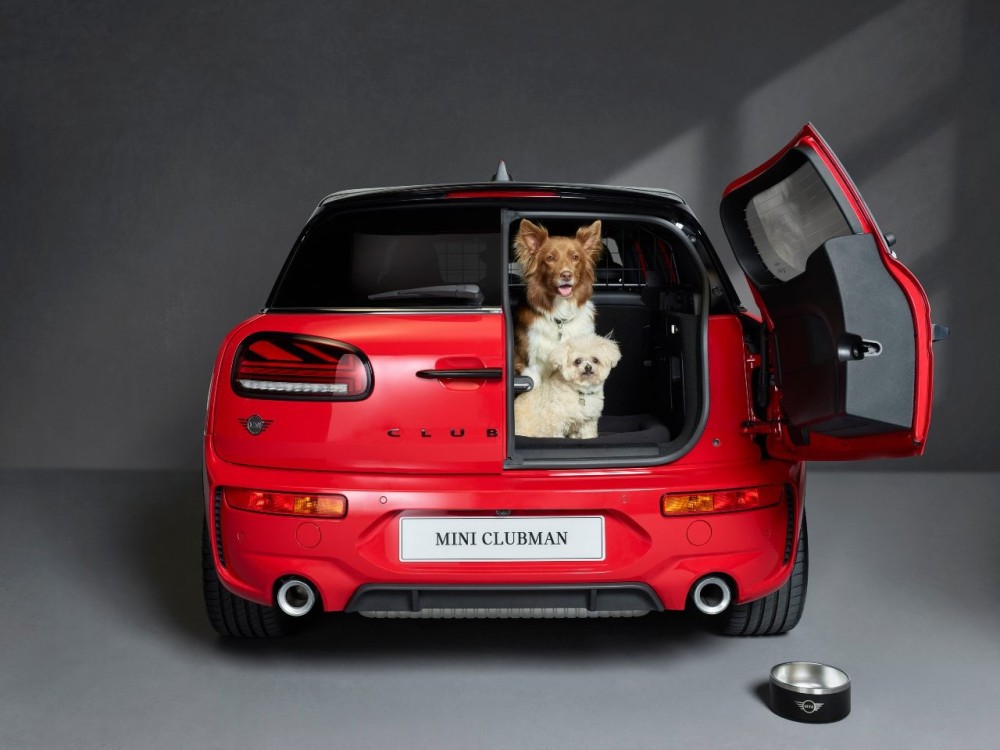
That is part of the reason people get weirdly attached to cars like the Honda Fit. It is not cool in the usual way. It is cool in the much rarer way, where it quietly solves real problems. A dog can get into it. The layout works. The space is more usable than it has any right to be. It is the kind of car that does not brag, which usually means it is doing something right.
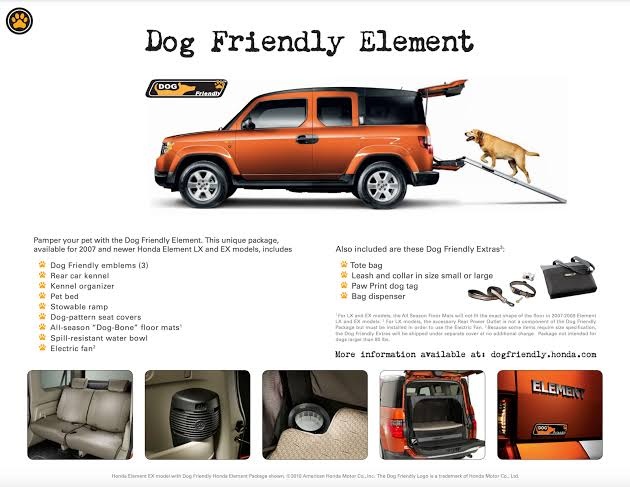
Then there is the Honda Element, which honestly felt like it had at least one dog person somewhere in the design process fighting for common sense. Boxy, washable, roomy, low-stress. It looked like a car built for people who actually use a car, which is a surprisingly rare quality. The fact that it became such a favorite among dog owners was not some accident. It earned that reputation by being practical in exactly the ways dog life requires.
Minivans are maybe the most honest answer of all, even though nobody likes admitting it at first.
Because once you stop worrying about whether a minivan says something flattering about your personal brand, it becomes very hard to argue with one. Huge opening. Low step-in height. Tons of room. Easy crate setup. Easy bed setup. Easy ramp setup. Easy everything. A dog does not look at a Honda Odyssey and think, wow, this lacks edge. A dog looks at it and thinks, excellent, a rolling living room.
And honestly, the dog is right.
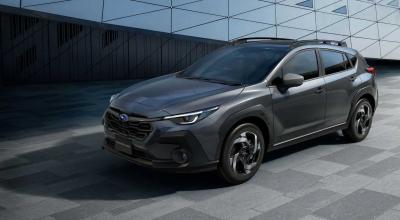
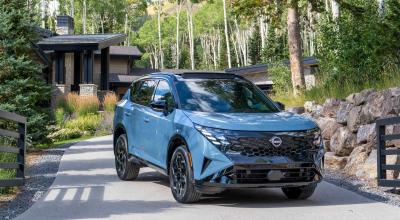
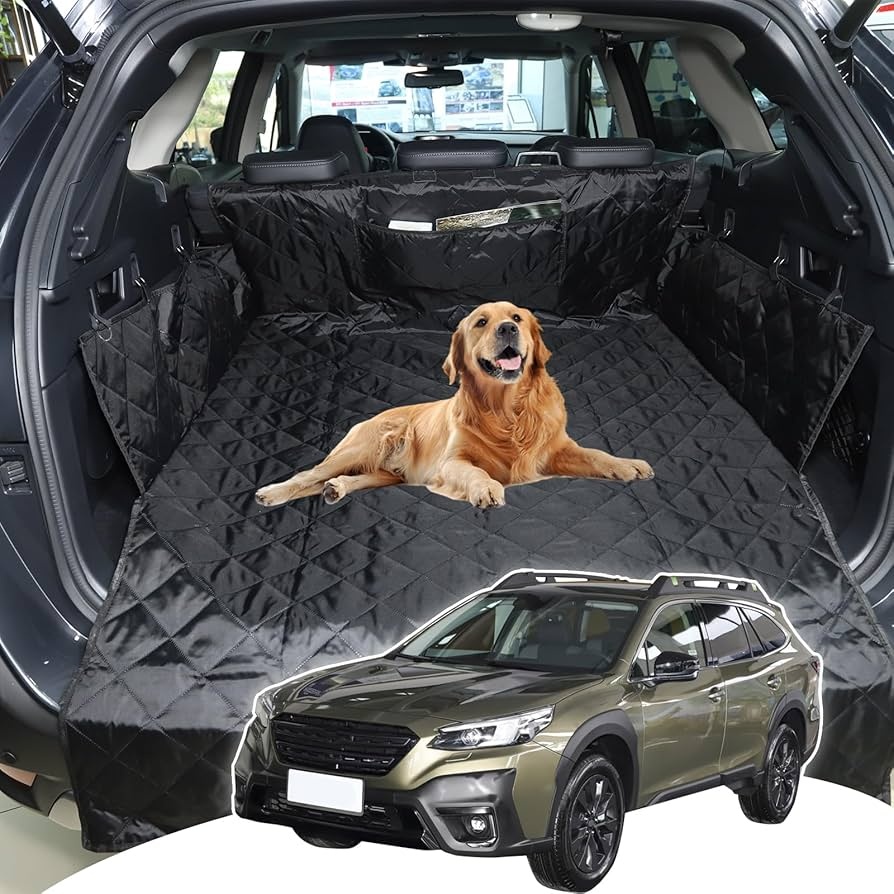
Some SUVs work well too, but not all of them. A lot of people hear “SUV” and assume dog-friendly automatically, which is not really true. Some are too tall, some have awkward cargo shapes, some look roomy until a real dog gets in there and tries to turn around. The useful ones are the ones that remember a cargo area should actually be usable. A Subaru Outback makes more sense for a lot of dogs than a tall, style-first crossover with a sloped roof and a loading lip like a castle wall.
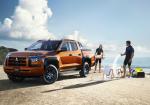
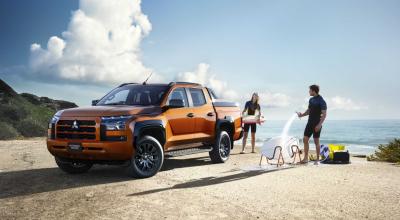
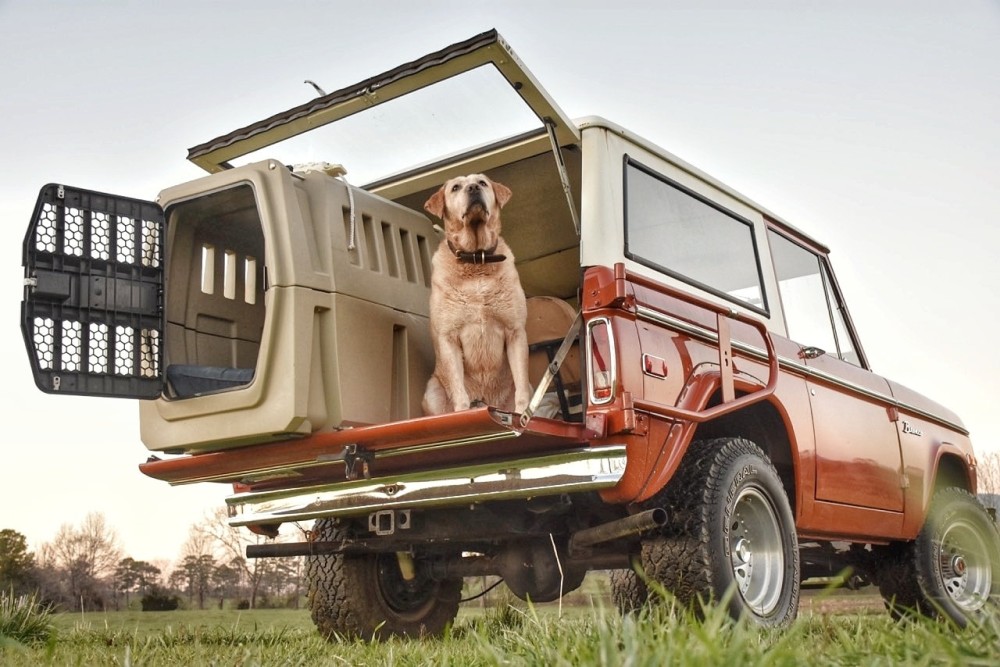
Pickup trucks can be great, but only when people are being serious about it. Not in the fake macho “my dog rides in the truck because truck” way. In the practical way. A truck with a genuinely usable rear cabin, a flat area for a bed or crate, and easy rear access can work beautifully. A Ridgeline makes sense for this exact reason. The dog has room, the setup feels stable, and you are not pretending the bed of the truck is somehow the same thing as safe transport.
Which brings up the part people always try to skip because the cute version is more fun than the true version: safety.
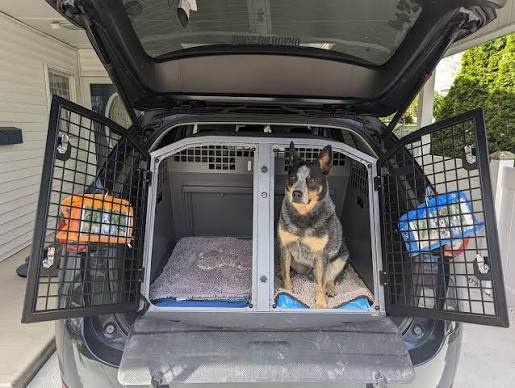
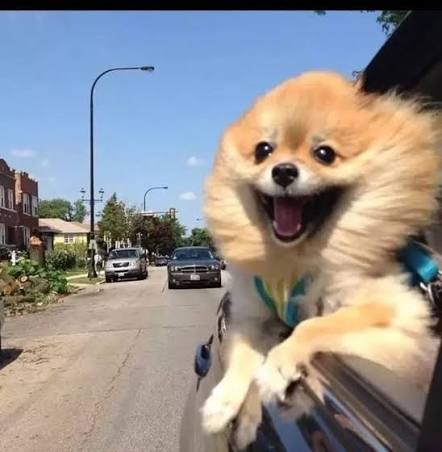
A dog hanging half out a window may look adorable. A loose dog bouncing around the cabin may feel harmless. It is not. In a crash, a dog becomes just as vulnerable as every other living thing in that vehicle, and also potentially a projectile. So the best dog car is not just spacious. It is a car that makes it easy to secure the dog without turning the whole trip into a wrestling match.
That means enough room for a crate, or a harness setup that actually fits, or a rear area where the dog can ride safely without being jammed into nonsense. The practical best car for a dog is not just the one where the dog looks happy. It is the one where the dog is comfortable and protected.
One genuinely smart feature the rest of the industry should have copied faster is Dog Mode. Credit where it is due, that is one of those features that instantly makes sense to anyone who has ever had to leave a dog in the car briefly while panicking about cabin temperature. It is not enough on its own to make one car the universal answer, but it is exactly the kind of thing dog owners actually care about. Not branding. Not fake ruggedness. Not stitched leather dashboards. Useful stuff.
And that is really the whole answer.
The best cars for dogs are the ones built around comfort, room, low effort, and real-life usability. Wagons make sense. Hatchbacks make sense. Minivans make a ridiculous amount of sense. Some trucks do. Some SUVs do. The right car is the one that lets your dog get in, settle down, ride comfortably, and come home without turning the whole experience into a production.
Dogs are actually pretty easy to please.
They just want to come with you.