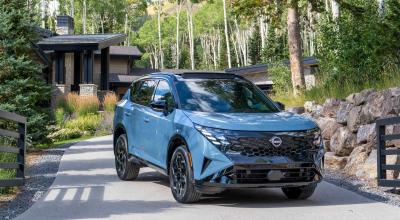
The AI Car Scam Red Flags That Should Make You Close the Tab Immediately

by AutoExpert | 24 June, 2026
Shopping for a car online used to come with a familiar set of risks. A seller could lie about mileage, hide damage, use old photos, invent a maintenance history, or conveniently “forget” to mention that the transmission was one bad Tuesday away from becoming your problem.
Now there is a new layer on top of all that.
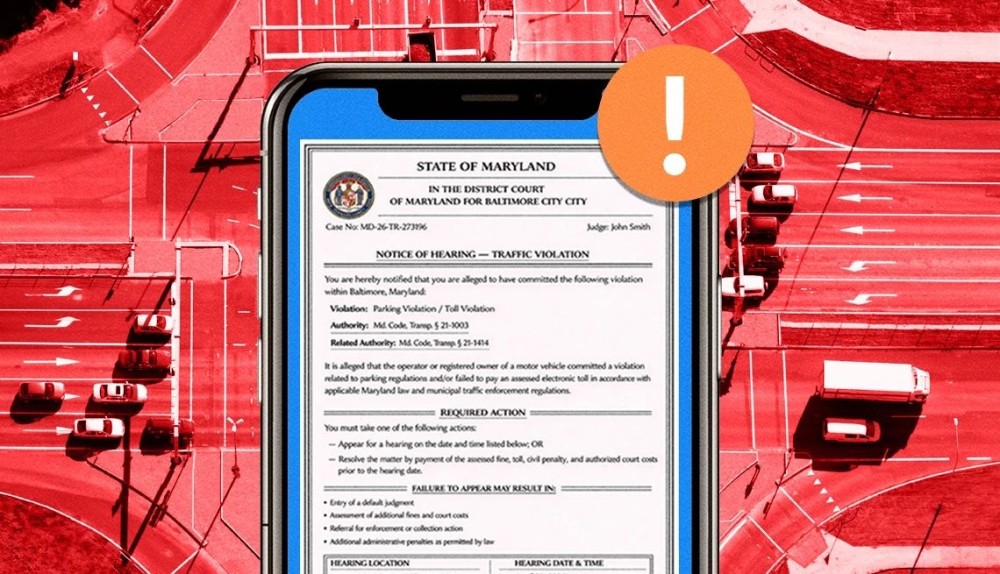
AI has made it easier for scammers to fake cars that do not exist, fake sellers who do not exist, fake photos, fake paperwork, fake websites, and in some cases, fake enough reassurance to make a nervous buyer feel like the deal must be legitimate because look at all the proof.
That is what makes these scams dangerous. They do not always look sloppy anymore. In fact, some of them look almost too polished.
That is usually the first clue.
A real car listing often has a little mess to it. Maybe the photos are not perfect. Maybe the description is a little awkward. Maybe the seller clearly wrote it themselves and sounds like an actual human who owns a car, not like a dealership intern trying to impress a chatbot. Real life usually has texture. Scams, especially AI-assisted ones, often have a kind of smoothness that starts feeling weird once you notice it.
The photos are one place where that weirdness shows up fast.
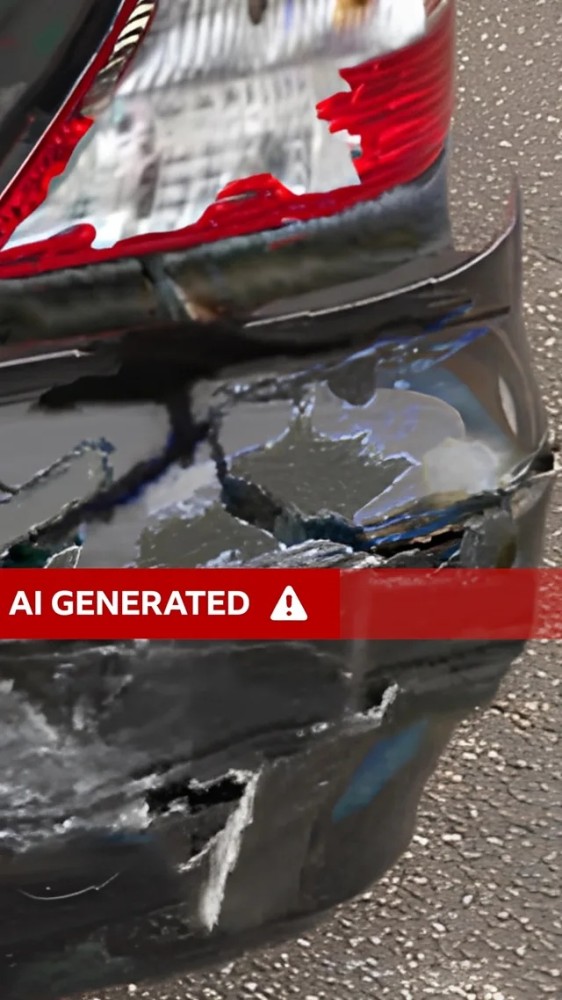
A fake listing can look convincing at first glance, especially when the images are glossy and well composed. But the longer you look, the more small things start going sideways. A wheel design that makes no sense. A body panel that bends oddly. Badges that look almost right but not quite. Headlights that seem to fade into the bodywork. Tire lettering that turns into nonsense when you zoom in. Reflections that do not behave like reflections. Sometimes the car looks fine until you study the background and realize the shadows are off, the proportions are strange, or some random detail looks like it melted.
That is the thing about AI images. They often survive the quick glance and fail the stare.
And if a seller is leaning hard on images as “proof,” that is exactly when it is worth slowing down.
The written part matters too, though not in the lazy way people think. A lot of people now claim they can “just tell” when something was written by AI, and most of them are giving themselves too much credit. The issue is not whether a sentence sounds polished. The issue is whether the whole listing sounds like a person with an actual car or like a machine trying to sound trustworthy.
Scam listings often have a strange tone. Too complete. Too neutral. Too eager to sound legitimate. Sometimes they include lots of official-sounding details but somehow still fail to feel grounded. It is the digital version of a person who keeps telling you how honest they are before you even asked.
And then there is the fake proof.
This is where people get trapped, because they assume more documentation means less risk. The seller has title scans, VIN reports, maintenance history, extra photos, maybe even dealership paperwork, so it feels harder to imagine the whole thing being fake.
But scammers understand that now. They know buyers are suspicious. So instead of avoiding proof, they flood the buyer with it. Documents can be altered. Vehicle history screenshots can be manipulated. Title images can be doctored. Photos can be generated, cleaned up, or stitched together from real and fake sources. Too much proof, offered too quickly, can actually be a warning sign rather than comfort.

The easiest way to break through that performance is to force the deal back into reality.
Ask to see the car in person.
That sounds obvious, but it is still the single most useful filter. Scammers hate anything that drags the deal out of the digital fog and into the physical world. A real seller should be able to meet. A real dealership should want you on the lot. A real vehicle should exist somewhere you can actually go stand next to it.
If the seller is full of reasons why that cannot happen, stop right there.
Video calls can help, but they are not the same thing. They are better than nothing, sure, but they are not proof that the seller is real or that the car is. Deepfakes are no longer some futuristic thing only seen in weird tech demos. Scammers are already using fake faces, cloned voices, and manipulated live video to create just enough realism to get people past their hesitation. So if a seller insists on video but never allows an in-person inspection, that should not relax you. It should make you more suspicious.
Websites are another trap.
A lot of buyers still assume that if a listing leads to a dealer-looking website, that means the deal is probably safe. Not anymore. Fake dealership sites are now part of the scam toolkit. The site may look real. The branding may look real. The inventory may look real. But the URL may be off by a letter, the contact information may be different from the legitimate business, and the prices may be just a little too attractive.
That “just a little too attractive” part matters. Scammers are getting smarter about pricing. Instead of posting a deal so absurd it instantly triggers skepticism, they often aim for something that feels like a lucky break. Cheap enough to create urgency. Not so cheap that you immediately laugh and move on.
That is where people get pulled in.
The payment method is usually where the mask slips. If the seller wants a wire transfer, ACH payment, cashier’s check, crypto, or any other difficult-to-reverse payment before you have physically seen the car, walk away. No legitimate private seller or dealership needs your money that badly before you have verified the vehicle exists. Pressure is the tell. Urgency is the tell. “We have other interested buyers” is the tell. “Just send a deposit to hold it” is the tell.
The whole scam depends on getting money moving before reality catches up.
And that is why the old rules still matter, even with all the new technology layered on top. If the price feels suspiciously good, that matters. If the seller will not meet, that matters. If the story keeps getting more elaborate instead of more concrete, that matters. If something feels off, even if you cannot yet explain why, that matters too.
A lot of scams work because people keep trying to logic their way past discomfort. They do not want to seem paranoid. They want the deal to be real. They want to be the person who found the underpriced car before everyone else did.
Scammers count on that.
So the smartest move is not to become a forensic AI analyst every time you open a listing. It is simpler than that. Slow down. Zoom in. Reverse search the photos. Verify the website independently. Call the real dealership number, not the one in the email. Refuse to send money before seeing the car. Insist on the physical world.
Because no matter how sophisticated the scam gets, a fake car still cannot be parked in front of you.
And that is still the part that matters most.