10 Small-Engine Cars That Still Hit 150+ MPH
by AutoExpert | 26 February, 2026
Bigger is better, right? Usually. But not always. The cars on this list prove it. They all have small engines with enough power to hit at least 150 mph. Some get closer to 200.
Some of these tiny engines pack the latest tech, like Koenigsegg's Tiny Friendly Giant with no camshafts. Others like Ferrari's two-liter V8 make big power thanks to a big turbo. Then there's Alfa Romeo's magnificent naturally aspirated two-liter V8 pushing nearly 250 horses. This is the world of tiny engines with huge power.
Here are 10 production cars with small engines that can reach 150 mph. Excludes motorsport applications since there are tons of those. Listed by horsepower.
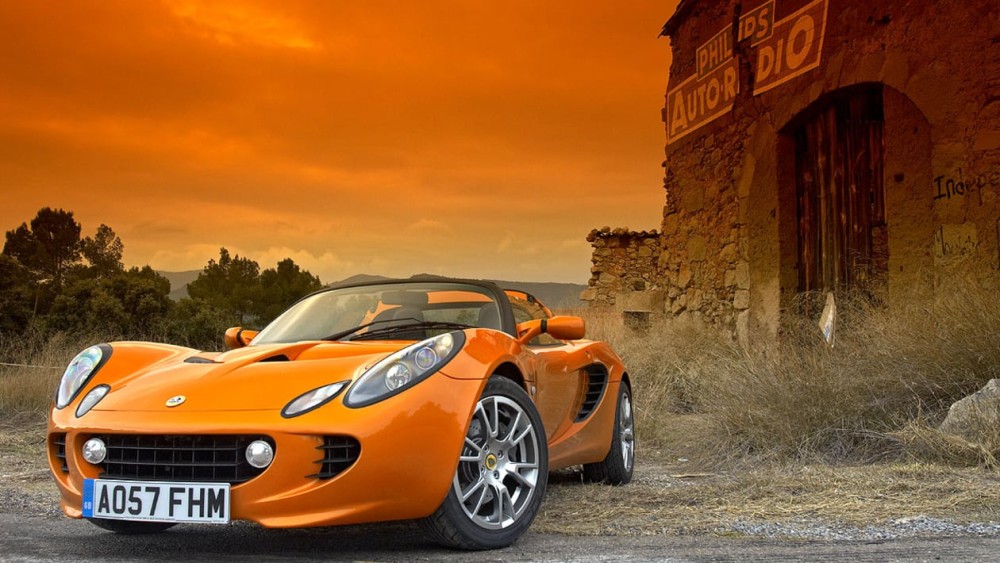
Lotus Elise SC (217 hp)
The legendary Lotus Elise's secret? Weighs around 1,800 pounds. First-gen Elise had a 1.8-liter Rover engine but Lotus later switched to Toyota's 2ZR-FE 1.8-liter. High-revving, super-reliable, more than enough to throw the light Elise around racetracks at ridiculous speeds.
For drivers wanting more, Lotus added a supercharger designed specifically for this application. With the blower, the Elise made 217 horses, enough to hit 150 mph. Lotus used the supercharged engine for years, eventually squeezing almost 250 horses out of it in some models.
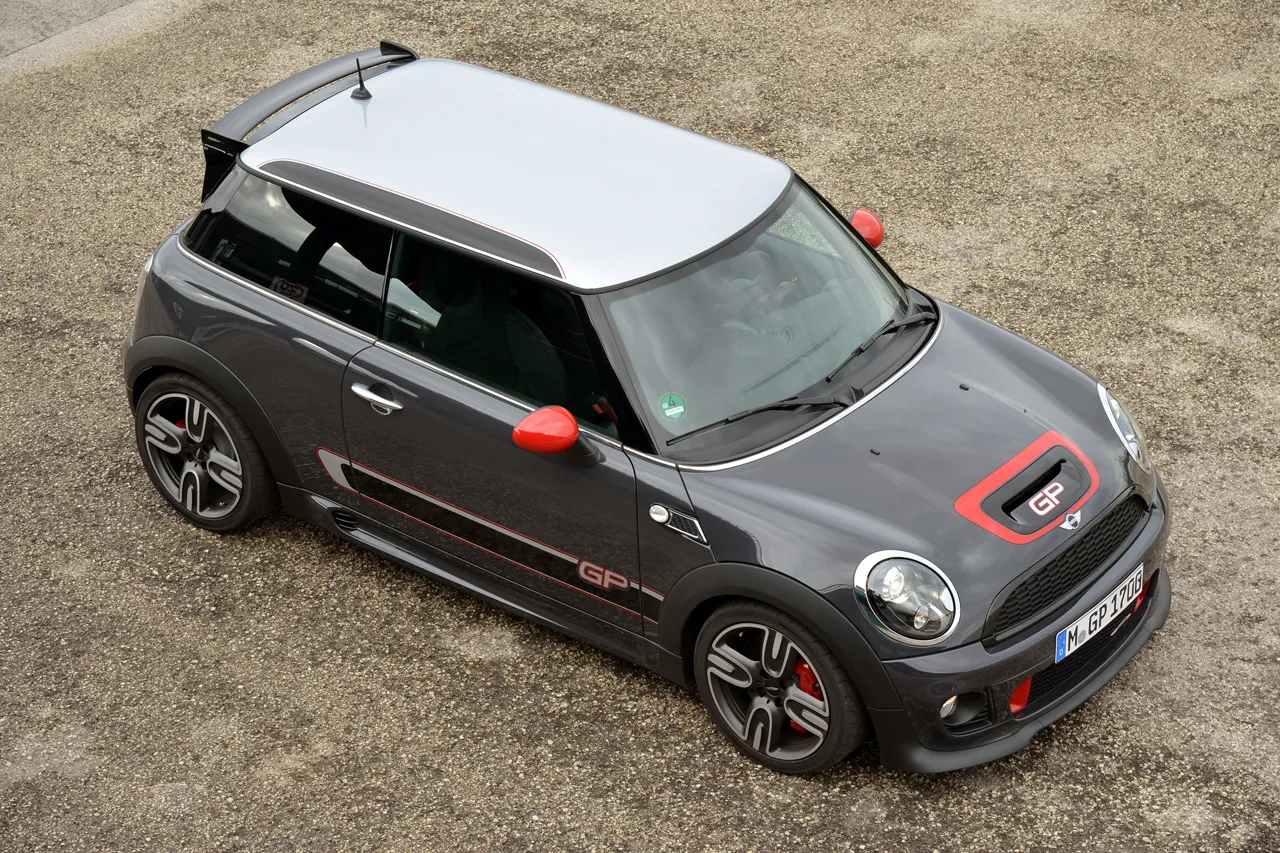
R56 Mini Cooper S JCW GP (218 hp)
The R56 Mini Cooper S came with a 1.6-liter turbocharged four-cylinder from a BMW, Peugeot, and Citroën collaboration. In 2006 a turbo replaced the first-gen's supercharger, adding more torque. John Cooper Works gave us the full-fat GP package pushing 218 horses.
Limited edition GP came standard with adjustable Bilstein coilovers, upgraded Brembo brakes, semi-slick tires. Rear seats deleted to save weight, special Recaro fronts, aerodynamic upgrades. Six-speed manual sent power to the front wheels.
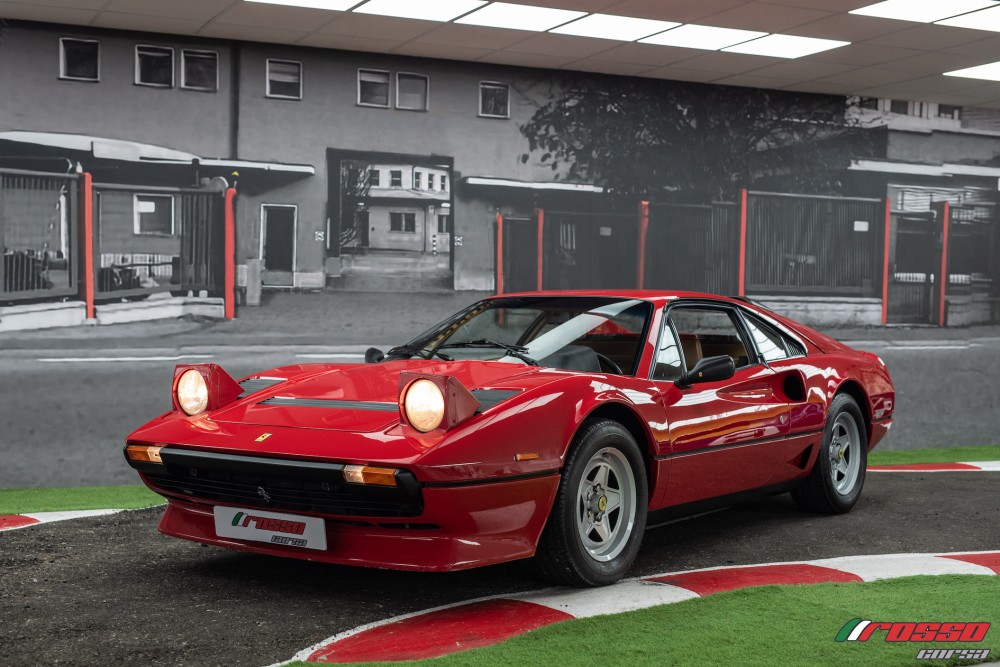
Ferrari 208 GTB Turbo (220 hp)
Ferrari and other Italian brands took advantage of a unique Italian tax break for cars under 2,000cc, making them way more affordable. Ferrari wasn't about to install some puny four-cylinder or even a V6. So engineers created a two-liter V8, initially in the Ferrari 208 making 155 horses and revving past 7,000 rpm.
By 1986 Ferrari added a turbo to the small V8, bumping power to 220 horses and giving the 208 GTB Turbo a 150 mph top speed. Extremely rare today with just over 300 made. Need around $200,000 to park one in your driveway.
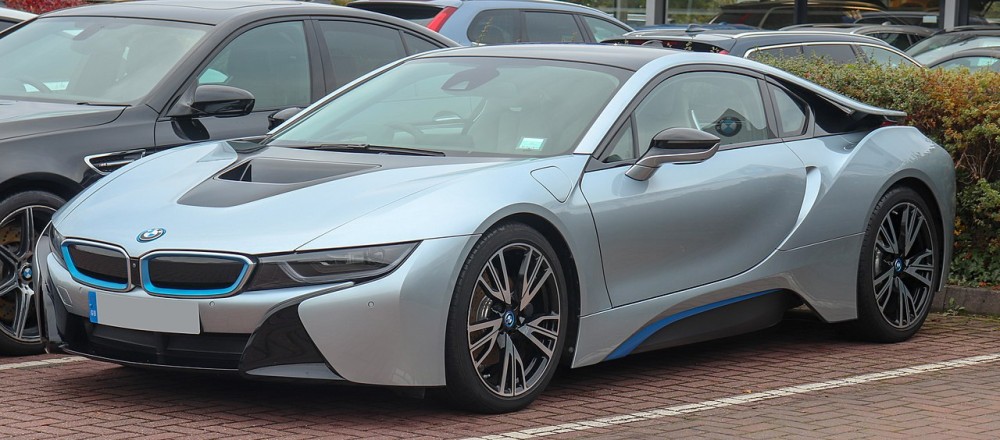
BMW i8 (231 hp engine, 374 hp combined)
The BMW i8 is a trend-setting hybrid with a combined 374 horses, ability to blast to 60 in just over four seconds, and limited top speed of 155 mph (hits around 170 without the limiter). Hybrid drivetrain is impressive but it's the tiny 1.5-liter turbocharged three-cylinder's 231 horses that really stands out. Located over the rear axle, drives the rear wheels via six-speed automatic.
A 143-horse electric motor drives the front wheels through a two-speed automatic. The B38 three-cylinder got used in other BMWs but the i8 version is the most powerful.
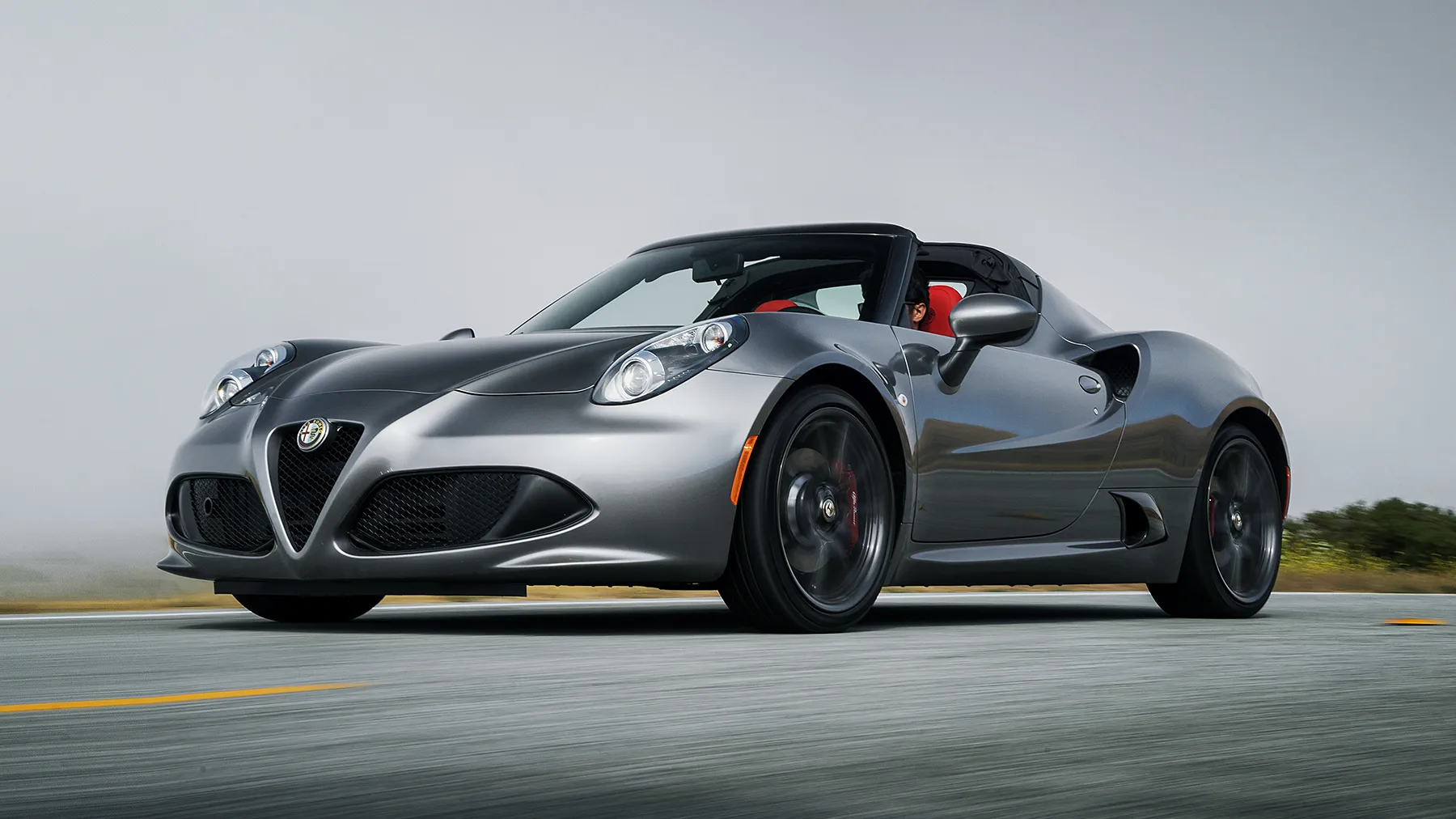
Alfa Romeo 4C (237 hp)
The Alfa Romeo 4C runs a 1.75-liter turbocharged four-cylinder making 237 horses and 258 lb-ft. Top speed 160 mph. Properly fast. Made between 2013 and 2020, has a lightweight carbon fiber tub and the compact turbo engine is mid-mounted driving the rear wheels. Result is a super-light sports car that handles like it's on rails. Small engine is surprisingly loud too, fits a true Italian sports car.
Magnificent example of the species with all the character, drama, and noise to make any gearhead's heart skip.
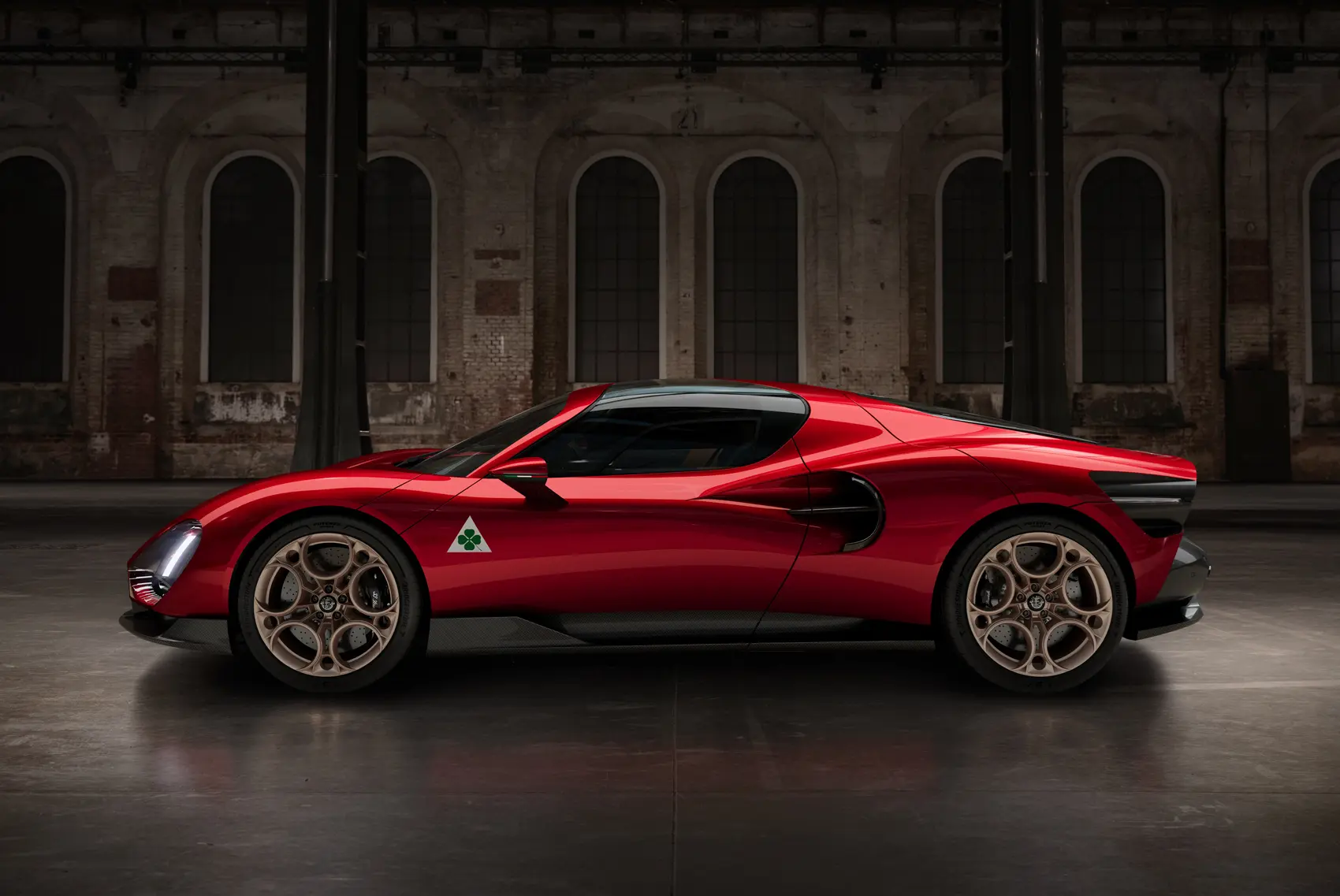
Alfa Romeo 33 Stradale (243 hp)
The original Alfa Romeo 33 Stradale from 1967 to 1969 is considered one of the most beautiful cars ever made. But way more than just a pretty face. Essentially a racing car licensed for the road, sharing the same two-liter naturally aspirated V8 that Alfa's racing team campaigned successfully around Europe. Magnificent engine revving past 9,000 rpm produces up to 243 horses, pushing the Alfa past 160 mph.
Only 18 ever made. Buying one today requires finding a willing seller, which is unlikely, plus over $10 million.
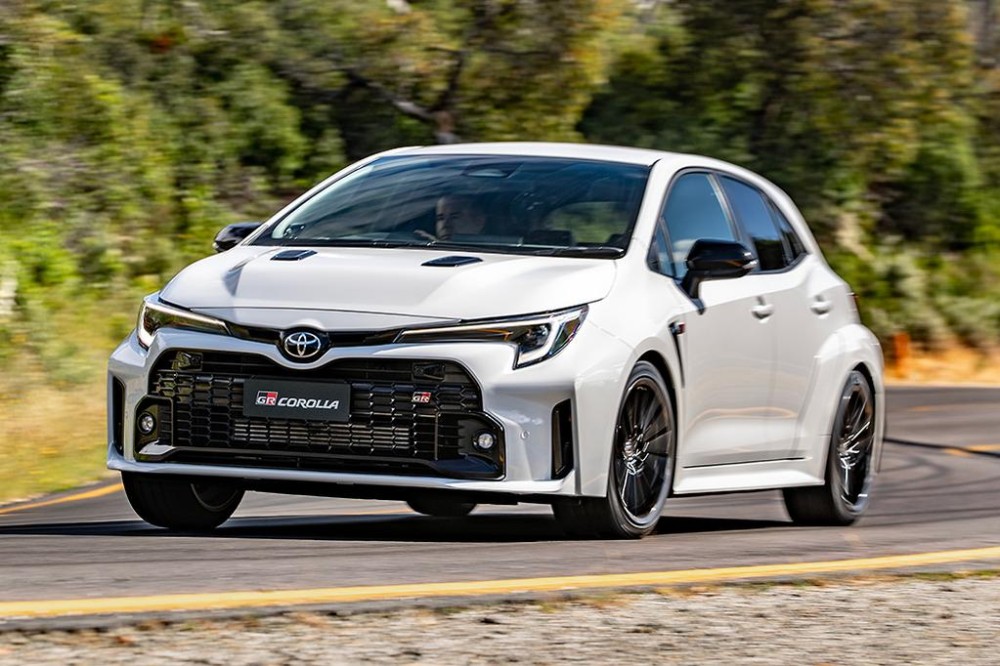
Toyota GR Corolla (300 hp)
Toyota's 1.6-liter turbocharged three-cylinder powers the GR Yaris and Corolla models. Packs a serious punch at 300 horses and 295 lb-ft. The G16E-GTS is one of the most power-dense production engines ever made, featuring race car engineering, robust internals, lots of boost from a single turbo. Brilliant engine that's proven as reliable as it is powerful, exactly what you'd expect from Toyota.
Toyota's apparently working on a new 2.0-liter turbocharged four-cylinder using all the G16E tricks. Expected to make 400 horses.
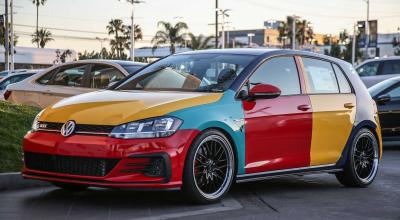
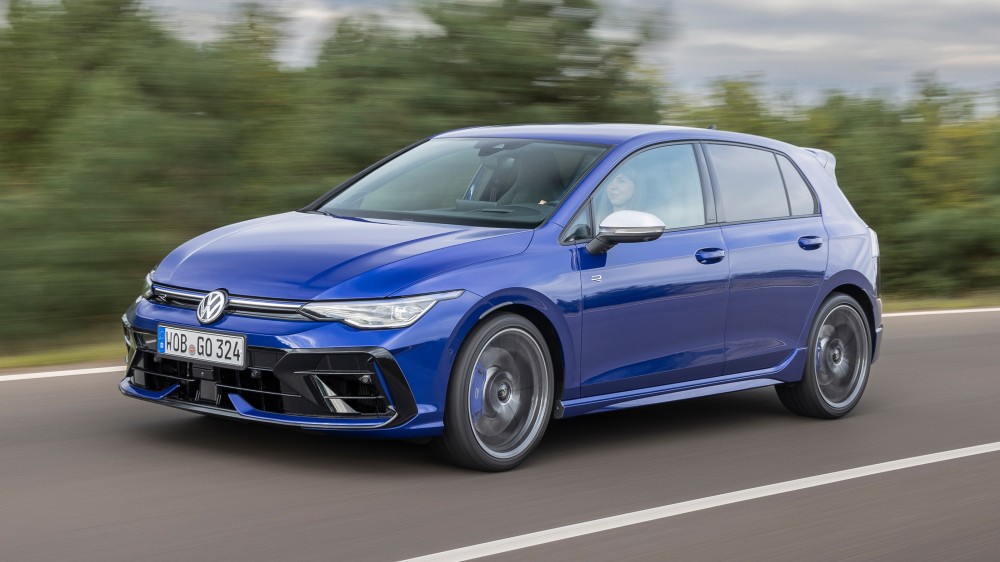
Volkswagen Golf R (328 hp)
The 1976 VW Golf Mk1 with a 1.8-liter four-cylinder made 108 horses. Today the apex Golf performance model, the R, still has a four-cylinder but the two-liter also gets a big turbo hiking power to 328 horses. That's 220 more than the original.
Golf R's iconic EA888 two-liter features direct injection and all the latest tricks. Seven-speed dual-clutch sends power to all four wheels via VW's 4Motion all-wheel-drive.
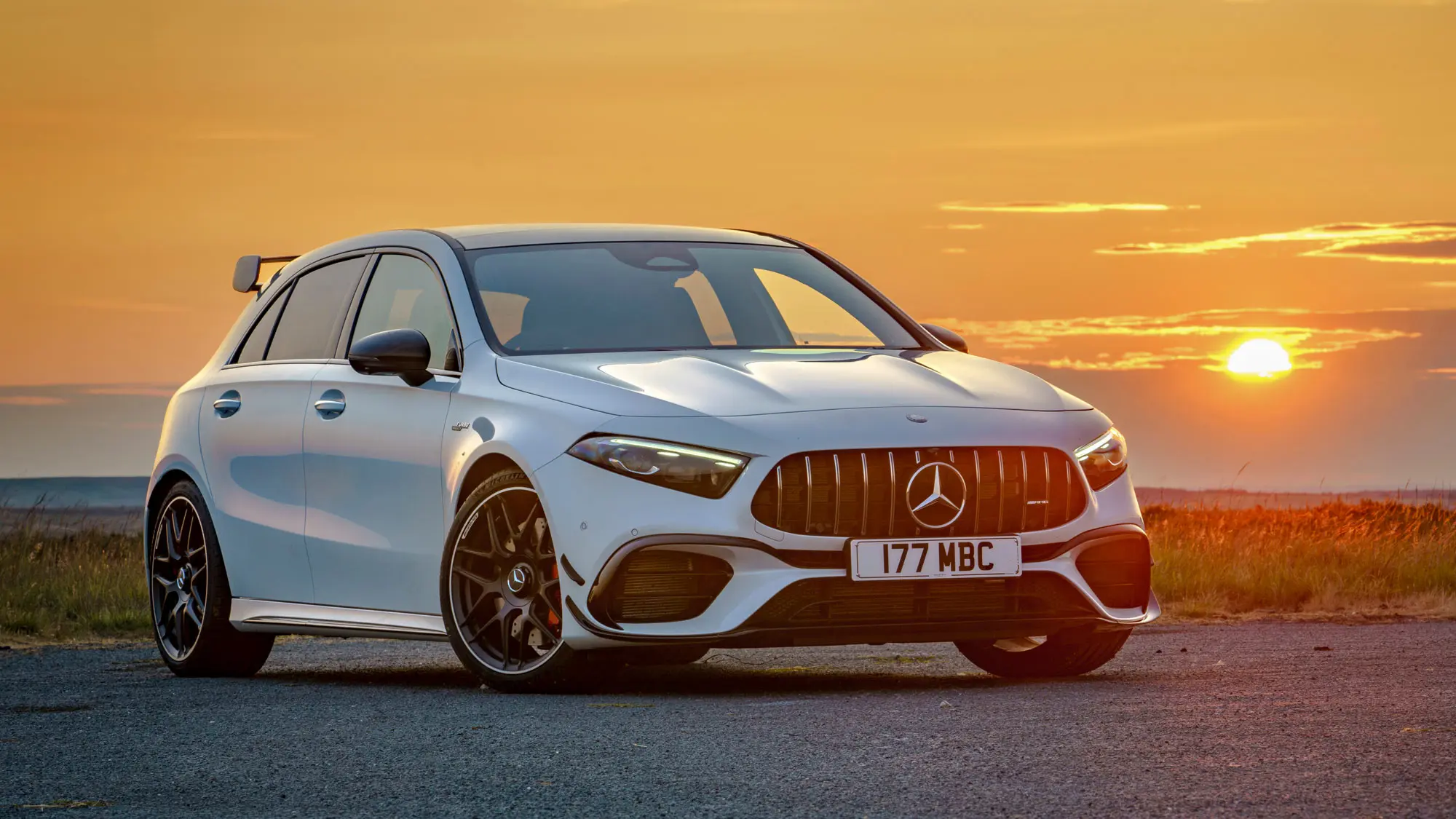
Mercedes-AMG A45 S 4Matic (416 hp)
Mercedes-AMG's M139 two-liter turbocharged four-cylinder is currently the most powerful four-cylinder ever in a production car. Powers the AMG A45 S hatch making 416 horses. Eight-speed dual-clutch sends power to all four wheels via AMG Performance 4Matic+. The M139 also powers the latest C63 S E Performance paired with an electric motor for a combined 671 horses.
The powerful four-pot is heading for retirement with AMG planning to replace it with a high-revving straight-six. The M139 will remain a prime example of what a four-cylinder can do for a long time.
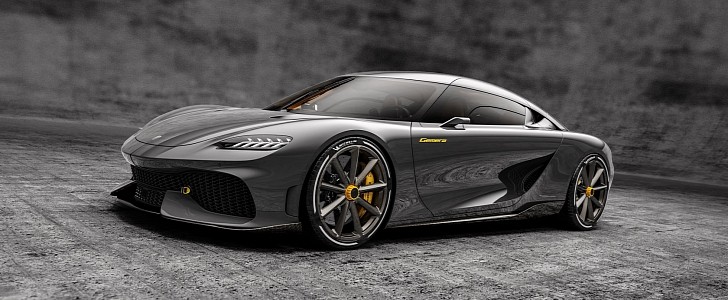
Koenigsegg Gemera TFG (600 hp)
Koenigsegg's Tiny Friendly Giant engine, developed with engine company FreeValve, is incredible. Created for the Gemera supercar to work with three electric motors, the two-liter three-cylinder with two turbos makes 600 horses. TFG weighs just 154 pounds and uses FreeValve's unique setup with pneumatic-hydraulic-electric actuators instead of traditional camshafts. These actuators independently control each valve and the engine revs to 9,000 rpm.
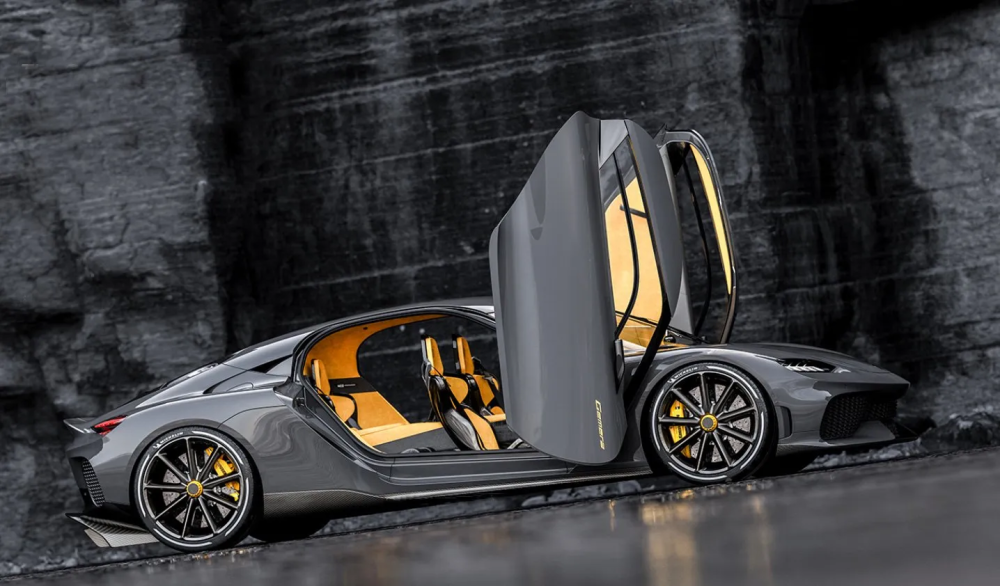
Engine was revealed in the Gemera in 2020 but wealthy Koenigsegg customers apparently weren't keen on it, preferring the brand's twin-turbo V8. Good news is Koenigsegg's still developing it for production cars with some two-stroke experiments underway.