
Open an Original Previa’s Bonnet and the Engine Isn’t Where You Expect
by AutoExpert   |  5 November, 2026

Share :

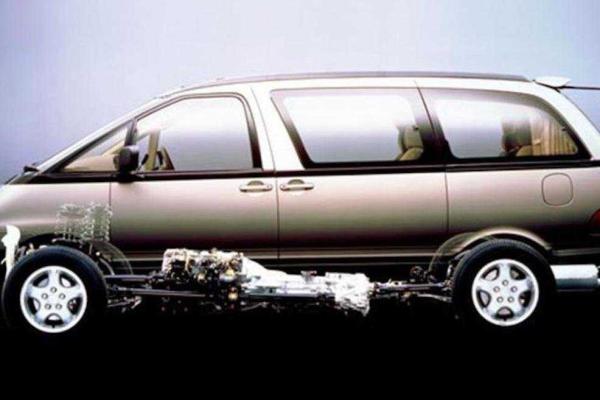
The first-generation Toyota Previa carried its engine beneath the cabin, behind the front axle. A separate accessory driveshaft transferred power forward to equipment under the bonnet. Later Previas adopted a conventional front-engine layout. 

Opening the bonnet of an original Previa can leave a newcomer searching for something fairly important. There is equipment under there, but the engine is farther back, tucked beneath the floor.
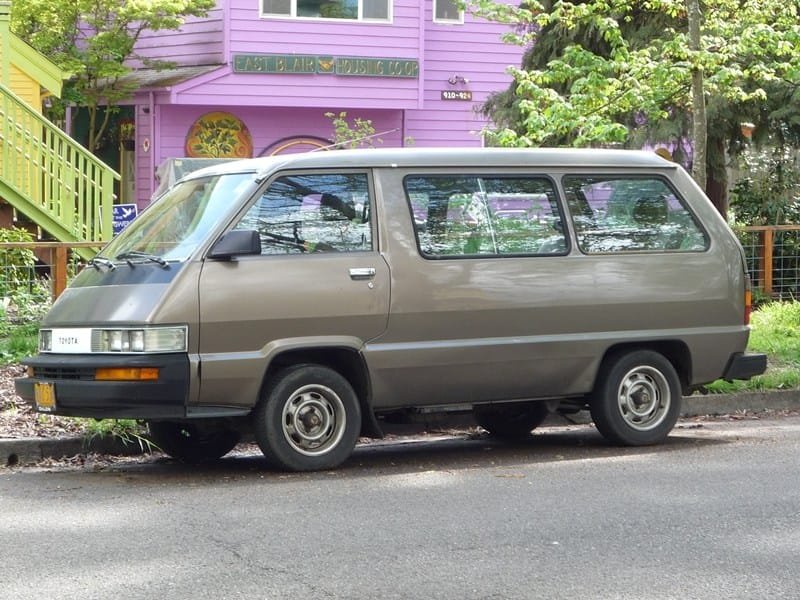
Toyota Previa engine location

The smooth, rounded body gives little away. It looks like a family vehicle designed around luggage and arguments over who gets a window seat. Underneath, Toyota had arranged the machinery in a way that required considerable ingenuity.

The petrol engine lay at a steep angle to keep the installation low. Its position helped Toyota distribute the weight and preserve usable cabin space. Moving it there, however, created another job: finding a convenient home for equipment normally clustered around the engine. 

Toyota kept ancillary equipment at the front, where it could be reached beneath the bonnet. The Supplemental Accessory Drive System connected the separated machinery. Its shaft carried rotation forward from the engine, allowing equipment some distance away to receive mechanical power.

The factory service information gives a useful glimpse of the arrangement. Its accessory-driveshaft procedure describes the shaft connecting at the crankshaft pulley and the equipment-drive housing. This was a substantial mechanical link, with its own removal and installation instructions. 
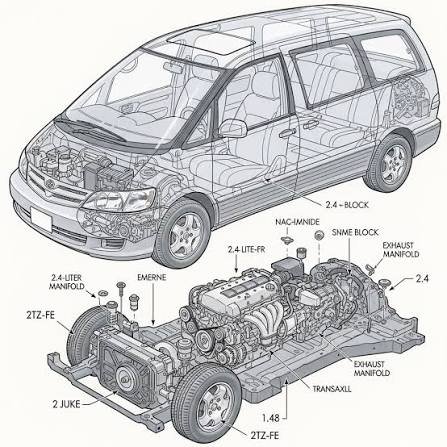
Toyota Previa engine location

That makes an old Previa interesting to inspect. A look beneath the bonnet tells only part of the story, so a buyer needs someone familiar with the underfloor engine and its associated drive system. Before commissioning work, it is worth establishing which access panels the job requires and whether the workshop knows the layout.

An unfamiliar noise also needs to be traced carefully. There is more machinery between the engine and the front equipment than a glance under the bonnet might suggest. Guessing from the direction of a sound can become an expensive way to choose replacement parts.

Toyota’s own history acknowledges how much engineering went into the arrangement. When the next-generation Previa arrived in 2000, it placed the engine at the front and drove the front wheels, changing the packaging substantially. 

The original remains a rewarding car for the mechanically curious. Ask an owner to show you where the engine lives. A conversation that begins at the open bonnet soon moves toward the cabin floor, which is an unusual route into discussing a family car.
Recomended:

Before Paying for Delivery, Check What Your Volvo’s Passenger Seat Can Do - Photo
Others
Before Paying for Delivery, Check What Your Volvo’s Passenger Seat Can Do

Certain Volvo S80s have a front passenger backrest that folds forward to a horizontal position for long loads. It uses catches on the rear of the backrest, and availability depends on the car’s

AutoExpert
Renault Gave the Avantime Enormous Doors, Then Had to Rethink How They Opened - Photo
Others
Renault Gave the Avantime Enormous Doors, Then Had to Rethink How They Opened

The Renault Avantime’s long doors used double-kinematic hinges to reduce the space they needed when opening. The mechanism helped provide access to the rear seats without swinging such a large d

AutoExpert
Karma Says Goodbye To The Revero With A 1,200-HP Carbon-Fiber Monster - Photo
Car News
Karma Says Goodbye To The Revero With A 1,200-HP Carbon-Fiber Monster

The Revero was never meant to be a supercar, but Karma Automotive has given its outgoing sedan a completely different job. Its familiar three-cylinder range extender has made way for a 6.2-liter V8, t

AutoExpert
This 1967 Shelby GT500 Has 1,000 HP And A Carbon-Fiber Body - Photo
Tuning
This 1967 Shelby GT500 Has 1,000 HP And A Carbon-Fiber Body

The original Shelby GT500 was built for a time when big engines and loud styling ruled the muscle car world. Nearly six decades later, this 1967 example follows a very different recipe. Its classic sh

AutoExpert
Toyota Is Turning the bZ4X Into a Driverless Taxi With Waymo Technology - Photo
Car News
Toyota Is Turning the bZ4X Into a Driverless Taxi With Waymo Technology

Toyota's bZ electric SUV is about to spend less time in private driveways and more time picking up passengers. The Japanese automaker is working with Waymo on a driverless version of the crossover

AutoExpert
This 1956 Ford F-100 Has 800 HP And The Heart Of A Modern Mustang - Photo
Tuning
This 1956 Ford F-100 Has 800 HP And The Heart Of A Modern Mustang

Building a classic truck usually means bringing it back to its former glory. Fat Fender Garage had a much bigger idea for this 1956 Ford F-100. Instead of preserving its original character, the Arizon

AutoExpert
Your Car Has Heated Washer Jets. So Why Has the Spray Disappeared? - Photo
Others
Your Car Has Heated Washer Jets. So Why Has the Spray Disappeared?

Heated washer jets warm the nozzles that spray the windscreen. Depending on the car, the hoses and reservoir remain unheated, so the fluid can still freeze elsewhere in the system. Winter-grade washer

AutoExpert
Watch an Old Mercedes Wiper Closely. It Does More Than Swing Across the Glass - Photo
Others
Watch an Old Mercedes Wiper Closely. It Does More Than Swing Across the Glass

The Mercedes monowiper used a mechanism that changed the blade’s reach as it crossed the windscreen. This extending and retracting movement helped it clean beyond a simple circular arc. Mercedes

AutoExpert
Honda Moved the Jazz’s Fuel Tank, and Suddenly the Back Seats Could Do This - Photo
Others
Honda Moved the Jazz’s Fuel Tank, and Suddenly the Back Seats Could Do This

Honda Jazz Magic Seats can fold flat or lift their rear cushions upward to make space for tall objects. A fuel tank mounted beneath the front seats helps make this possible by freeing space below the

AutoExpert