The Wild Era of American Hypercar Concepts: A Look Back
by AutoExpert | 7 April, 2025
Most concept cars hit the auto show circuit with a flash of excitement only to vanish into storage or worse, the crusher. But between the late '80s and mid-2000s, American automakers went all-in on some truly wild hypercars that deserve a second look.
While concept cars have been around since the 1938 Buick Y-Job (or technically the 1933 Volvo Venus Bilo), the real madness didn't kick off until much later. And perhaps surprisingly, it all started with... Oldsmobile?

Oldsmobile's 900-HP Moonshot
Back in the mid-80s, Oldsmobile was actually crushing it, selling nearly a million cars annually. With cash to burn and a new "Quad-Four" engine to promote, they did what any sensible company would do—build a 900-horsepower hypercar.
The Aerotech, designed by GM legend Ed Welburn, took a modest four-cylinder engine and transformed it into something extraordinary. IndyCar champion AJ Foyt hit 257.1 mph on GM's test track, shattering closed-course speed records of the day.
"One of the initiatives was to create a high-speed research vehicle to establish a closed-course record," Welburn recalls. With its sleek, silvery body inspired by the Porsche 917LH and a wind tunnel-tested drag coefficient of 0.30, the Aerotech was revolutionary.
While it never reached production, the Aerotech sparked something in Detroit—a hypercar obsession that would last nearly two decades.
Ford Goes Radical with the GT90
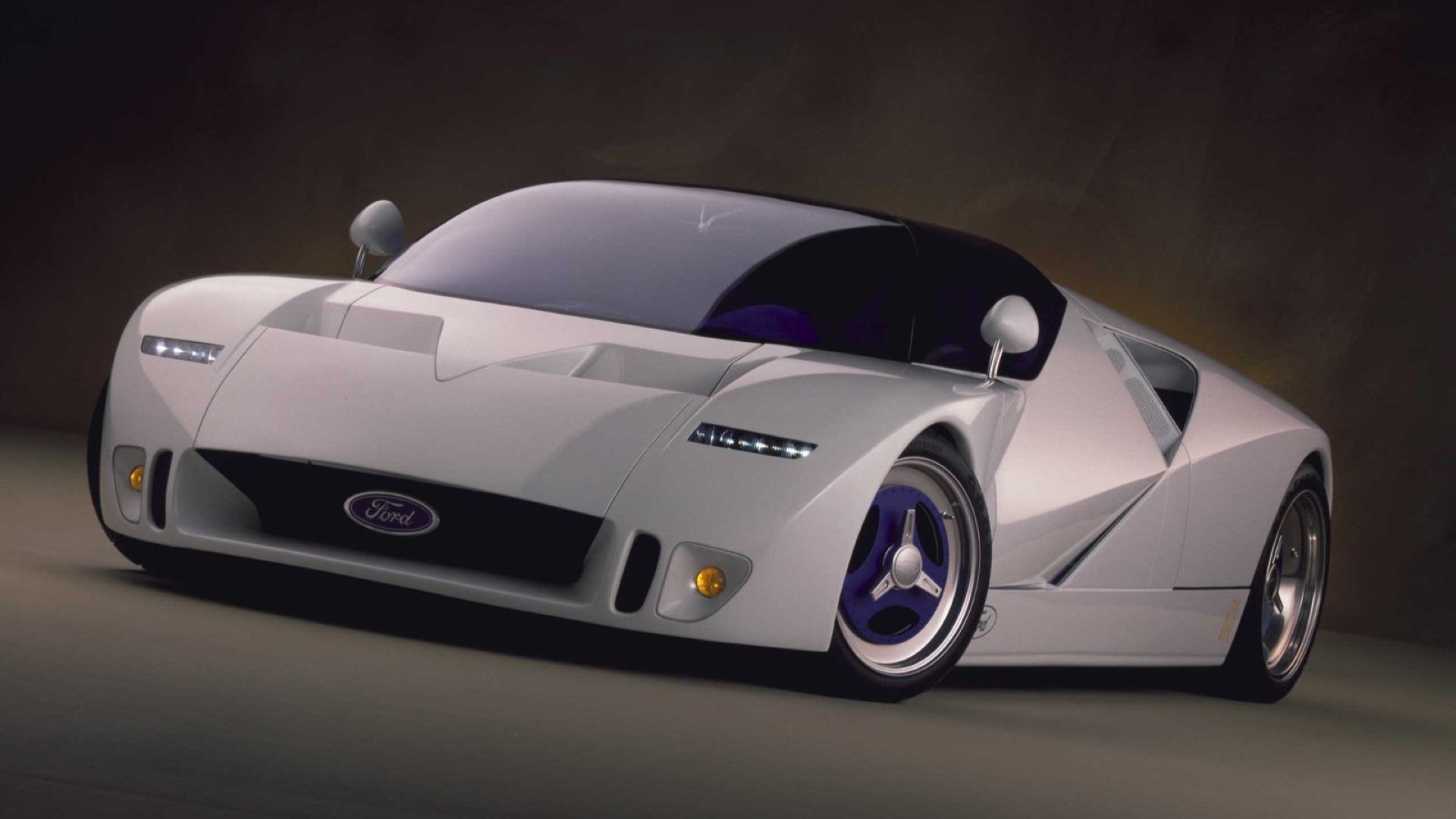
By 1995, Ford was ready to make its own statement with the angular, dramatic GT90. Unveiled at the Detroit Auto Show, it showcased Ford's new "New Edge" design language that would influence everything from Mustangs to family sedans for years to come.
Designer James Hope explained: "Ford basically said we want something fresh, new, and exciting. It all came together with this exciting push to do this kind of stealthy, angular design language that no one was doing. It was completely alien."
Built on a modified Jaguar XJ220 platform (remember when Ford owned Jaguar?), the GT90 packed a quad-turbo 5.9-liter V12 making 720 horsepower. On paper, it could hit 60 mph in 3.2 seconds with a top speed of 235 mph.
Unlike the Aerotech, journalists—including a young Jeremy Clarkson—actually got to drive the GT90, albeit limited to just 40 mph. Today, it sits in an Oklahoma museum, a beautiful what-if from the Blue Oval.
Cadillac Celebrates with the Cien
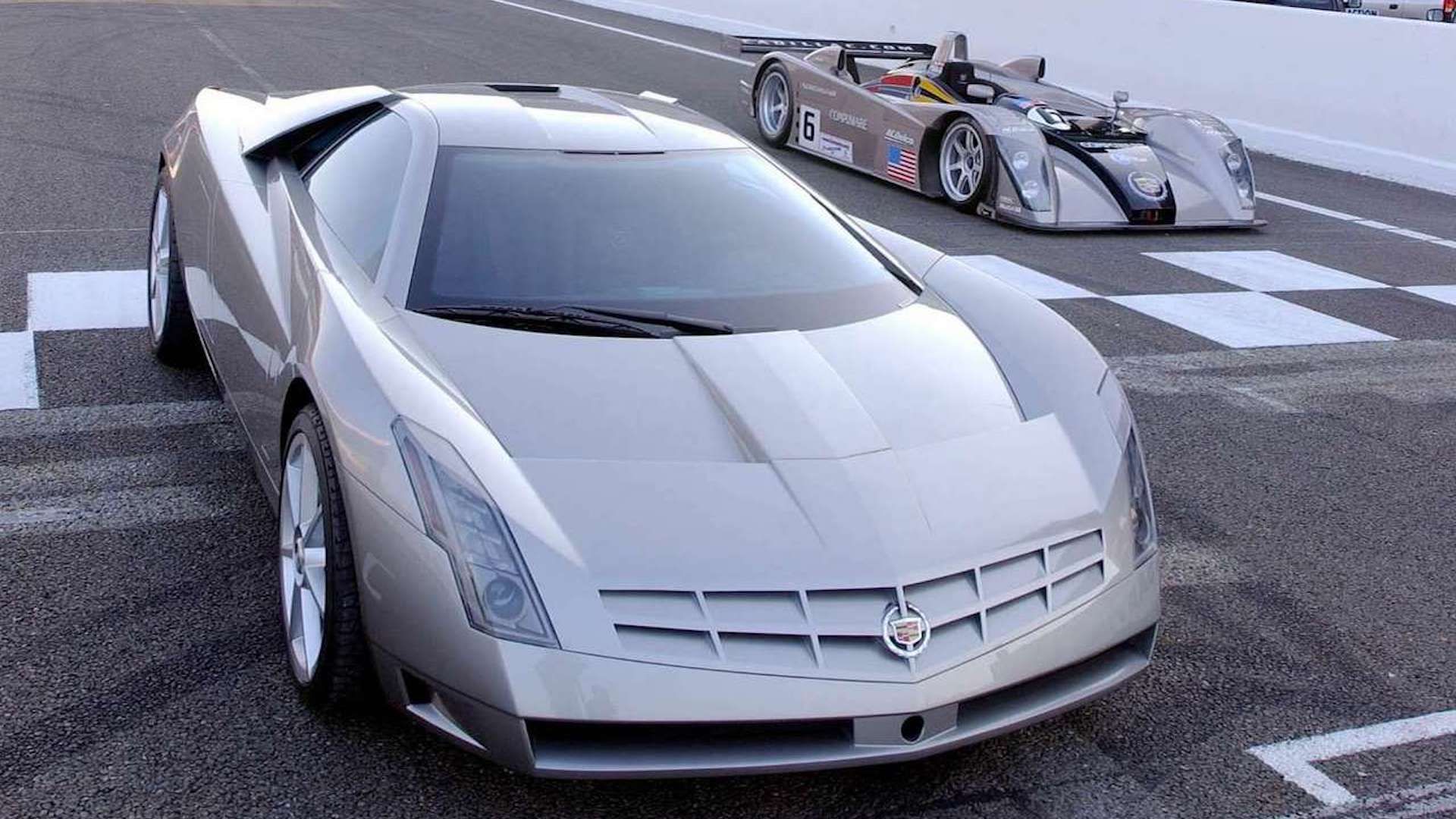
In 2002, Cadillac marked its 100th birthday with its first-ever hypercar—the appropriately named Cien (Spanish for "100"). Designed at GM's British studio by Simon Cox, its sharp, angular styling would influence Cadillac's design language for decades.
"I wanted to celebrate a century with a product that really shows that we have the technology and performance—there are no bounds to where we can go," Cox said of his creation.
The Cien featured a carbon fiber monocoque chassis and a massive 7.5-liter V12 producing 750 horsepower. Cadillac briefly considered a limited production run at about $200,000 each before ultimately shelving the idea.
Chrysler's Almost-Production ME Four-Twelve
Chrysler jumped into the hypercar game in 2004 with what came closest to actually reaching production—the ME Four-Twelve. Championed by then-president Wolfgang Bernhard, the project started with a design competition among 50 designers.
Brian Nielander won that contest: "I was really hungry to finally land it. I remember when they announced what car they were going to use—I don't think it was elation, it was just relief."
Drawing from Art Deco influences in Chrysler's lineup, Nielander created something timeless: "The body side was the defining feature—those lines that came up and over the wheels and then fanned back."
With a carbon fiber body over an aluminum honeycomb tub and a Mercedes-sourced quad-turbo V12 making 850 horsepower, the ME Four-Twelve promised 60 mph in just 2.9 seconds and a 248 mph top speed.
Unlike its predecessors, Chrysler actually built working prototypes and let journalists drive it at Laguna Seca. Production seemed imminent—until corporate shake-ups killed the project.
"You heard the rumors that we're going to try and build this," Nielander remembers wistfully.
The End of an Era
The American hypercar concept craze continued sporadically with cars like the Ford Shelby GR-1, Chrysler Firepower, and Saleen S5S Raptor, but the golden age had passed.
These days, there's less mystery at auto shows, fewer jaw-dropping reveals from American brands. But for a brief, glorious moment, American automakers dared to dream bigger than anyone—and left us with some unforgettable machines that deserved better than dusty storage rooms.