How Much Rising Gas Prices Really Cost Truck and Sedan Owners
by AutoExpert | 12 March, 2026
Gas prices. Given recent events they've been on everyone's minds as rising oil prices cause gasoline prices to climb across the U.S. and around the world. We won't dive into why costs have spiked recently or how prices are set locally or at the barrel level but wanted to explain how these changes will impact the average car owner and their wallets. Though drivers complain about even a modest fuel cost increase it may not affect budgets as much as you'd think.
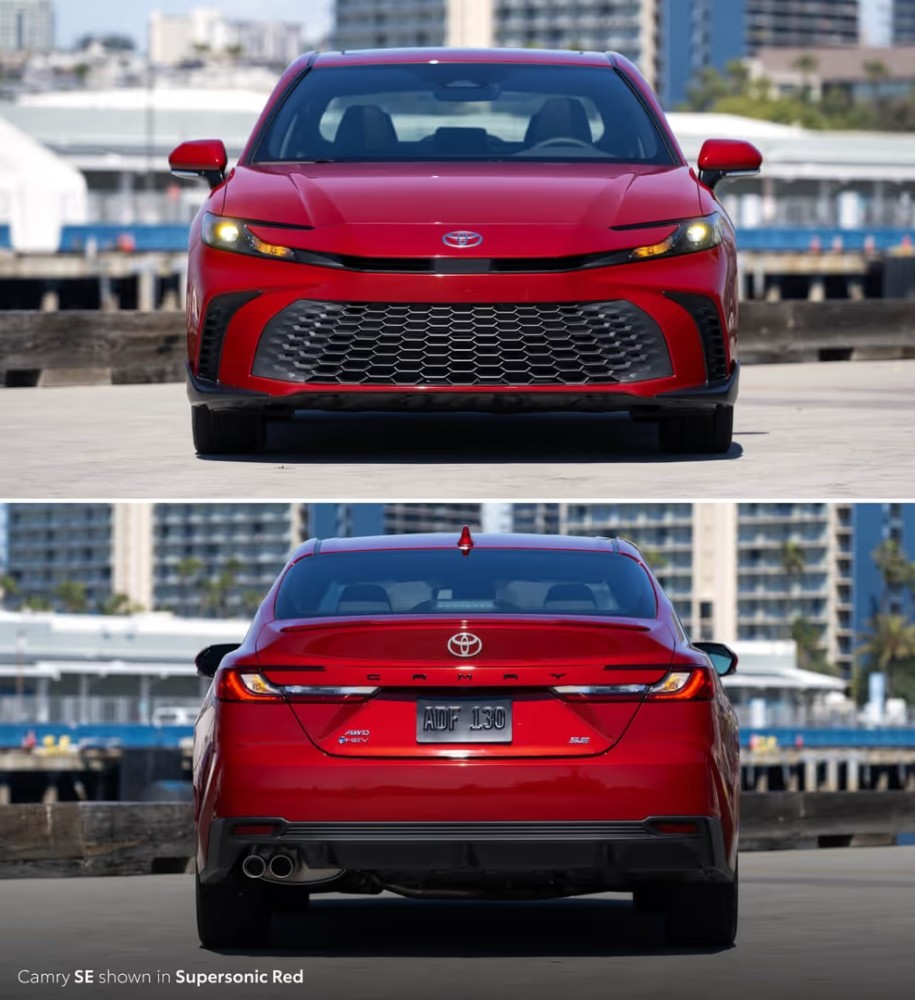
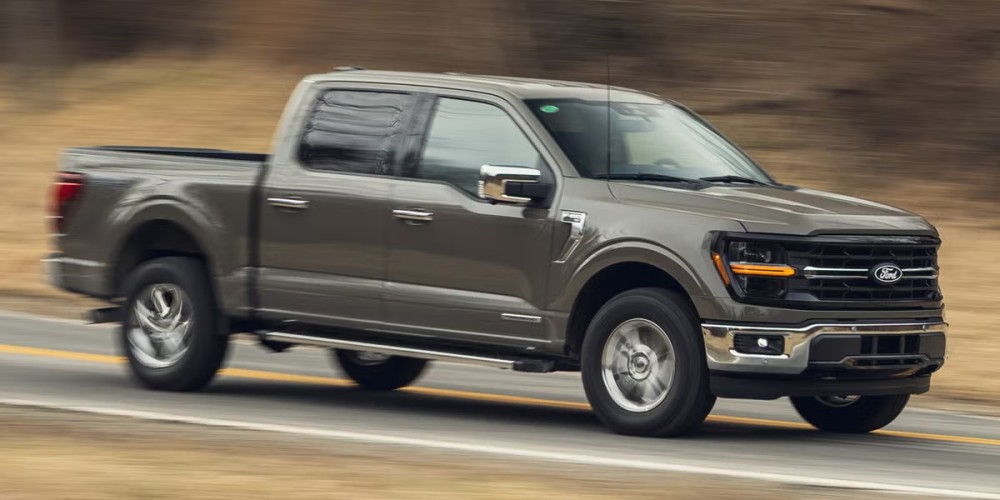
To show how much the latest gas price increases actually cost drivers we looked at two popular vehicles: the 2026 Ford F-150 and 2026 Toyota Camry. Former is the best-selling pickup truck and vehicle of any kind in the U.S. and the latter is the best-selling non-truck or SUV. We chose the F-150 with its 5.0-liter V8 to show a traditional truck option and the Camry in its SE/XLE trims since they make up the bulk of sales. Contrast between these two shows how your personal choice plays a major role in how gas prices impact your wallet.
Gas Prices Have Increased
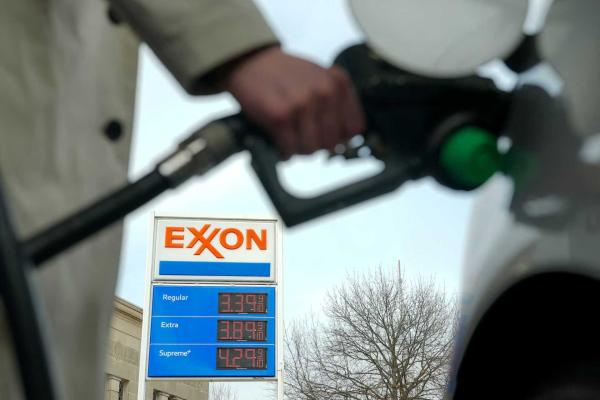
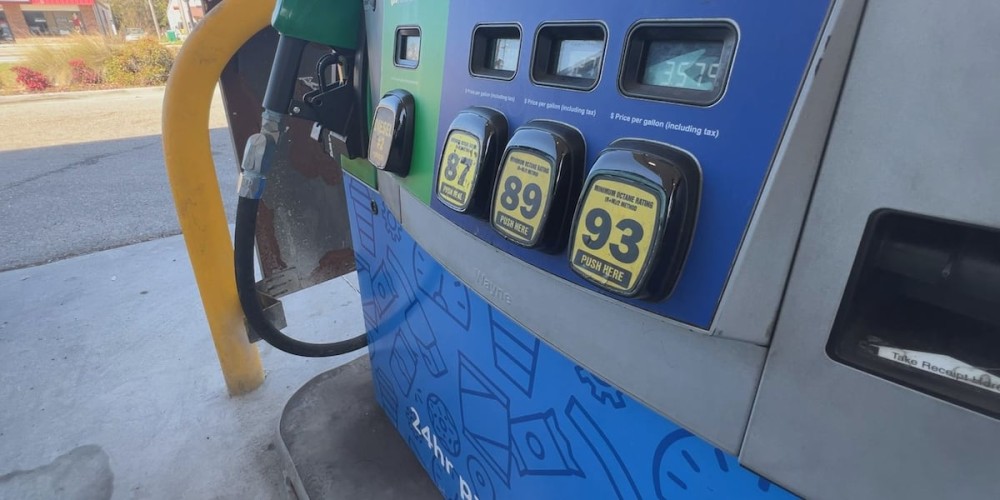
For this comparison we're using national average gas prices calculated daily by AAA. These prices fluctuate daily and vary greatly by region. As of March 9, 2026 regular 87 octane fuel averaged $3.478 while premium 91 octane was $4.342. Week prior prices were $2.997 and $3.861 respectively, increases of 16% and 12.4%.
Cost to Fill Your Tank
Starting small we wanted to show how much it would cost to fill the tank on average in the V8-powered F-150 and how much in the hybrid Camry. F-150 has three different fuel tank sizes but we used the middle 26-gallon option which would cost $90.48 to fill at today's fuel prices. For comparison it would have cost $78 one week ago, difference of $12.48.
Camry is way less expensive to fill up since it only has a 13-gallon tank. You'll pay $45.24 today compared to $39 one week ago. Smaller savings of just $6.24 but your cost per tank is far lower. F-150 will theoretically achieve 19 mpg combined with its V8 meaning it should travel around 494 miles per tank, 624 if they're all highway miles and you get the EPA-rated 24 mpg.
Despite carrying half as much fuel the Camry should travel around 598 miles on a tank in our chosen trims since it averages 46 mpg. Thanks to being hybrid only in the current generation.
How Does That Add Up Over a Year?
Most drivers aren't going bankrupt because they have to spend an extra $6 or $12 here or there but those costs can add up over a car's life. Since gas prices fluctuate so much and so frequently it's impossible to say if they'll remain at current levels but assuming they stayed exactly as they are today here's how much it would cost the hypothetical F-150 and Camry driver.
According to the U.S. Federal Department of Transportation the average driver drives 13,476 miles per year. This would cost the F-150 driver $2,468.24 at today's fuel prices if they held the same for 365 consecutive days.
If the F-150 bought fuel a week ago for an entire year it would cost $2,127.79, savings of $340.45. In other words the $0.48 weekly increase in gas prices if extrapolated over a year would cost a truck owner around $340. But what about a hybrid sedan owner?
We've already seen how the Camry can go about as far as the F-150 on a single tank using about half as much gas so that's bound to pay dividends over a year. At today's prices it would cost $1,090.62 to run the Camry 13,476 miles assuming no price changes.
If prices were at the level from one week ago it would only cost $878.87 to fill the Camry, $211.75 less than this week. Not only does the Camry owner pay way less at the pump but vehicles with higher fuel economy aren't hurt as much by fluctuations in gas prices.

What If Gas Prices Keep Going Up?
Gas prices are unpredictable. Unclear how long the current spike will last or if they'll climb any higher. To see how a hypothetical increase might impact our F-150 and Camry owners we took the same formulas used to calculate a tank of gas and a year of running costs and plugged in $4 and even $5 per gallon gasoline.
Ford F-150
If gas hits $4 per gallon the F-150's $104 to fill, $13.52 increase compared to today. At $5 per gallon same tank would cost $130, $39.52 increase. Over one year $4 gasoline would bring running costs to $2,837.05 while $5 gas would balloon them to $3,546.32, increases of $368.82 and $1,078.08 compared to today. Drivers being able to absorb an extra $340 per year seems doable but spending $1,000 more per year is a serious hit.
Toyota Camry
Camry lessens the blow to gas price increases even if they hit $4 or $5 per gallon. Full tank in the Camry would cost $52 at $4/gallon or $65 at $5/gallon, increases of $6.76 and $19.76 over today respectively. Thanks to the frugal hybrid powertrain it would only cost $1,171.83 to run the Camry for an entire year on $4 gasoline, $81.21 more than today with prices at $3.48.
Even if gas prices rose another dollar beyond that the Camry would insulate its driver from the impact and it would cost $1,464.78 over 13,476 miles. Compared to today that's a $374.17 increase, barely more than the difference the F-150 pays over the same mileage when gas prices go up by only $0.48.
Other Price Increases
Easy to view affordability through the lens of gas prices since it's difficult to control variables like how far you need to commute for work. While a fuel-efficient vehicle like the Camry sounds nice in theory not everyone can afford to upgrade to a $29,100 new vehicle and some people need to drive a pickup truck for towing or payload capacities.
That's why we wanted to put gas prices into a grander cost perspective giving readers some greater context on how they stack up with other necessities like groceries.
The USDA publishes monthly food report plans using a reference family of two adults ages 20 to 50 and two children one aged 6 to 8 and the other aged 9 to 11 to calculate average grocery spending with Thrifty, Low-Cost, Moderate, and Liberal options.
Since January 2025 grocery prices have increased around 2.9% according to the U.S. Bureau of Labor Statistics Consumer Price Index. Even on the Thrifty plan inflation has caused grocery prices to increase around $345 per year, around the same rise as the recent $0.45 gas hike would for an F-150 driver.
So while gas prices can impact your wallet especially if you drive a larger vehicle that uses lots of fuel it's not the only expenditure to pay attention to in a world of rising costs even if they do eventually go back down. A significant drop at the pump might save you $1,000 per year but if your home energy costs, health care, or other expenses increase they could offset those savings.