BMW Goldfisch V16: The Wild E32 7 Series Prototype and the Rarest V16 Cars Ever Built
by AutoExpert | 5 March, 2026
Some cars are best left as prototypes. Maybe the design's too wild for production or the tech's so experimental it wouldn't work in everyday use. Doesn't mean they can't be fascinating though.
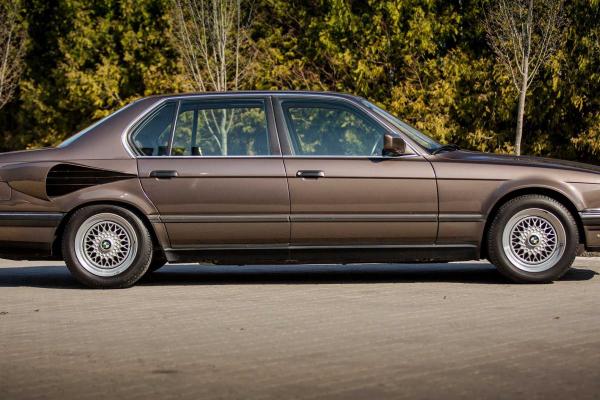
One car that explored interesting design ideas but hit roadblocks trying to make them practical is a little-known BMW prototype called the "Goldfisch." Based on a 7 Series, this one-of-a-kind creation was powered by a V16 engine, making it rare not just among BMWs but in the car world as a whole.
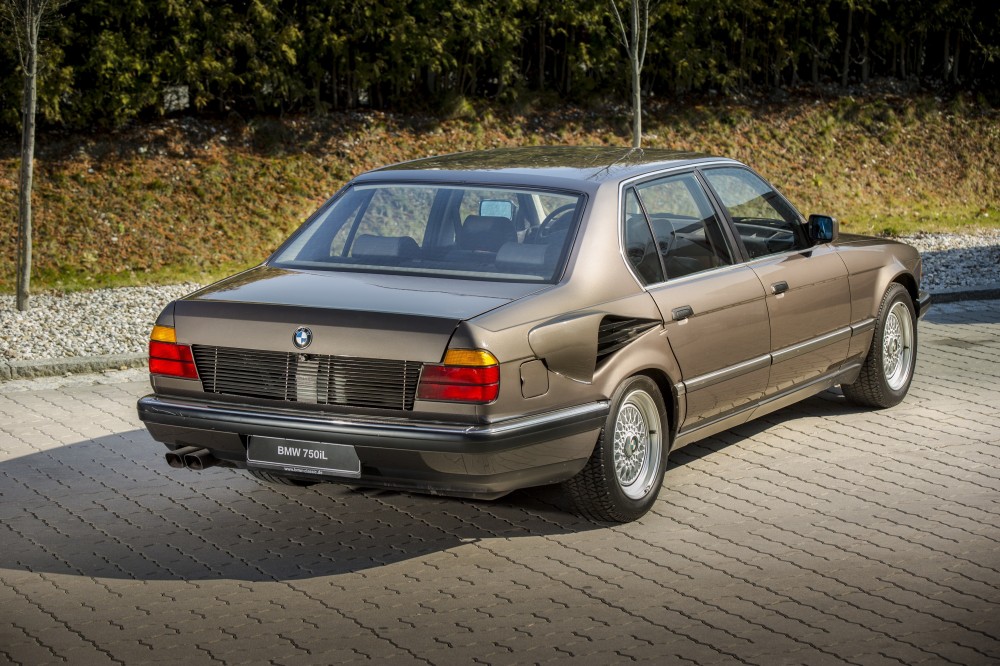
The Goldfisch was wildly impractical and could never have become a production car but it's still proof of BMW's creativity. Here's its history, features, and some other interesting V16 cars over the years.
Amazing on Paper, Less So in Real Life
Late 1980s, just as the second-gen E32 7 Series was being released, BMW decided to use it as the base for an experimental project. Went by several names during development including "Seven Seven" and "767" before becoming known as the Goldfisch.
Most crucial difference between the Goldfisch and its parent model was the engine. Instead of the inline-six, V8, or V12 you'd expect to see in standard E32 7 Series models, there was a bigger engine built specifically for this car: a 6.7-liter V16. Paired with a six-speed manual sending power to the rear wheels.
Based on the production model's V12 with an extra four cylinders, this engine unfortunately hampered the car's practicality. BMW team also had to add two large custom air intakes on the side, visually distinguishing it from the regular 7 Series.
Despite becoming rapidly clear the Goldfisch would never lead to production, the prototype still got tested extensively. The Goldfisch was more powerful than any production E32 7 Series, producing around 408 horses. Hit 60 mph in about six seconds, topped out at 175 mph.
Project got shelved for a combo of reasons. Excessive engine size and lack of practicality obviously but also issues with emissions regulations. BMW's unwillingness to start an arms race with a V16 engine was another factor. Goldfisch wasn't scrapped though. Got preserved in BMW's own collection of classic vehicles.
The Trouble Was the Engine
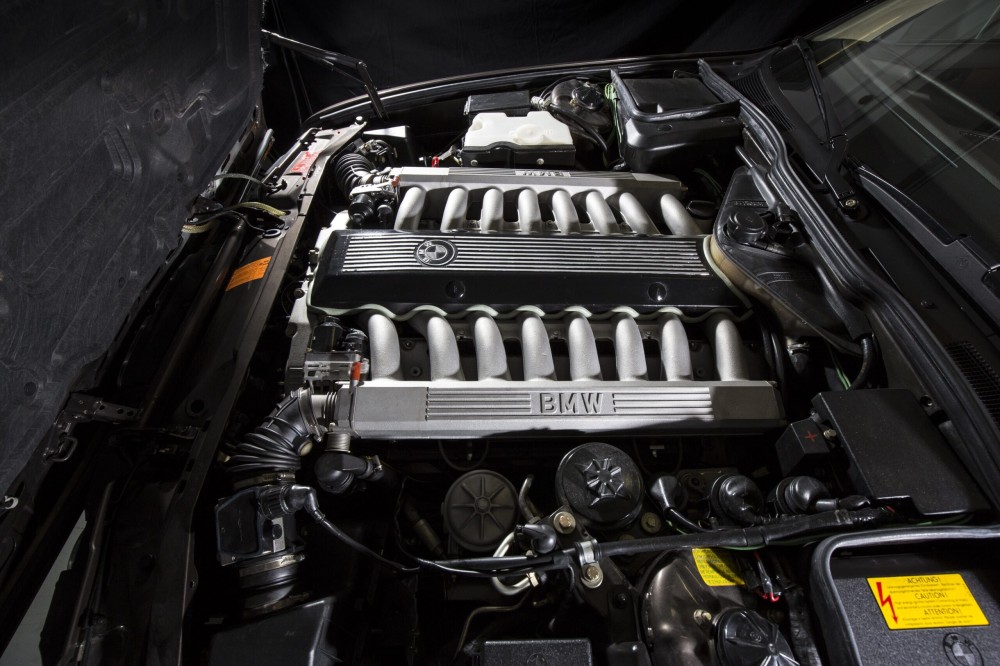
Main reason the Goldfisch could never become a production car was its engine, an attempt at doing something bigger and better than full-size luxury sedans of the era offered. Designed by Adolf Fischer who'd already designed the V12 in the E32 7 Series under direction of then-BMW boss Dr Karlheinz Lange.
V12's design was the starting point. V16 kept many core characteristics like bore and stroke, compression ratio, aluminum block and cylinder heads, single overhead camshafts. But two extra cylinders got added to each bank plus several other components were added or upgraded.
Result was an engine nearly 12 inches longer than the original. The 7 Series engine bay was just about big enough to fit the engine itself but no room for anything else including the radiator. Cooling system had to be adapted and installed in the trunk instead.
As a result no cargo could be transported in the trunk, making the Goldfisch pretty useless as a daily driver. Remained a fascinating one-off showing BMW's engineering capabilities.
The Parent Model: E32 7 Series
Model the Goldfisch traces back to is the second-gen 7 Series, also known as E32. Released in 1986, went on sale for 1987. Modernized several aspects of the first-gen's design including headlights, tail lights, grille. Also got new features making the experience more pleasant like dual-zone climate control and adaptive suspension.
Variety of models with different engines. Two inline-sixes, one 3.0 liters and one 3.4 liters. Two V8s, 3.0 and 4.0 liters. V8-powered versions arrived early '90s, first V8 BMWs since the early '60s.
Largest engine was the 5.0-liter M70 V12 that the Goldfisch's V16 was based on. Exclusively in the 750i, also the most powerful at 296 to 300 horses and 332 lb-ft. M70 was BMW's very first production V12. 750i was also the first German car powered by a V12 since the late 1930s.
Two transmission choices: four-speed automatic later replaced by five-speed or a five-speed manual. Two wheelbase configs too, the i and the iL long-wheelbase version.
Other Famous V16s Over the Years
What made the Goldfisch wildly impractical also made it stand out. V16 engines are rare and only a few automakers have ever built a car, prototype or production, with one. V16 started in aviation, used in experimental aircraft like 1909's Antoinette VII. First car with one arrived in 1930.
Cadillac V-16 was powered by a 7.4-liter engine making 165 horses. In 1938 a second generation came with a smaller 7.0-liter engine that was more powerful at 185 horses. Stayed on the market till 1940 when World War II led to it being discontinued. Decades later in 2003 Cadillac built another V16 for a one-off concept called the Cadillac Sixteen.
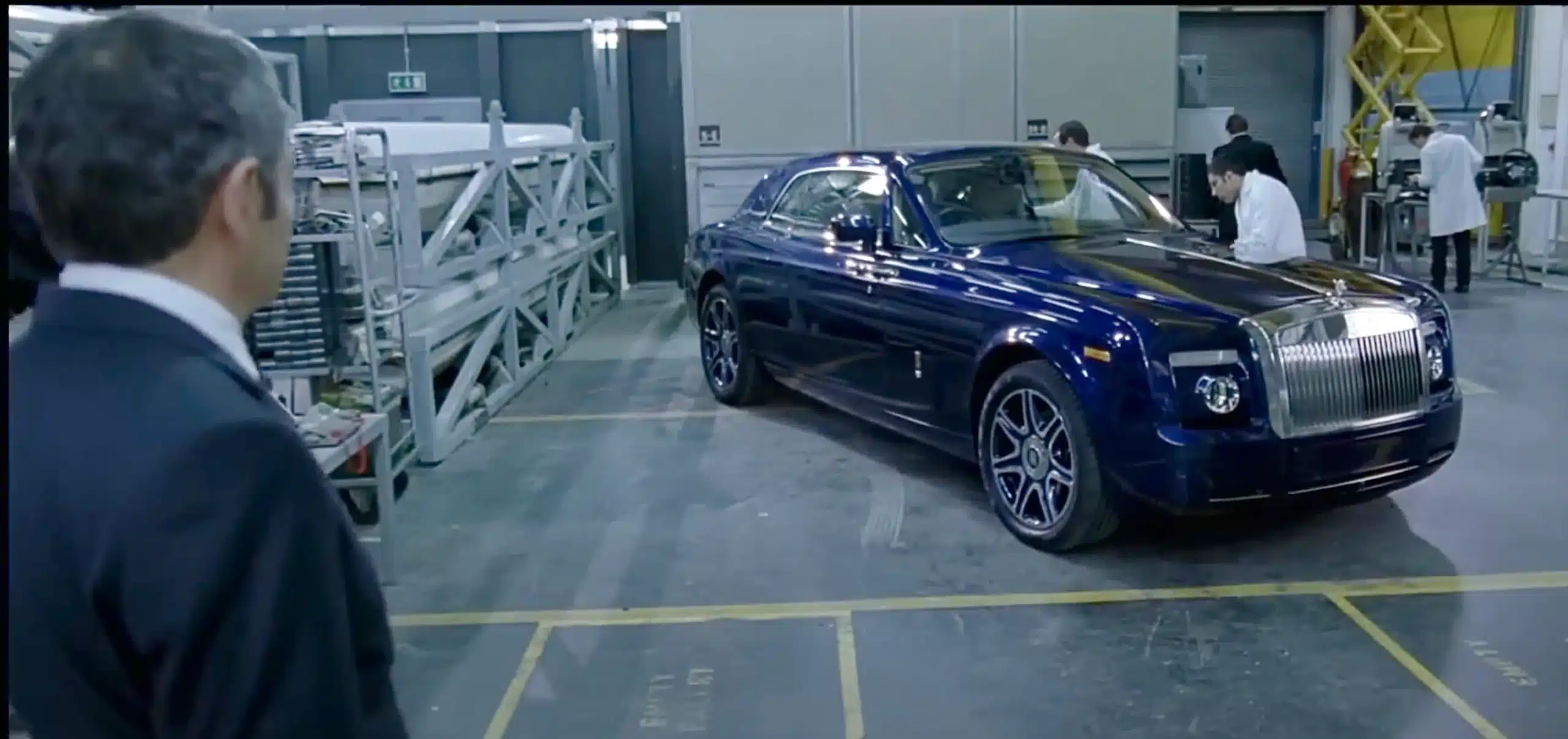
Around 20 years after the Goldfisch's debut, Rolls-Royce built V16-powered experimental cars of its own. First was the 100 EX in 2004 celebrating the meeting between Charles Rolls and Sir Henry Royce that created the brand. Second was the 101 EX in 2006. Finally a one-off V16 Phantom got built in 2011 for the movie Johnny English Reborn. All three powered by the same 9.0-liter unit with a six-speed automatic.
Rolls-Royce isn't the only ultra-high-end maker that built a V16. Most recent example is actually a production car though very limited run due to exclusivity: the Bugatti Tourbillon. Introduced in 2024, first Bugatti in over 20 years powered by something other than a W16. Engine is an 8.3-liter naturally aspirated V16 created by British engineering firm Cosworth making 986 horses on its own. In the Tourbillon it's combined with three electric motors for total output of 1,775 horses.