
How Far Can You Drive on a Doughnut Spare? Limits & Safety Guide
by AutoExpert | 18 December, 2025
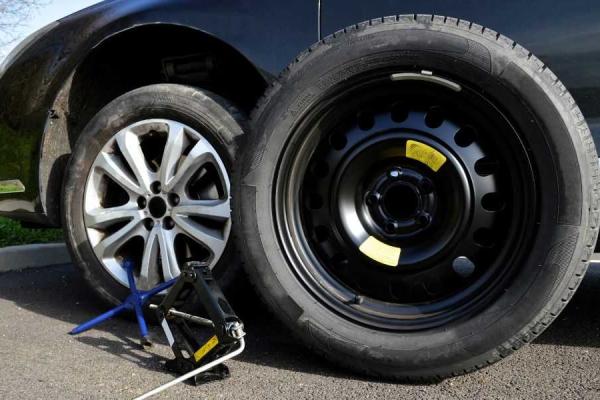
Flat tire, long day, nowhere near home—that’s when most drivers discover what kind of spare their car actually has. For a lot of modern cars in the U.S., that means the skinny little “doughnut” hiding in the trunk.
It looks goofy, feels flimsy, and always comes with the same big question: How far can it really go before things get sketchy?
How long a doughnut can actually last
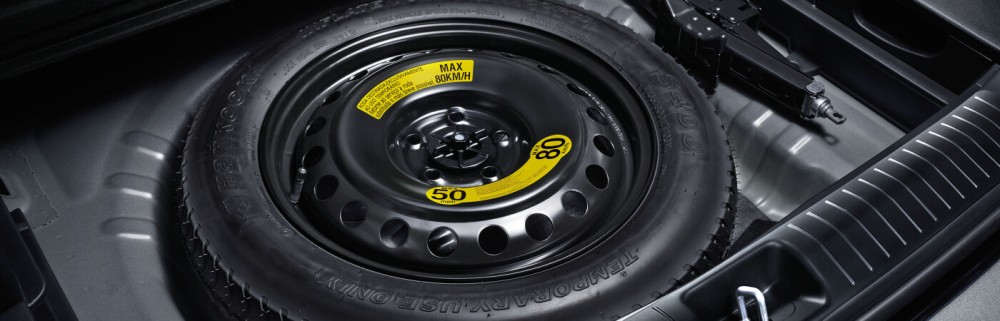
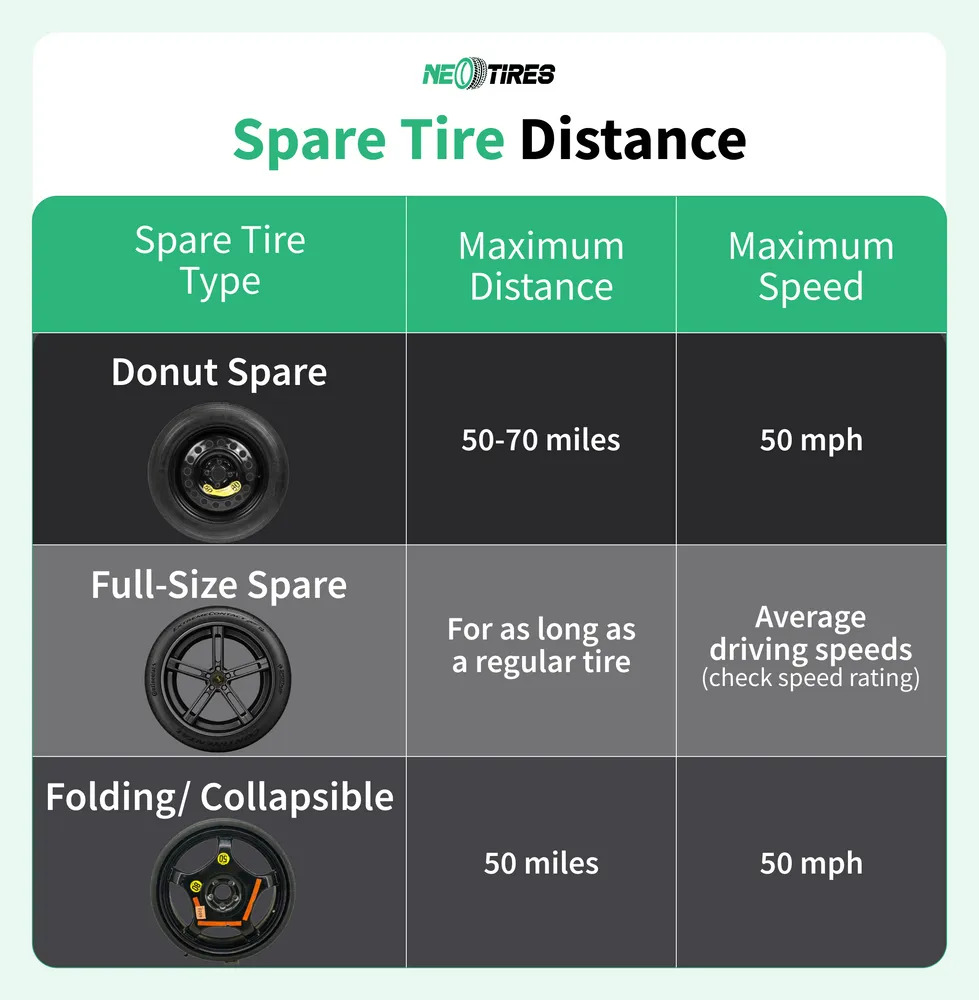
Doughnut spares are designed as a “get-out-of-trouble” option, not a backup tire for regular use. Most are rated for about 50 miles at speeds up to around 50 mph. That’s enough to limp off the shoulder, get across town, or reach a tire shop a few exits away.
In real life, some drivers stretch that to 70 miles or so when they’re stuck between paychecks, on a road trip, or just trying to make it to the weekend. It happens. But once a doughnut starts going well beyond its intended range, the risk climbs fast:
The tread is much thinner than on a regular tire
The rubber isn’t built for heat from long highway runs
Grip is worse, especially in rain or snow
The car’s handling and braking are thrown off
Push it too hard, and that “temporary spare” can turn into the next flat—or a full-blown blowout.
Why doughnuts feel so sketchy
There’s a reason a car feels weird as soon as a doughnut goes on. It’s smaller, lighter, and usually mounted on a basic steel wheel. That mismatch means:
The car may pull slightly to one side
Braking distances can increase
Stability control and ABS aren’t working with a fully balanced set of tires
It’s not that the car suddenly becomes unsafe the moment the doughnut goes on. It’s that the safety margin shrinks. Short trips, lower speeds, and calm weather? Usually fine. Long interstate runs, heavy rain, or aggressive driving? Bad idea.
Why full-size spares disappeared
Older American sedans, SUVs, and trucks often came with a proper full-size spare tire. Swap it in, and the car drove more or less normally. For many drivers, that meant fixing the damaged tire became a “whenever I get around to it” problem.
Then fuel economy rules started tightening.
Under U.S. Corporate Average Fuel Economy (CAFE) standards, automakers are pushed to squeeze out every bit of efficiency they can. One of the easiest ways to do that? Lose weight. A full-size spare plus jack and tools can add 30 to 50 pounds. Multiply that across millions of vehicles and the impact is big enough for manufacturers to notice.
So the full-size spare quietly started disappearing. In its place:
Compact doughnuts
Tire repair kits with sealant and a tiny compressor
And in some models, nothing at all
Which cars still get a “real” spare?
A few vehicles sold in the U.S. still take spares seriously. Off-roaders and trucks especially. Models like:
Jeep Wrangler
Ford Bronco
Some full-size pickups
A few SUVs and certain Subaru trims
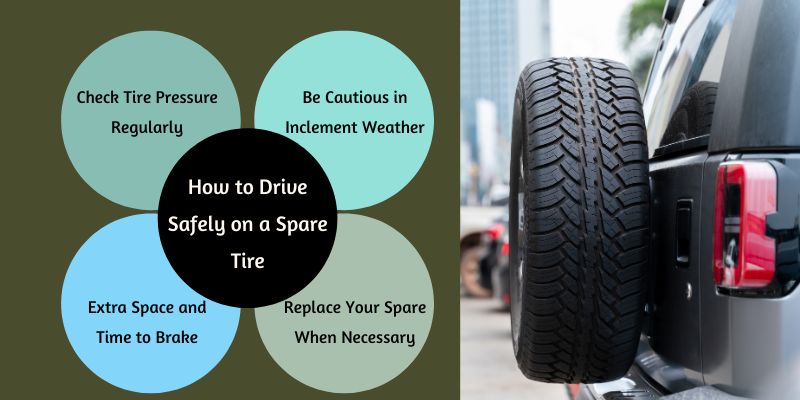
often still ship with a full-size spare or at least a more robust solution. They’re designed for people who actually leave paved roads, drive long distances, or tow, so having a real backup tire still makes sense.
But they’re in the minority now. Consumer Reports has noted that only a portion of new vehicles even come with a doughnut, and a much smaller slice include a full-size spare at all. A surprising number offer just a sealant kit, which is useless if the tire sidewall is shredded or the wheel is cracked.
The bottom line on doughnuts
For most modern cars in the U.S., the doughnut spare is all that stands between a flat tire and a tow truck. It’s:
Temporary, not a backup for weeks
Limited to around 50 miles and about 50 mph
Sensitive to bad weather and long highway runs
If money is tight or timing is awful, drivers sometimes stretch those limits. But every extra mile is a bit of a gamble.
One thing is clear: a doughnut isn’t there to keep the car on the road long-term. It’s just there to buy enough time to get the real problem—a proper tire—sorted out.