
EV Power Outages: What Happens & How to Prepare
by AutoExpert | 3 March, 2025
So you've got an electric car and suddenly... no power. Cue the panic, right? Before you start imagining yourself stranded with a dead EV, take a deep breath. This situation isn't nearly as dire as you might think.
First Things First: A Little Perspective
Let's be real, most power outages are over before you know it. According to the U.S. Energy Information Administration, the average American experienced less than six hours of total power interruptions in 2023. That's not six consecutive hours, but rather all the little outages added up across the entire year.
Even the big, memorable blackouts don't last forever. Remember the massive 2003 Northeast blackout? Most people had power back within seven hours. Or the 1989 Loma Prieta earthquake that rocked the San Francisco Bay Area? Power was restored for most within eight hours.
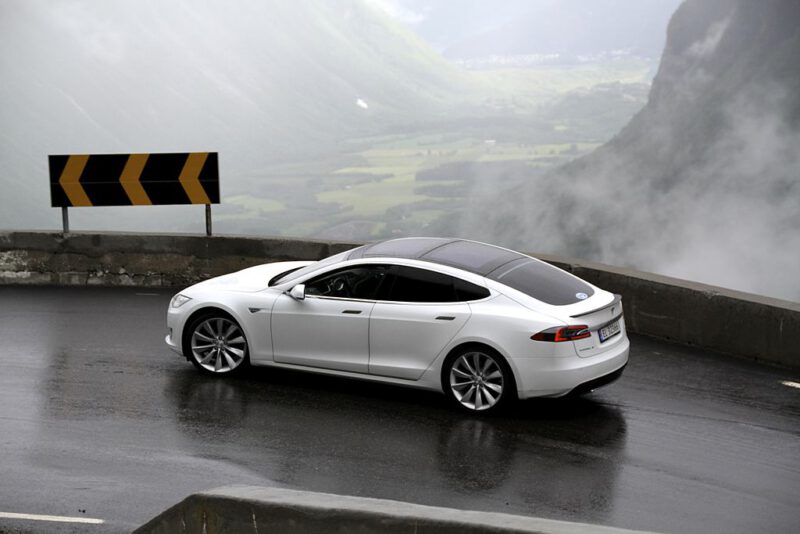
In other words, chances are good your power will come back on long before your EV charging session would've finished anyway.
Be Like a Scout: Always Prepared
If you live somewhere prone to power issues — maybe you're up in the mountains or out in a rural area where outages are just part of life — you probably already have contingency plans in place. The same mindset applies to your EV.
Think of it like keeping your gas tank filled before a storm. Instead of charging every few days when you're down to 20 or 30 percent, plug in every night when wild weather is in the forecast. That way, you're always starting with a full "tank."
:max_bytes(150000):strip_icc()/low-angle-view-of-silhouette-man-repairing-electricity-power-cable-1193319650-6adb1255cafd4a30ba605e9cea37773c.jpg)
Know Your Escape Routes
Here's a smart move: familiarize yourself with public charging options within a 25-50 mile radius of your home. Even if your battery is only at, say, 20 percent, that still gives you enough juice (typically 20-45 miles of range) to escape the immediate outage zone.
Make note of both DC fast-chargers (the speedy ones) and the more common Level 2 stations. Pro tip: look for chargers near places with bathrooms, like restaurants or convenience stores. Trust me, you'll thank yourself later.
Remember, it's pretty rare for widespread outages to stretch across 20+ miles, so chances are good you can drive somewhere with working power.

Get Creative with Power Sources
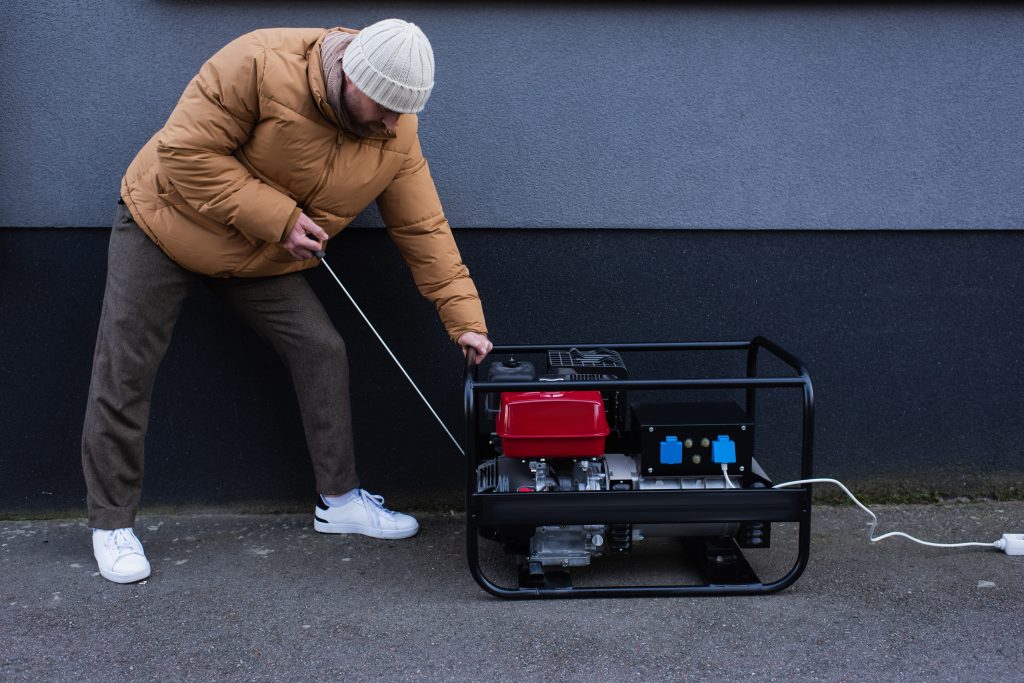
Got a home generator? Make sure your house is wired so the generator-powered circuits include an outlet near where you park. Or you can plug your EV's portable charging cord directly into the generator if it has an outlet.
Sure, a standard 120-volt outlet won't charge as quickly as your usual 240-volt Level 2 setup, but adding 2-5 miles of range per hour could be a lifesaver until the main power returns.
And hey, in a pinch, maybe your neighbor still has power? A friendly request to borrow an outlet might save the day.
The Real-World Test: Hurricane Milton
Want proof that this approach works? Look at what happened during Hurricane Milton in Florida in October 2024.
According to data from Stable (a company that helps plan and operate EV charging networks), Florida's charging infrastructure held up surprisingly well despite widespread power outages. The charging stations that went offline were mostly concentrated right where the hurricane made landfall — areas where people were actually under shelter-in-place orders and told NOT to evacuate by car.
The really impressive part? More than 85 percent of charging points were back online within just two days of the hurricane. Meanwhile, gas stations that had power were dealing with long lines and limited fuel supplies.
And here's the kicker: there wasn't much crowding at EV charging stations along evacuation routes. People got out just fine.

The Big Picture Is Getting Better
The charging situation is only improving. Fifteen years ago, public charging stations were as rare as unicorns. Today? We've got about 233,000 charging ports at over 84,000 locations across the U.S. and Canada, according to the Department of Energy.
So if there are more EVs on the road during the next blackout, there will also be way more places to charge them.
One Last Reality Check
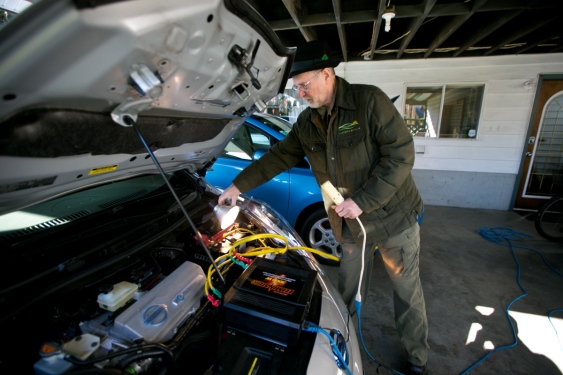
Here's something worth remembering: during a widespread power outage, your neighbors with gas cars are in the same boat you are. Gas pumps need electricity to work! No power means no way to get that gas from the underground tanks into your car.
So plug in a bit more often when the weather looks iffy, know your charging options, and relax. You've got this.