Fuzzy Dice Used to Mean You Had a Bit of a Death Wish. Now They’re Mostly Just Nostalgia
by AutoExpert | 2 July, 2026
There was a time when fuzzy dice actually meant something.
Now they mostly mean the person driving either likes old-school car culture, enjoys ironic throwback accessories, or found them online for twelve bucks and thought they looked fun. That is not an insult. It is just a very different energy from what fuzzy dice used to carry.
Because for a while, they were not just decoration.
They were part superstition, part attitude, part signal that the person behind the wheel was at least flirting with the idea that driving fast and doing stupid things was a perfectly respectable way to spend an evening.
That edge is mostly gone now, which is why fuzzy dice have faded out of everyday cars almost completely.
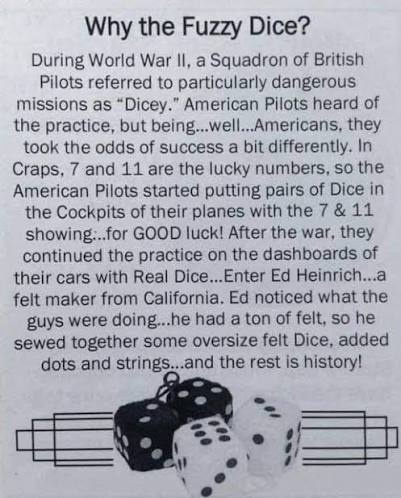
The story people usually tell starts with World War II pilots. Before missions, some of them kept dice in the cockpit as a kind of luck charm, or maybe as a darker joke about the odds they were flying into. Either way, the message was the same: every trip was a gamble. When the war ended and those men came home, some of that ritual supposedly followed them into civilian life. The cockpit became the car. The dice stayed.
Then the whole thing slid neatly into postwar hot rod culture, which was exactly the kind of environment where fuzzy dice could thrive. That scene already loved symbolism, ritual, and the idea that cars were not just transportation but identity. If you were racing, especially illegally, the dice made sense. You were taking chances. You were rolling them, literally and otherwise. Hanging dice in the car was a small, visible way of admitting that maybe you liked life with a little more danger in it.
That is what made them cool in the first place.
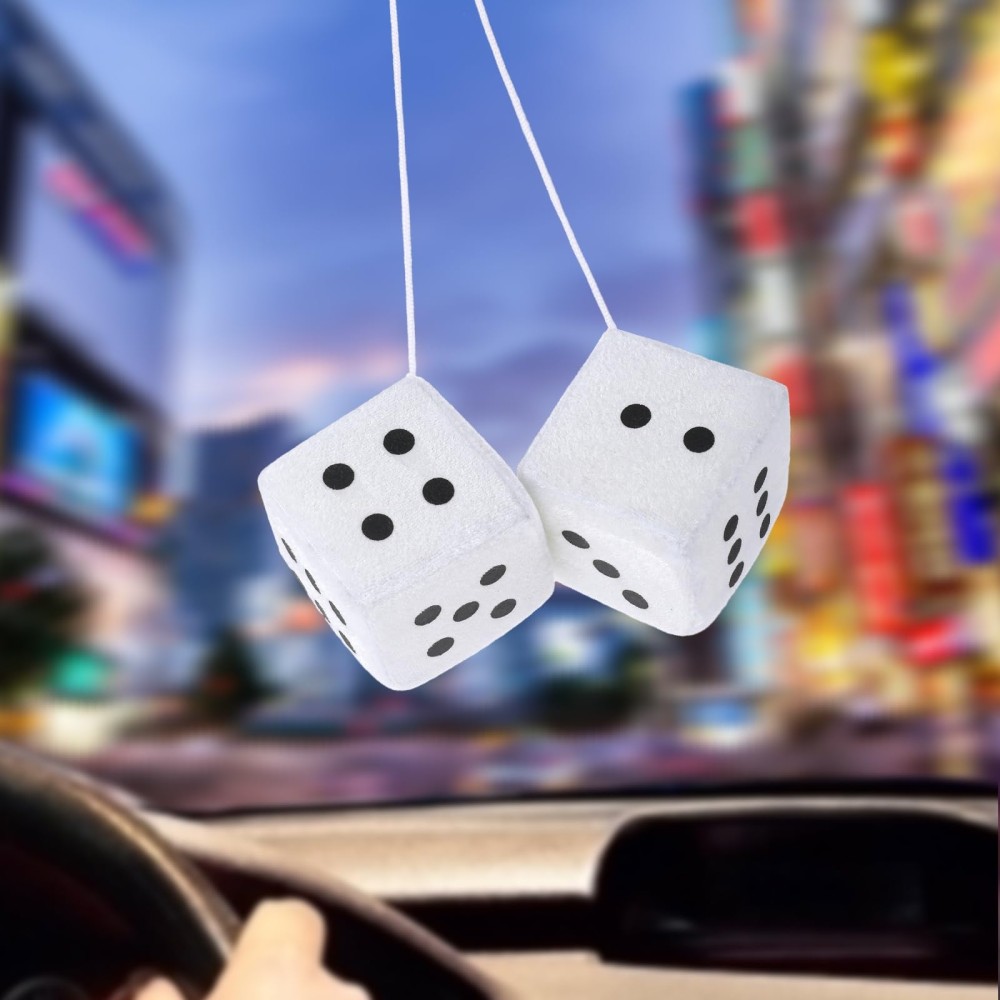
The original versions were not fuzzy, by the way. They were harder, more literal dice, which was fine until the sun got involved and made that idea less practical. So the soft plush version took over, and from there the whole thing became much more visual, much more customizable, much easier to sell. Once magazines, custom shops, and the broader hot rod scene started embracing them, fuzzy dice stopped being a private symbol and became an accessory.
That is usually the beginning of the end for anything with real edge.
Because once a rebellious object becomes easy to buy and easy to copy, it starts losing some of the danger that made it interesting. By the time fuzzy dice were everywhere, they were no longer really saying, “I live fast and accept consequences.” They were saying, “I like the aesthetic of people who once said that.”
Which is how culture works, honestly.
Through the 1950s and into the decades after, fuzzy dice stuck around because they were fun. They were colorful, cheap, easy to hang, and instantly recognizable. They also fit into a bigger shift where people started treating the inside of the car like a personal space instead of just a driving space. Once that happened, fuzzy dice were no longer alone. They had company. Dashboard hula girls, Garfield suction-cup toys, bobbleheads, little signs, charms, trinkets, all the random stuff people use to make a car feel less like a machine and more like a room they happen to move around in.
That changed the meaning again.
Instead of rebellion, fuzzy dice became one more way people decorated their cars. Less outlaw symbol, more personality choice.
And then came the part that probably helped push them even further out: rules.
A lot of states got stricter about anything hanging from the rearview mirror or cluttering the windshield area. Once something becomes an obstruction issue, its survival chances get worse. You might still see people do it, obviously, but the more official attention started landing on mirror-hanging accessories, the less normal it felt to have junk swinging around in front of your face while driving.
Modern cars did not help either.
Old cars had room for visual nonsense. New cars are increasingly busy around the mirror area with cameras, sensors, housings, safety systems, and all the little bits of technology designed to watch the road, read lane markings, and keep drivers from doing things they should not be doing in the first place. Hanging plush dice in that zone now feels less like style and more like you are trying to annoy your own car.
So fuzzy dice slowly got squeezed out.
Not because people suddenly hated them. More because the world around them changed. Cars got more serious. Interiors got cleaner. windshield laws got less forgiving. Accessories got replaced by other accessories, then by screens, then by the general modern urge to keep everything looking minimal and vaguely expensive.
Fuzzy dice did make a little comeback later, but by then it was nostalgia. Pure nostalgia. The same way old diner signs or retro gas pumps come back around. Nobody was really hanging them because they wanted to project danger anymore. They were hanging them because they liked what the symbol used to be.
And that is where fuzzy dice live now.
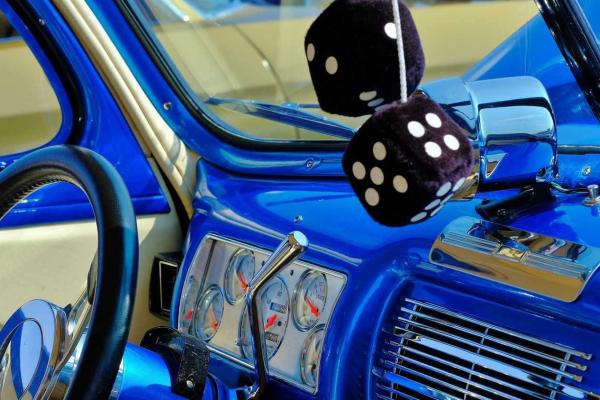
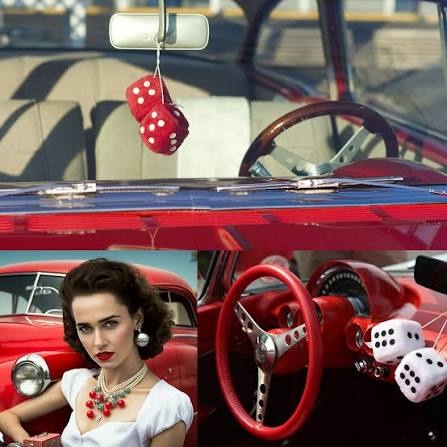
At car shows. In old hot rods. In retro builds. In the occasional classic where they still feel right. Maybe in the mirror of someone who genuinely loves the whole golden-age-custom-culture thing enough to bring one tiny piece of it into the present.
That is probably the nicest ending they could have had.
Because the truth is, fuzzy dice did not disappear because they were uncool. They disappeared because the world stopped needing them in the same way. What they once represented got diluted, then softened, then replaced by other versions of self-expression. The danger went first. Then the defiance. What remained was the object itself, still recognizable, still charming in the right setting, but no longer carrying the same charge.
They used to mean you were taking a chance.
Now they mostly mean you miss the time when car culture still liked to pretend that mattered.