
The Spare Tire Quietly Disappeared From New Cars, and Many Drivers Haven’t Noticed
by AutoExpert | 13 July, 2026
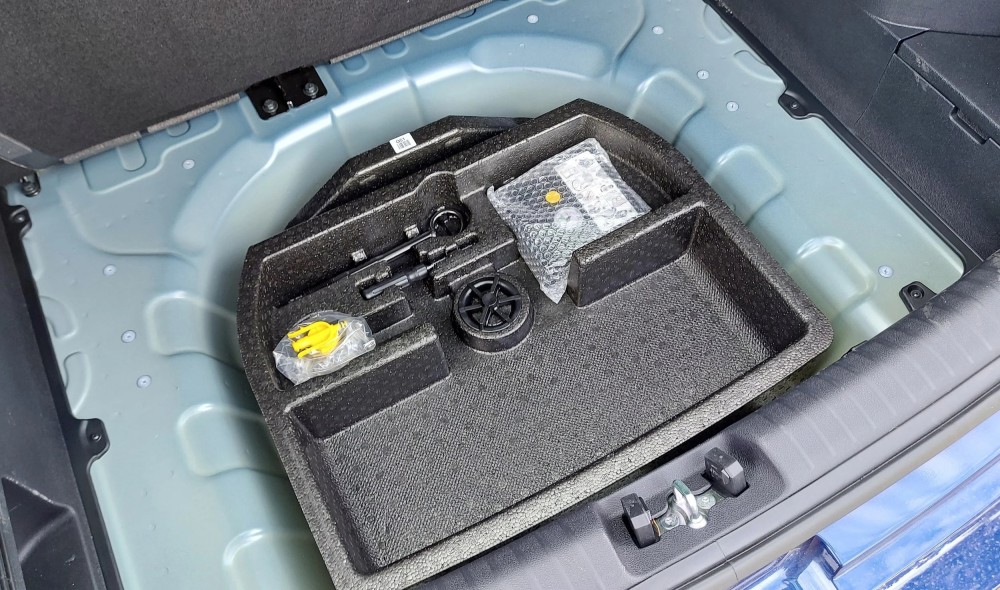
Here is a mildly alarming experiment: open the trunk of your car and lift the floor. There may be a spare tire under there. There may also be a little black compressor, a bottle of sealant, and a patch of empty space where a wheel would have fitted rather nicely.
Plenty of drivers do not find out which one they have until a tire goes flat. By then, the car is on the shoulder, the hazard lights are flashing, and that tiny bottle of goo suddenly has a lot riding on it.

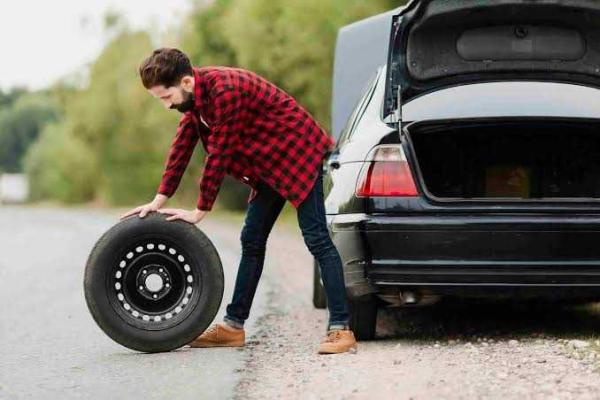
Spare tires used to be part of the deal. Buy a car, get five wheels. The fifth might have been a skinny temporary “donut,” but at least it was there. Today, a growing number of cars leave the factory without one.
Automakers have reasons for this. Whether those reasons are especially helpful when staring at a shredded sidewall is another matter.
It started with a few pounds
Modern cars have gained a lot of weight. They carry larger wheels, stronger crash structures, more sound insulation, electric seats, cameras, sensors, screens, speakers, and enough wiring to make an old mechanic nervous.
At the same time, manufacturers are under constant pressure to make them more efficient. That means looking for weight savings wherever they can be found, and the spare-tire compartment is an easy place to start.
Take out the wheel, tire, jack, lug wrench, and mounting hardware, and the car becomes lighter without losing anything that will be noticed during a test drive. The fuel-economy improvement from one missing spare is not dramatic, but automakers work in fractions. A small saving repeated across an entire model range still counts.
AAA found that 28 percent of 2017 model-year vehicles did not include a spare tire as standard equipment. That number is now several years old, but the trend it captured has not gone away.
The trunk looks better without one
Then there is space.
Car buyers want roomy cabins and large trunks, even when the car itself is not particularly large. Something has to give, and a round tire beneath the cargo floor takes up more room than it seems.
Remove it, and the trunk can become deeper. The floor can sit lower. There may be space for an upgraded sound system, suspension components, emissions equipment, or a battery.
That last point matters in hybrids and electric cars, where engineers are already trying to fit batteries and electrical hardware into every available corner. A spare tire is competing for some very valuable real estate.
It also explains why certain cars have enough room for an optional spare but do not include one as standard. The space exists. The wheel simply costs extra.
Yes, money has something to do with it
This is the explanation that rarely makes it into the brochure.
A spare tire costs the manufacturer money. So does the wheel, jack, wrench, storage tray, bracket, and hardware holding everything in place. Each piece has to be sourced, shipped, installed, and carried around for the life of the car.
A compressor and bottle of sealant are cheaper and lighter. They also fit into a space barely larger than a shoebox.
The saving on one car might not look enormous. Across hundreds of thousands of cars, it becomes a very different calculation.
So what are drivers supposed to use?
Usually, the answer is hiding inside that little foam tray.
A compressor and some sealant
Many new cars come with a small electric compressor and a bottle of liquid sealant. Attach the hose, plug the compressor into the car, and the system pushes sealant and air into the tire.
When the problem is a small nail hole in the tread, the kit may be enough to get the car moving again. That is the best-case scenario.
If the tire has a torn sidewall, a large cut, a blowout, or damage from a pothole, the kit is mostly luggage. Sealant cannot rebuild missing rubber or pull a tire back onto its wheel.
There is another catch. The bottle expires.
It can sit under the trunk floor for years without anyone looking at it. When it is finally needed, the contents may be well past their replacement date. That is why checking the kit now is much better than reading its instructions by phone light on the side of a highway.
Sealant is also only a temporary repair. The tire still needs to be inspected, and some sealants can make a permanent repair messier or affect the tire-pressure sensor.
Run-flat tires
Some cars skip the compressor and rely on run-flat tires instead.
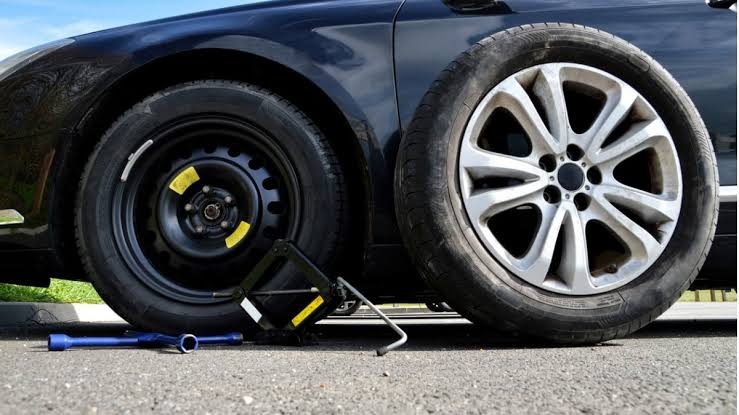
These tires have reinforced sidewalls that can hold up the vehicle after the air escapes. The idea is simple: rather than changing a tire beside moving traffic, the driver can continue to a safer place or nearby repair shop.
That does not mean the tire is fine.
Run-flats have limits on speed and distance, and the exact limits depend on the tire. Once driven without pressure, the tire may also need replacement, even if the puncture itself looks repairable. Damage can be hidden inside the sidewall.
They tend to cost more than ordinary tires, too. Some deliver a firmer ride, and not every tire shop keeps the right size in stock. A run-flat can save a driver from changing a wheel, but it does not necessarily save time or money afterward.
A phone call
For some cars, the real spare tire is roadside assistance.
That sounds reasonable when the car is parked in a city with good phone coverage. It sounds less convincing on an empty road in bad weather, particularly when the estimated arrival time begins with “two hours.”
Roadside assistance is still worth having. It just changes a problem that once took 20 minutes and a lug wrench into a problem that may require a tow truck.
Does your car actually have a spare?
There is only one reliable way to find out.
Open the trunk and look.
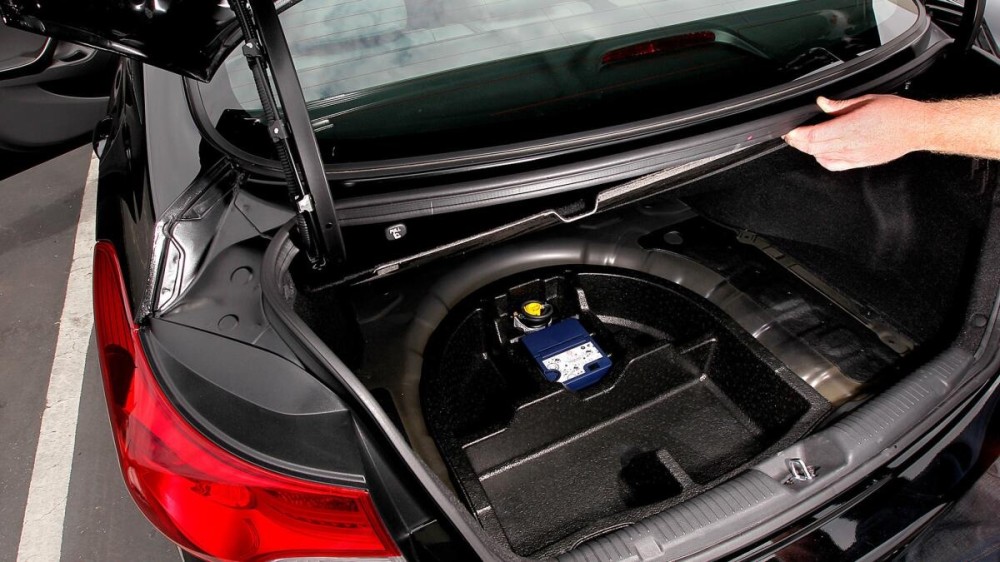
Lift the cargo floor and check for a spare, jack, and lug wrench. If the space contains a compressor, find the sealant bottle and check its expiration date. Plug in the compressor to make sure it still runs. If the car uses run-flat tires, the sidewalls should be marked accordingly.
Also look for the locking-wheel-nut key. It has a remarkable habit of disappearing into old gloveboxes, garage drawers, or the pocket of whichever technician last removed the wheels. Without it, even a perfectly good spare may not be much help.
The same inspection is worth doing with a rental car before a long drive. Two identical-looking cars can carry completely different emergency equipment.
Can you buy a spare if the car did not include one?
Often, yes.
Some manufacturers sell model-specific kits with the correct wheel, tire, jack, wrench, and storage hardware. Aftermarket kits are available for many other vehicles.
The important part is buying one that genuinely fits.
A spare must clear the brake calipers, fit the wheel hub, support the car’s weight, and stay close enough to the original tire diameter. On an all-wheel-drive car, fitting the wrong size can cause more than an illuminated warning light. A large difference in rolling diameter can place unnecessary strain on the drivetrain.
There is also the question of where to put it. If the trunk was never designed to hold a wheel, the spare may take up a chunk of cargo space. It also needs to be tied down securely. A heavy wheel should not be free to travel through the cabin during a collision.
A dealership or knowledgeable tire shop can confirm whether a proper kit exists.
Five minutes now can prevent a very long afternoon
Nobody buys a car because of the quality of its spare tire. It is not exciting, it is not visible in the driveway, and it will never impress a passenger.
But the absence of one can become extremely interesting at exactly the wrong time.
Take a look beneath the trunk floor. Find out whether the car has a spare, a run-flat setup, a sealant kit, or nothing at all. Add a flashlight, gloves, pressure gauge, and reflective warning triangle while the trunk is already open.
A flat tire is annoying enough. Discovering that the backup plan expired three years ago makes it much worse.