
America Chose the Right Side of the Road Before Cars Even Existed
by AutoExpert | 14 July, 2026
The United States was already keeping right long before anyone had an engine, a steering wheel, or an argument about who had the right of way at a four-way stop. The habit began with horses, heavy freight wagons, and drivers who needed one hand free for a whip. Cars arrived much later. By then, the side of the road had largely been decided.
That is the short answer. The longer one involves Colonial America, enormous Conestoga wagons, an early Pennsylvania turnpike, and a Ford that helped move the American driver from one side of the cabin to the other.
Traffic rules began before traffic looked anything like this
There was no national meeting at which early Americans voted to drive on the right. The custom developed gradually from the way people, animals, and wagons already moved.
Research collected by the Federal Highway Administration indicates that right-hand travel was common in Colonial America from the earliest settlements. Horseback riders, ox teams, wagon drivers, and even pedestrians generally kept to the right.
The biggest influence appears to have been the freight wagon.
Large wagons were often pulled by teams of two, four, or six horses. Instead of sitting on a bench at the front, the driver might ride the left rear horse. This position allowed a right-handed driver to control the team with a whip held in the right hand.
Sitting on the left also gave the driver a clearer view of the wagon’s left side. When meeting another wagon, keeping to the right allowed both drivers to watch the gap between the two vehicles and avoid clipping wheels.
The practice became particularly important with the arrival of the Conestoga wagon around the middle of the 18th century. These were not the lightweight covered wagons associated with westward migration. They were heavy commercial vehicles built to move large loads, often using teams of several horses.
Long before trucks had blind spots, wagon drivers were already thinking about clearance.
Pennsylvania made it official in 1792
Custom eventually became law.
In 1792, Pennsylvania approved a charter for the turnpike connecting Lancaster and Philadelphia. The legislation required travelers to use the right side of the road.
According to the Federal Highway Administration, this was the first formal keep-right rule adopted by a state.
New York followed in 1804 with a law covering all public highways. Other states gradually did the same, and by the Civil War, right-hand travel had become standard across the country.
This happened decades before the automobile entered everyday life. When early cars appeared in the 1890s, they entered a road system that already had a preferred side.
The car did not create America’s keep-right rule. It inherited it.
Early American cars often put the driver on the right
Here is the part that feels strange now: driving on the right did not immediately mean sitting on the left.
Many early automobiles placed the driver on the right side of the vehicle. Horse-drawn carriage drivers were accustomed to sitting closer to the edge of the road, where they could watch the ditch, curb, or roadside obstacles.
Some of the earliest motor vehicles used a tiller rather than a circular steering wheel, and the control could be mounted near the center. Once steering wheels became common, manufacturers had to make a more definite choice about where the driver belonged.
For a while, American automakers often chose the right.
That position helped the driver judge the edge of the road, but it made passing more difficult. To see around the vehicle ahead, the driver had to move much of the car into the oncoming lane before gaining a clear view.
It also placed the driver on the traffic side when entering or leaving the vehicle.
The Model T helped move the wheel to the left
Ford did not invent left-hand steering, but the Model T helped make it the American standard.
Introduced in 1908, the Model T placed the driver on the left. That gave a clearer view of oncoming traffic and allowed passengers to enter and leave from the curb side rather than stepping into the road.
As the Model T became overwhelmingly popular, other automakers followed. By 1915, left-hand steering had largely taken over the American market.
The arrangement made sense for a country already driving on the right. The driver sat closer to the center line, where visibility around slower vehicles improved, while passengers used the safer curb side.
The familiar pattern was now complete: traffic on the right, steering wheel on the left.
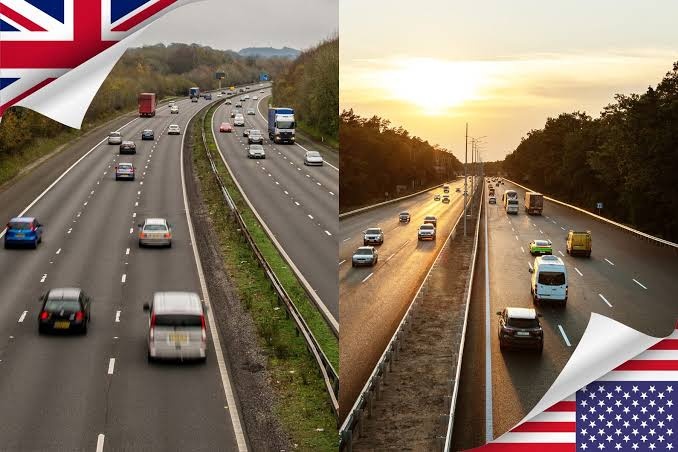
Britain followed a different history
Britain’s left-side traffic is often explained with stories about medieval swordsmen. Because most people were right-handed, the story goes, riders kept left so their sword arm faced an approaching stranger.
It is a memorable explanation. It is also difficult to prove as the single reason an entire road system developed the way it did.
Practical customs, carriage design, military movement, local laws, and later imperial influence all played a role. Britain established left-side travel in law and exported the practice to many parts of its empire.
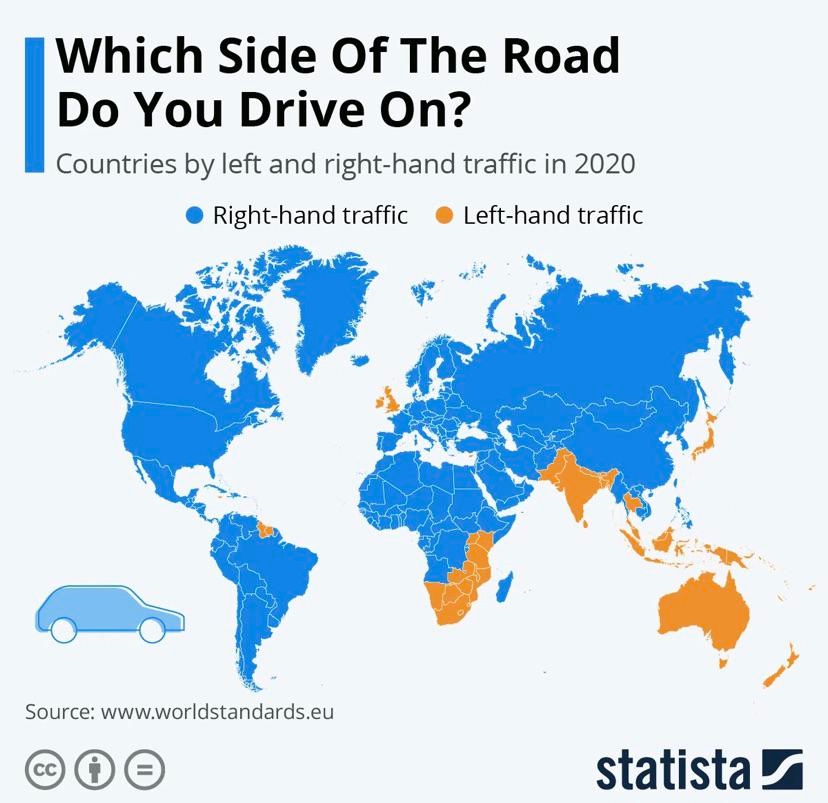
That is why countries including Australia, India, New Zealand, and South Africa still drive on the left. Former French territories and much of continental Europe generally adopted right-side traffic instead.
There is no mechanical law proving that one system is better. Once roads, cars, signs, intersections, and driver habits are built around one side, consistency matters far more than the original reason.
Countries can switch, although it is not easy
Sweden proved that a country can change sides, even after cars become part of daily life.
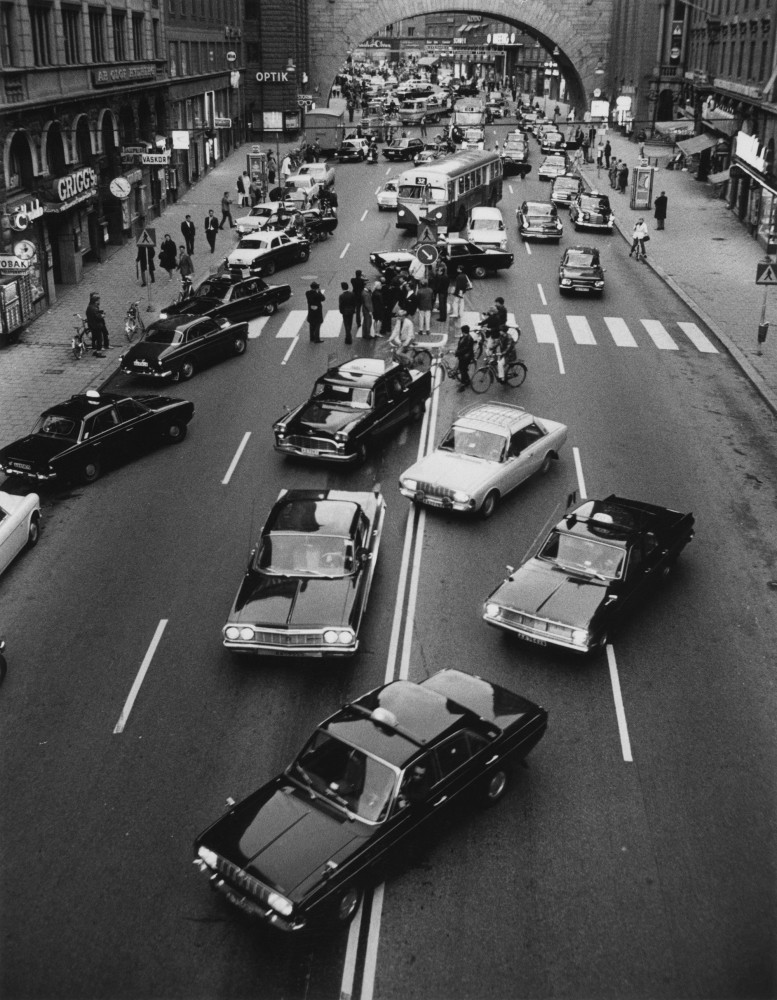
On September 3, 1967, Sweden moved from left-side to right-side traffic in an operation known as Dagen H. The change brought it into line with neighboring Norway and Finland and better matched the left-hand-drive cars already common in Sweden.
The switch required years of preparation. Road signs were covered or replaced, intersections were redesigned, bus stops were moved, and public-information campaigns tried to prevent millions of drivers from following years of muscle memory.
At the appointed time, traffic stopped, moved carefully to the other side, and started again.
It was an extraordinary logistical exercise, but it also showed why most countries keep the system they already have. Changing every sign is difficult. Changing every driver’s instinct may be harder.
Wired’s account of Dagen H details the scale of the preparation and the surprisingly orderly changeover.
The answer was hitched to a team of horses
America drives on the right because the practice made sense to the people guiding large horse-drawn wagons centuries ago. They sat on the left, kept right to judge passing clearance, and established a habit that later became law.
Cars inherited the right side of the road, but the driver’s seat took longer to settle. The Model T helped shift it to the left, creating the layout that now feels completely natural to American drivers.
The arrangement looks like a carefully designed automotive system.
In reality, half of it was decided before the automobile existed.