
Your Steering Wheel May Soon Stop Controlling Your Wheels Directly
by AutoExpert | 20 May, 2026
This is one of those car technology shifts that sounds fake the first time you hear it.
Because for basically your entire life, steering has worked the same way. You turn the wheel, a metal shaft physically moves things underneath the car, and the front tires respond. Pure mechanical connection. Old-school. Simple. Comfortingly physical.
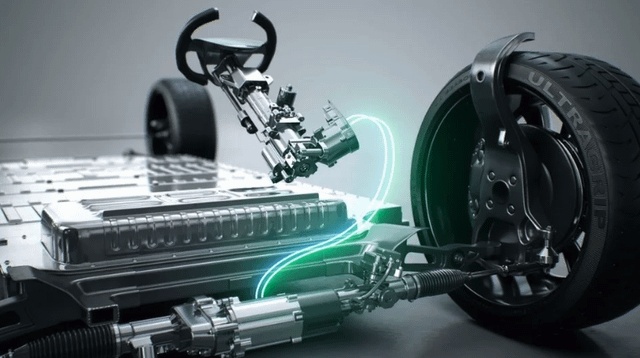
Now imagine turning the steering wheel... and nothing mechanical is actually attached to it anymore.
That’s steer-by-wire technology, and it’s officially moving into the mainstream whether people are ready for it or not.
Mercedes-Benz just confirmed its updated Mercedes-Benz EQS will use steer-by-wire starting in 2026, making it the first German production car to ditch the traditional steering column entirely.
Which sounds mildly terrifying until you realize airplanes have basically been doing the same thing for decades.
Commercial jets don’t rely on direct mechanical steering connections anymore either. Pilots input commands electronically, computers interpret them, systems respond. It’s called fly-by-wire, and millions of people trust it every single day without thinking twice while eating pretzels at 35,000 feet.
Cars are now entering that same era.
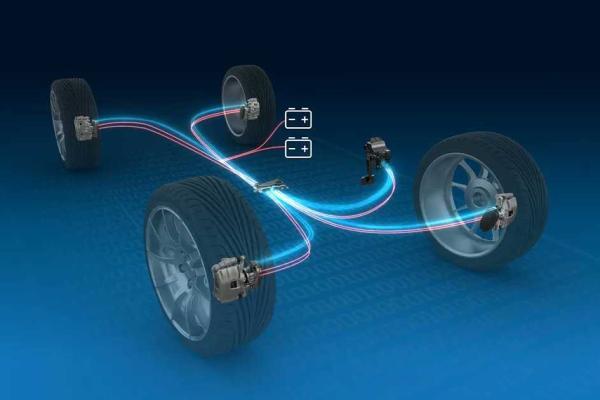
In a steer-by-wire setup, sensors track how you move the steering wheel, how quickly you turn it, how aggressive the input feels. That information goes to a computer, which instantly tells electric motors near the wheels how much steering angle to apply.
So technically? Your steering wheel becomes more like a high-tech controller than a mechanical device.
And weirdly, most drivers probably won’t even notice.
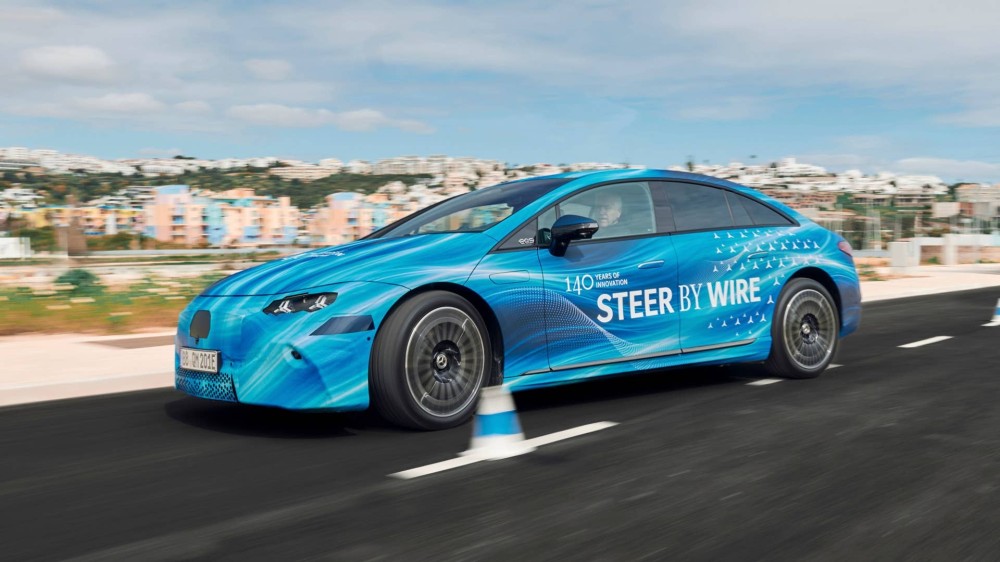
That’s the goal, actually.
Manufacturers add artificial steering feedback through motors inside the steering system so the wheel still pushes back naturally in your hands. Otherwise drivers would freak out immediately because humans apparently need some amount of fake resistance to emotionally believe a car is steering correctly.
The interesting part is why automakers want this so badly.
First, it gives engineers way more freedom with interior design because there’s no giant steering shaft running through the dashboard anymore. Crash safety improves too since there’s less rigid hardware aimed at the driver during front-end impacts.
But the bigger advantage is software control.
A steer-by-wire car can completely change how the steering feels depending on speed or driving conditions. Light and effortless while parking. Sharper and more stable at highway speeds. The car can even adjust steering ratios dynamically in ways traditional systems physically can’t.
And once autonomous driving features become more advanced, electronic steering integrates much more naturally with all of it.
Still... people are going to have trust issues at first. Understandably.
The idea that “a computer is steering the car” triggers a certain primal anxiety in drivers, especially after years of software glitches randomly freezing phones, TVs, printers, and every Wi-Fi router ever created by mankind.
Nobody wants their steering wheel rebooting mid-corner like a Windows laptop from 2009.
Which is why these systems are loaded with redundancy. Multiple sensors. Backup power supplies. Independent control circuits. If one system fails, another instantly takes over. Mercedes says it tested the setup for over a million kilometers already.
And honestly, this shift is happening faster than most people realize.
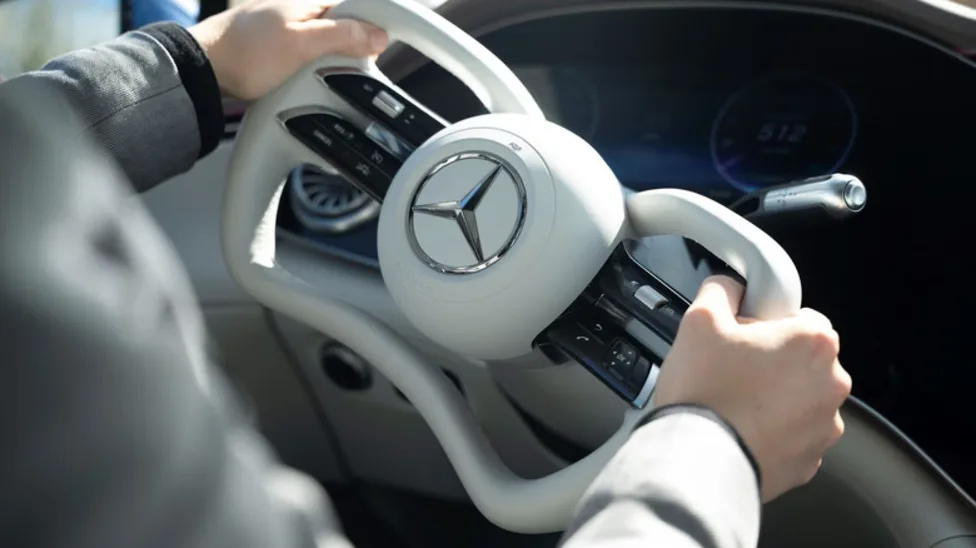
Tesla already uses steer-by-wire in the Tesla Cybertruck. Lexus offers it on the Lexus RZ 450e. China recently approved new regulations allowing fully electronic steering systems without mechanical backup connections at all.
That would’ve sounded insane ten years ago.
Now it’s becoming normal.
And that’s probably the weirdest part about modern car tech. The future arrives slowly enough that people barely notice civilization quietly replacing century-old mechanical systems with software until one day they realize the steering wheel isn’t actually steering anything directly anymore.
It’s just sending instructions.