The Steering Column Once Pointed a Steel Shaft at the Driver. Then Engineers Made It Collapse

by AutoExpert | 18 September, 2026
Drivers spend hours holding the steering wheel without giving much thought to what lies behind it.
Remove the trim, switches and wiring, and the basic arrangement appears simple. A shaft carries the driver’s movements from the wheel toward the steering gear. In an early car, that shaft could be a long, rigid piece of metal pointing almost directly at the driver’s chest.
It worked perfectly well until the front of the car hit something solid.
In a severe frontal collision, the engine compartment and steering gear could move rearward while the driver continued moving forward. The rigid column was caught between them. Contemporary safety researchers found that the steering assembly was a major source of serious injury in frontal crashes, particularly before modern restraints and energy-absorbing interiors became common.
The uncomfortable “steel spear” description is dramatic, but the geometry behind it was very real.
A steering wheel could create two separate problems
Early safety engineers had more than one force to manage.
First, the vehicle’s deformation could drive the column backward into the passenger compartment. The steering wheel moved toward the driver at precisely the moment the driver was moving toward it.
Second, the driver could strike the wheel with considerable force. Old steering wheels frequently had hard hubs, thin rims and little useful padding. Even when the column did not move far, the driver’s chest, face or neck could meet an unforgiving structure.
Seatbelts eventually helped limit that forward movement, while padded hubs and airbags added further protection. Before those systems matured, however, engineers needed to rethink the column itself.
The goal was rather clever. The steering shaft had to remain solid enough for precise control during normal driving, yet become willing to shorten during a major collision. A component expected to transmit every small movement of the driver’s hands also had to surrender in a controlled way when the load became dangerous.
General Motors put the collapsing column into production
The idea of a safer steering arrangement had circulated for years, but the major production breakthrough arrived for the 1967 model year.
General Motors introduced an energy-absorbing steering column using a two-piece shaft and a deformable section in its outer structure. The Smithsonian’s preserved 1967 Chevrolet column shows the expanded steel mesh used to absorb energy as the assembly compressed.
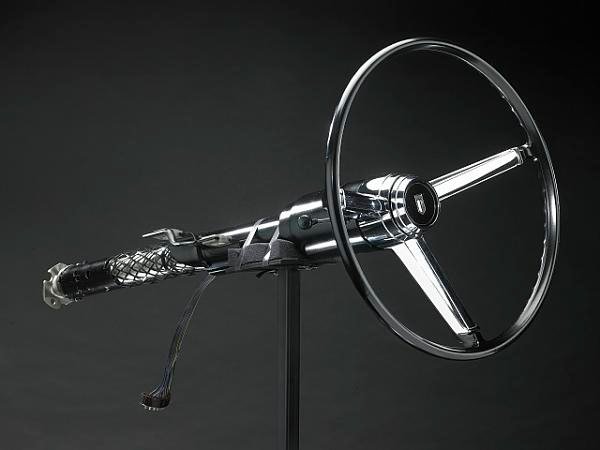
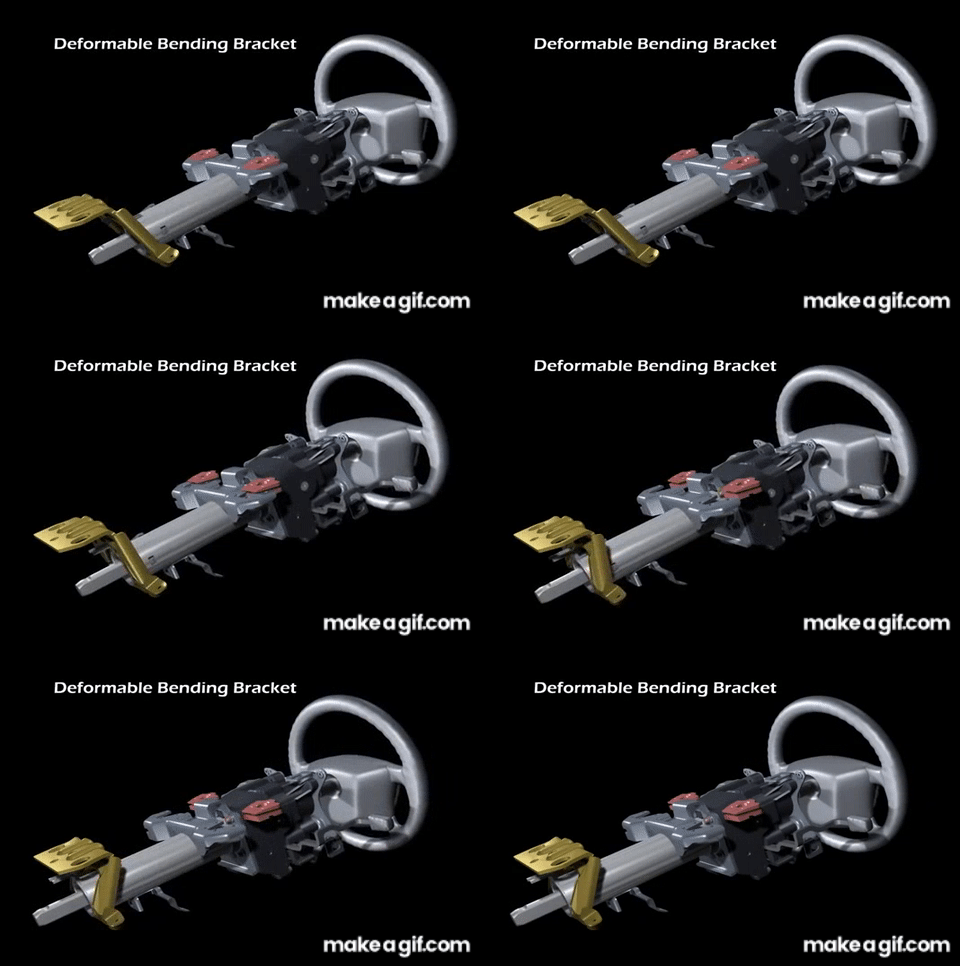
Under normal conditions, the parts remained firmly positioned and transmitted steering inputs as expected. During a sufficiently forceful impact, the inner sections could telescope while the mesh jacket deformed. Instead of behaving like one long steel rod, the column shortened and consumed some of the crash energy along the way.
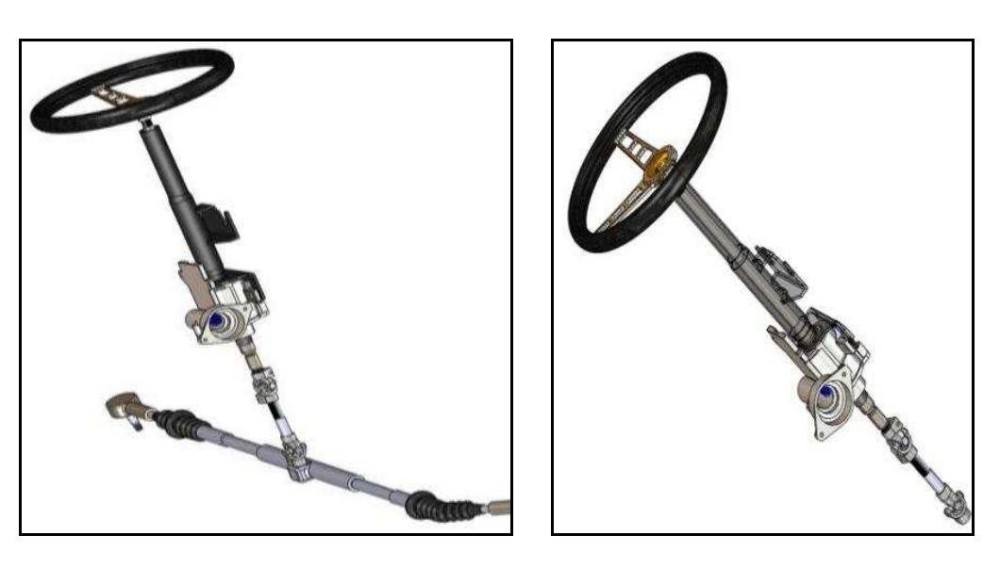
Modern columns use several variations of the same principle. Telescoping tubes can slide inside one another. Breakaway brackets may release the upper column from its dashboard mounts. Plastic capsules, shear pins, friction devices or deformable sections help control when movement begins and how much resistance the collapsing structure provides.
The engineering must be carefully calibrated. A column that collapses during ordinary driving would be useless, while one that refuses to move during a crash would return to the original problem.
This is also why a steering column should be inspected after a significant collision. Its energy-absorbing parts may have shifted or partially collapsed even when the wheel still turns normally. Pulling, hammering or casually “straightening” the assembly can interfere with components designed to respond at specific loads.
Federal standards turned the idea into measurable performance
Once collapsible columns appeared, regulators began defining what safer steering systems had to accomplish.
Federal Motor Vehicle Safety Standard 203 addresses the force transmitted to a driver who strikes the steering control. The current regulation describes a laboratory impact using a body-shaped test block and limits the force delivered through the system. Its stated purpose is to reduce chest, neck and facial injuries.
Standard 204 approaches the problem from the other direction. It limits how far the steering control may be displaced rearward during a frontal barrier test. Under the specified test conditions, the traditional requirement limits horizontal rearward movement of the column and shaft to 127 millimeters.
Those standards do not tell manufacturers exactly how to build every column. They define performance that the finished vehicle must achieve. Engineers remain free to use different shafts, brackets and energy-management devices, provided the system behaves correctly during testing.
A later NHTSA evaluation of Standards 203 and 204 concluded that they reduced driver fatalities and serious injuries. The improvement came from a collection of changes rather than one heroic piece of metal. Columns collapsed, steering wheels absorbed energy, interiors became more forgiving and restraints grew far more effective.
Classic-car buyers should look beyond the shiny steering wheel
The difference becomes important when buying or restoring an older vehicle.
Many cars built before the late 1960s retain rigid steering columns, though designs and introduction dates vary between manufacturers. A beautifully restored wheel may therefore hide a structure developed before modern crash protection became a central design concern.
An aftermarket steering column is not automatically safer simply because it is newer or adjustable. The installation, mounting brackets, intermediate shaft, joints and relationship with the rest of the vehicle all matter. A poorly fitted column can compromise steering control long before crash protection enters the discussion.
Owners considering an upgrade should use components intended for the specific vehicle and seek experienced professional guidance. Adding a collapsible section is more involved than replacing a steering wheel and tightening a few bolts.
Modern drivers rarely notice what happens beneath the column shroud, which is exactly how the system should behave. It turns faithfully for years, supports switches and wiring, adjusts for comfort and never announces that parts of it are designed to come apart.
Its finest moment, should it ever arrive, depends on knowing precisely when to stop being rigid.